
For Springdale’s high-volume I-49 corridor kitchens, interior cleaning on every pump cycle isn’t optional — it’s the standard that keeps bacteria from building between monthly visits. Full scrub, baffles cleared, odors gone. Waste to our Siloam Springs facility.
Interior Scrub Every Cycle
Bacteria Eliminated
Odor at the Source
Washington Co. Compliance

In most NWA markets, a grease trap cleaning visit is scheduled when there is a problem — odor complaints, a health inspection finding, or a trap that has been on pump-only service for too long. In Springdale, the I-49 corridor QSR environment makes that reactive model insufficient. At monthly service frequency with high daily frying volume, bacteria loading on interior walls is significant enough by week three or four that a pump-only cycle leaves a detectable odor problem before the next service arrives. Cleaning on every monthly visit is the operational standard — not an occasional extra.
The mechanism is straightforward: at high frying volume, every gallon of wastewater draining from a commercial kitchen carries a larger FOG fraction than lower-volume kitchens. More FOG per cycle means faster coating of interior walls and baffles with the organic material that bacteria colonies feed on. Pumping removes the liquid waste but leaves the wall coating intact. By the time the next monthly pump cycle rolls around, those bacteria colonies have had four weeks to grow. The result is the odor that makes customers ask restaurant managers if there is a drain problem.
Springdale’s independent restaurant community — particularly the city’s Latin American and Asian dining sector — adds a second dimension. Wok cooking generates an aerosol of fine oil particles that settles on kitchen surfaces and drains differently than standard fryer waste. The trap walls in these kitchens accumulate a denser, more adhesive film than typical grease trap waste. Pump-only service at bi-monthly frequency is even less adequate in these kitchens than in a QSR setting.
Every Ozark Grease Pros service visit in Springdale combines a full pump-out with a complete interior cleaning. No separate scheduling, no upsell — it is the standard scope on every call:
Service Component
What This Means for Your Springdale Kitchen
Full pump-out
All liquid waste removed — floating grease, wastewater, settled solids. Volume measured and recorded on manifest.
Interior wall scrubbing
Walls, lid underside, and all interior surfaces scrubbed to remove grease film and bacteria accumulation. This is the step that eliminates the odor source that pump-only service leaves behind.
Baffle clearing
Baffles cleared of deposits and residual material. Baffle condition inspected — damage or deterioration noted. For Springdale QSR accounts on monthly cycles, baffle deposits accumulate significantly between visits.
Residual solids removal
All material dislodged during scrubbing removed from the trap. Nothing pushed back into the drain line.
Inlet/outlet pipe inspection
Partial blockages cleared. Structural issues flagged for follow-up. For Springdale kitchens with high daily frying, inlet pipes are a common accumulation point.
Water refill
Clean water refilled to operating level — restores the water seal that blocks sewer gas from entering kitchen drain lines.
Signed manifest
Disposal destination: our Siloam Springs, AR facility. Date, gallons, technician signature. Your Washington County FOG compliance document.
Cleaning frequency in Springdale aligns with pump frequency — the combined pump-and-clean is the service unit, not two separate events. Here is the recommended combined service schedule by Springdale restaurant type:
Springdale Restaurant / Kitchen Type
Recommended Combined Service Frequency
I-49 corridor QSR / fast food
Monthly pump-and-clean. At the volume these kitchens operate, cleaning on every monthly cycle prevents bacteria accumulation from becoming an odor problem before the next visit. Pump-only monthly service is not adequate for high-frying QSR.
Casual dining, moderate frying
Every 60–90 days combined pump-and-clean. Moderate FOG output — bi-monthly service cycle is the standard for most full-service casual dining in Springdale.
Latin American / Asian cuisine restaurants
Monthly pump-and-clean. Wok cooking and high-heat frying coat trap walls faster than standard commercial kitchens. Monthly service with full interior clean is the appropriate schedule for these kitchens.
Tyson corporate dining / institutional
Assessed schedule based on volume. Large institutional kitchens may require bi-monthly combined service regardless of trap size — confirm with us on account setup.
Springdale hotel food service
Quarterly combined pump-and-clean. Multi-meal-period kitchens with moderate FOG output — quarterly cleaning keeps the trap in compliant condition between cycles.
New account / baseline visit
Start with a cleaning visit regardless of pump history. Establishes the actual interior condition of the trap before setting the ongoing schedule.
Grease trap odor in a Springdale restaurant is almost always a cleaning problem, not a pumping frequency problem. If your trap is being pumped monthly and the kitchen develops odor by week three — and this is common on the I-49 corridor — the source is bacteria on the trap walls, not a volume issue. Pumping has been removing liquid waste. Cleaning hasn’t been removing the bacteria that produce the odor.
For I-49 corridor restaurants with dining rooms that share HVAC with the kitchen, or with pass-through windows and open kitchen designs that bring guests near the kitchen, grease trap odor is a guest experience issue. Customers notice it. It generates reviews. It affects table turnover near the kitchen. A clean trap — interior scrubbed, not just pumped — does not produce persistent odor between service cycles.
If your Springdale kitchen has persistent grease odor — check these:
|
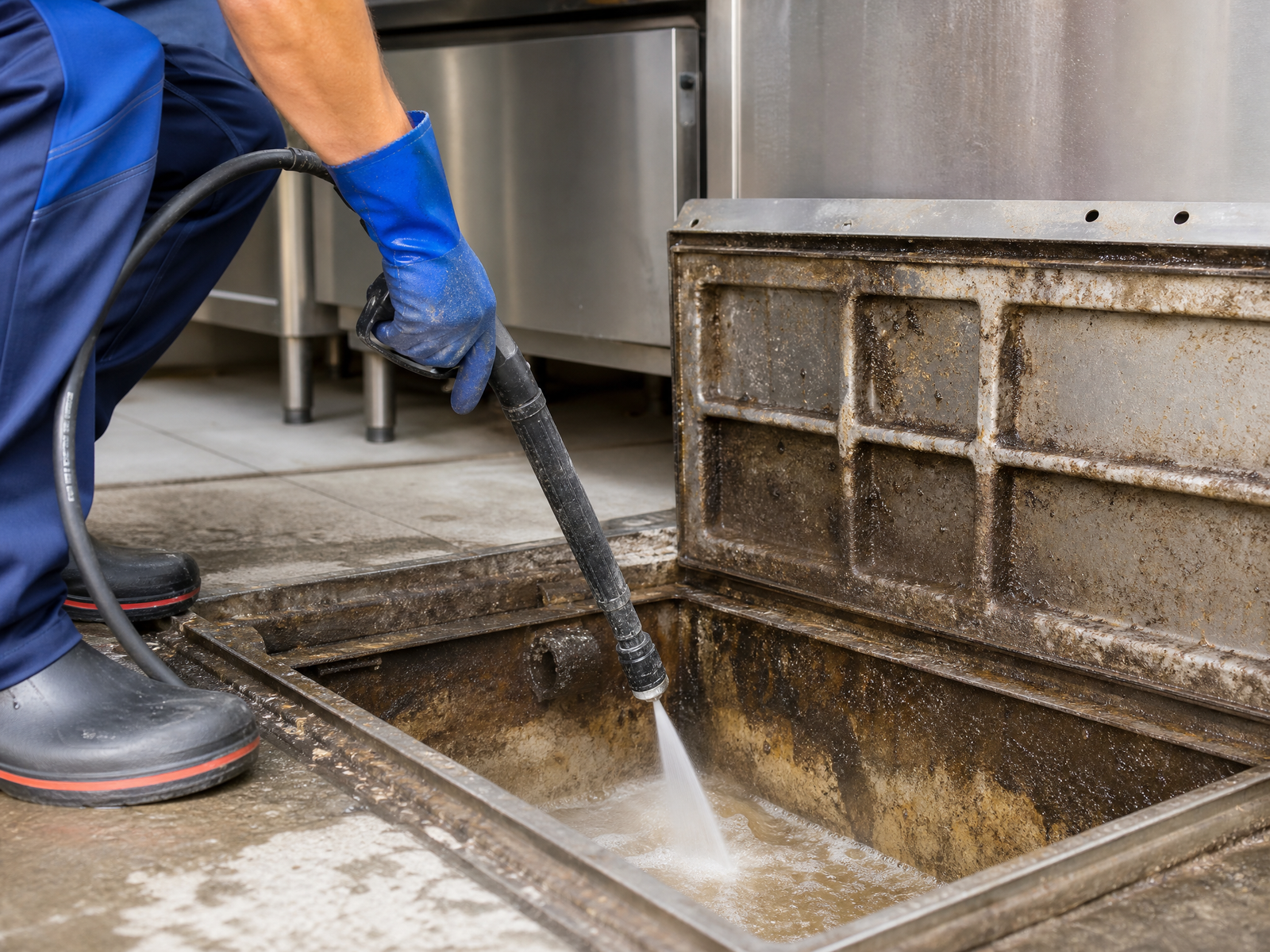
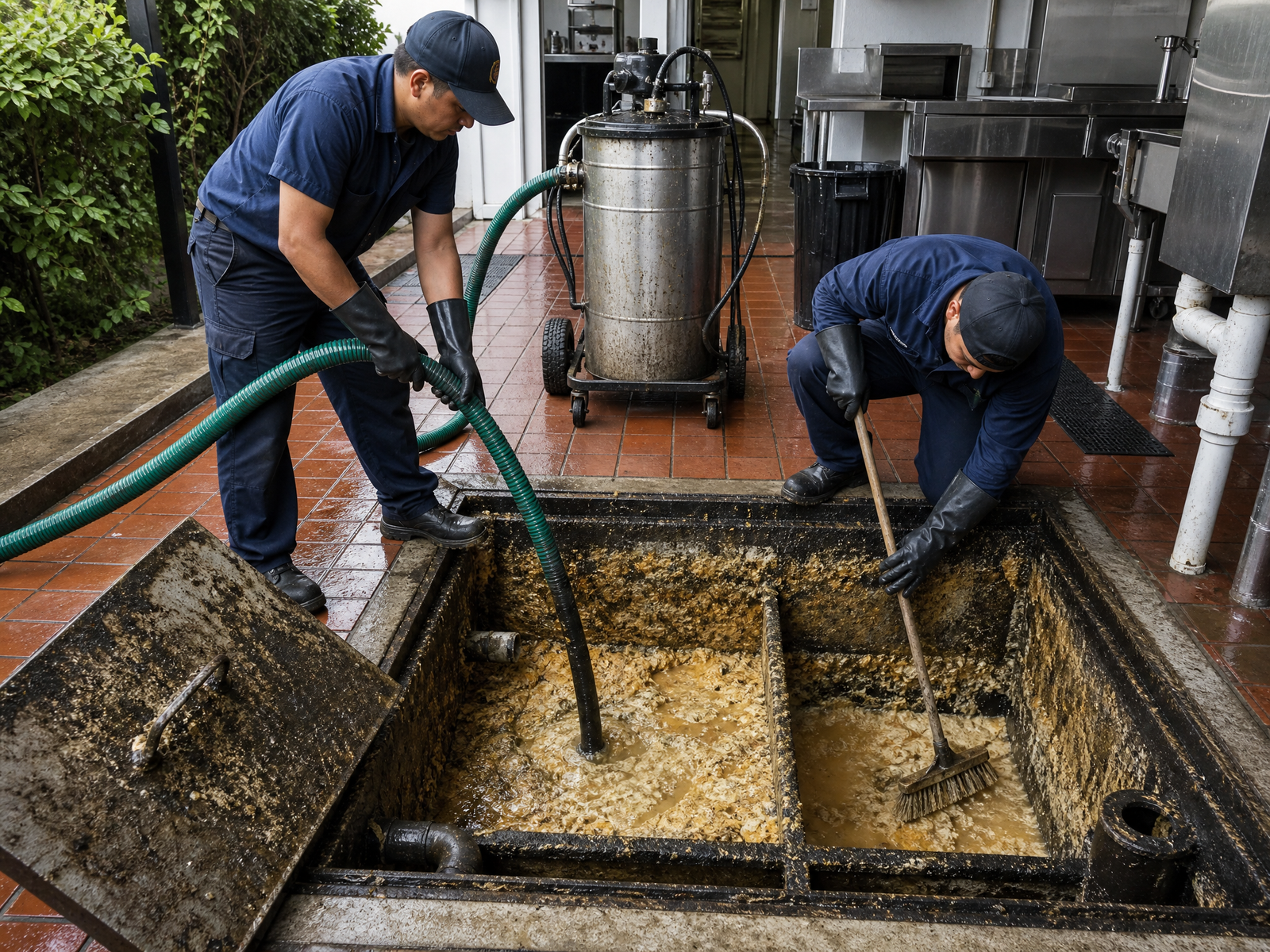
Washington County health inspectors assessing FOG compliance in Springdale look at more than liquid fill level. Inspectors who open a trap and find clean walls, clear baffles, and no residual deposits have found a well-maintained trap. Inspectors who open a trap and find wall coating, baffle fouling, and visible bacteria growth — even at acceptable liquid levels — have found a compliance finding waiting to be documented.
The combined pump-and-clean service that Ozark Grease Pros delivers on every Springdale visit produces a trap that passes both tests: emptied and physically clean. That is the standard Washington County health inspectors expect in a commercial kitchen where grease trap maintenance is treated as an operational priority rather than a minimum compliance checkbox.
For Springdale restaurants preparing for a scheduled inspection: contact us about emergency or pre-inspection service — we can schedule a priority pump-and-clean for Springdale accounts.
Every Springdale cleaning visit includes a full pump-out plus interior wall and baffle scrubbing, residual solids removal, inlet/outlet pipe check, water refill to operating level, and a signed manifest naming our Siloam Springs, AR facility as disposal destination. Cleaning is included in every scheduled service visit as standard — not a separate add-on.
Monthly combined pump-and-clean for I-49 corridor QSR and high-volume frying operations. At the volume these kitchens produce, bacteria loading on trap walls between monthly cycles is significant enough that pump-only service leaves a detectable odor problem. Cleaning on every monthly cycle is the operational standard for Springdale’s high-volume accounts.
Persistent odor after pumping means bacteria colonies on interior walls and baffles are still present — pumping removes liquid waste but not the bacteria. Interior cleaning eliminates the odor source. This is especially common in I-49 corridor QSR accounts and Latin American and Asian cuisine kitchens where wall accumulation between monthly cycles is rapid.
Yes. Combined pump-and-clean service documented with a signed manifest naming our ADEQ-licensed Siloam Springs facility satisfies FOG compliance requirements administered by City of Springdale Water Utilities under Washington County regulations.
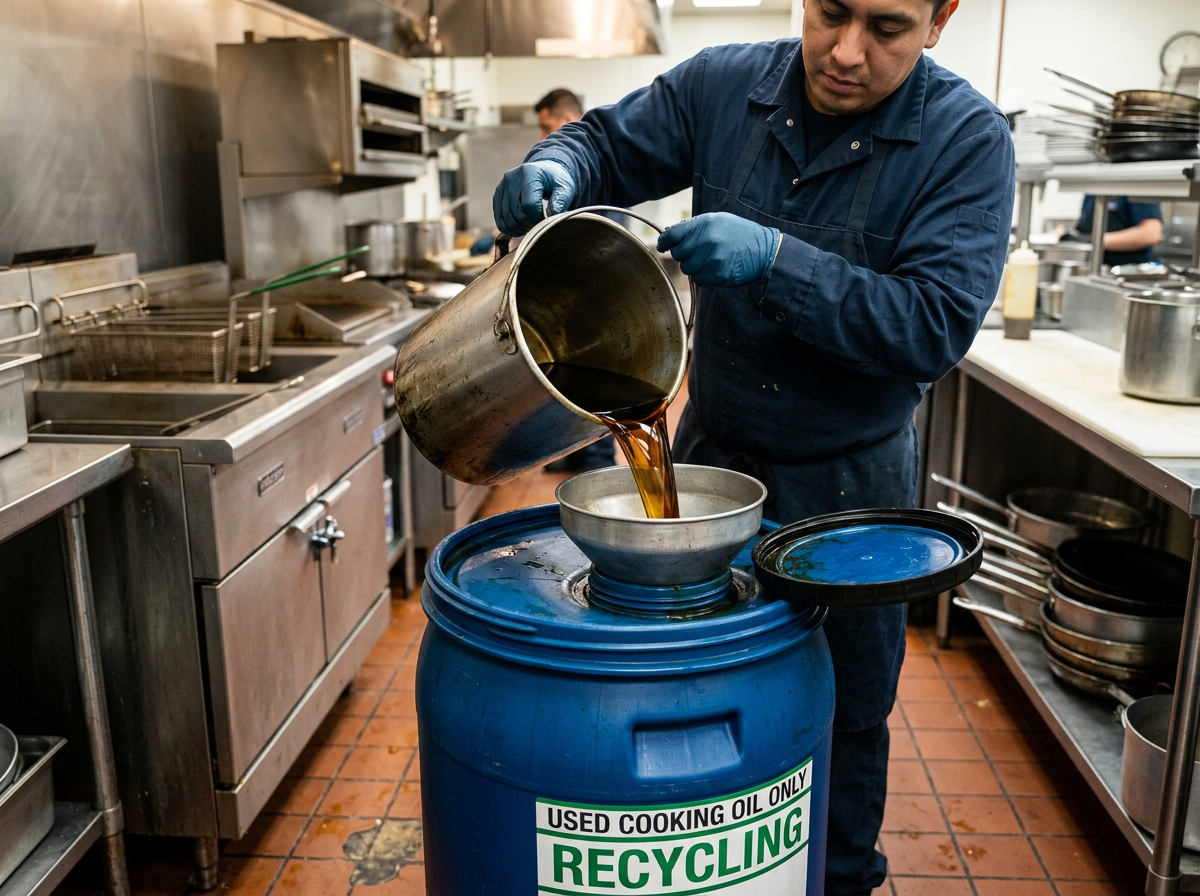
Yes. All waste from Springdale cleaning visits is transported to our licensed recycling facility in Siloam Springs, AR — approximately 25 miles west. Oil is extracted and recycled. Water is treated to Arkansas ADEQ discharge standards.
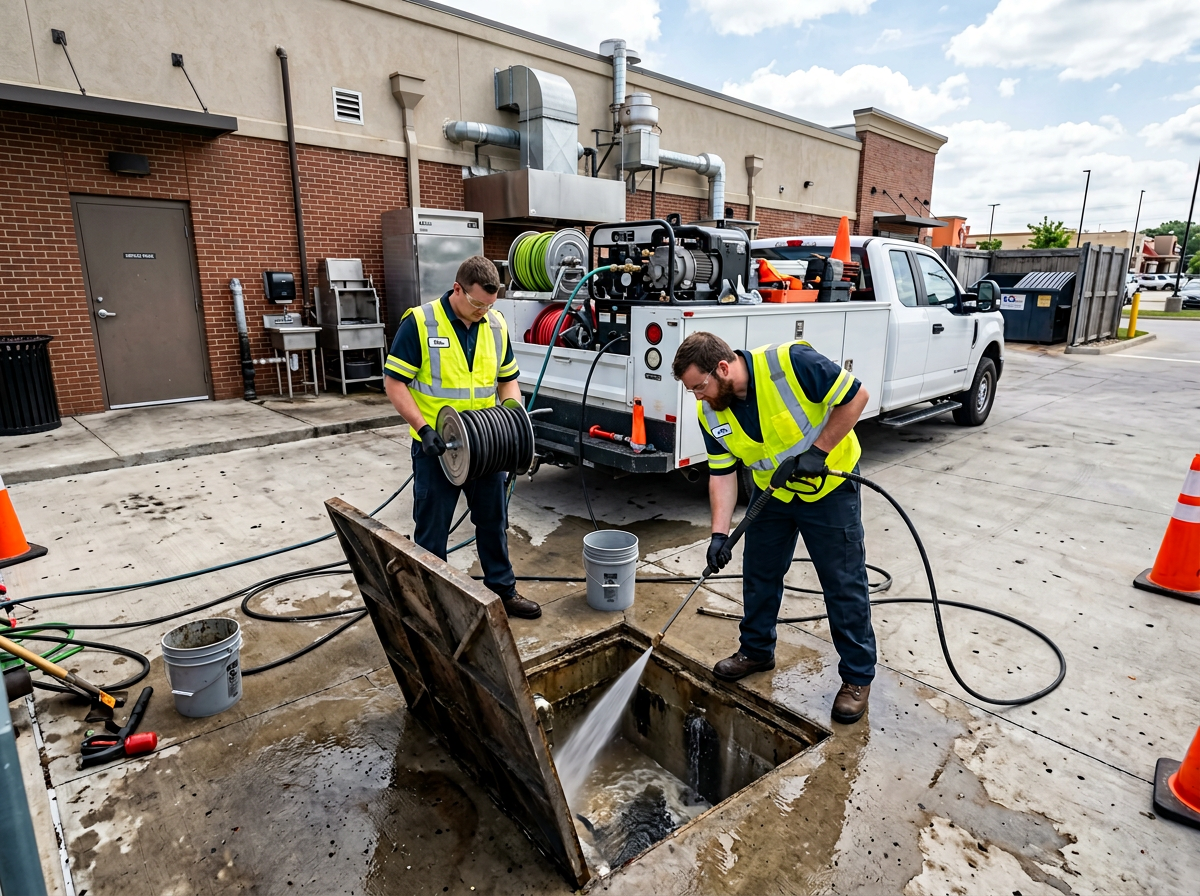
Grease Trap Pumping — Springdale
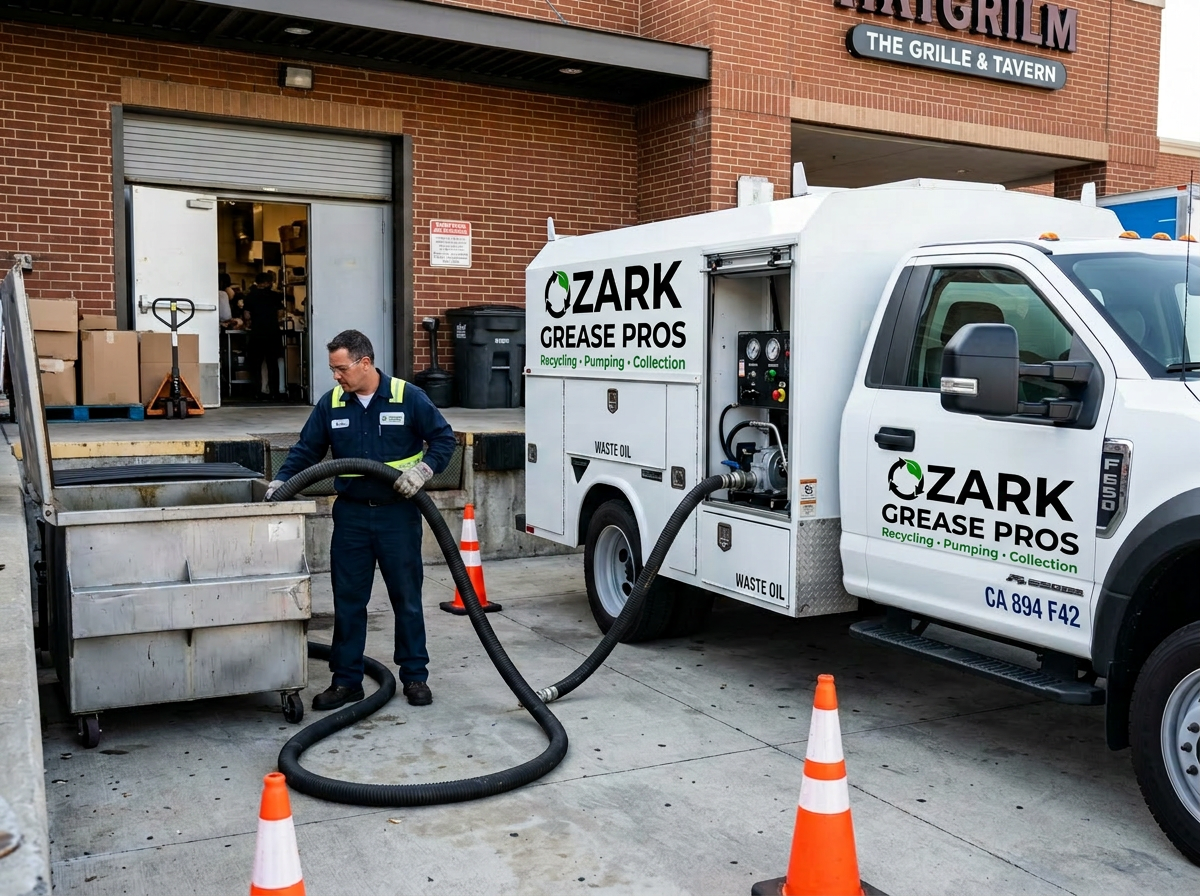
Grease Recycling — Springdale
Springdale Service Overview
Full interior clean on every visit. Bacteria eliminated. Odor at the source cleared. Washington County compliance documented. Waste to Siloam Springs — 25 miles, not Tulsa.