NWA's Only Recycling Facility
Oil Extracted & Recycled
ADEQ-Compliant Discharge
Manifest Every Load
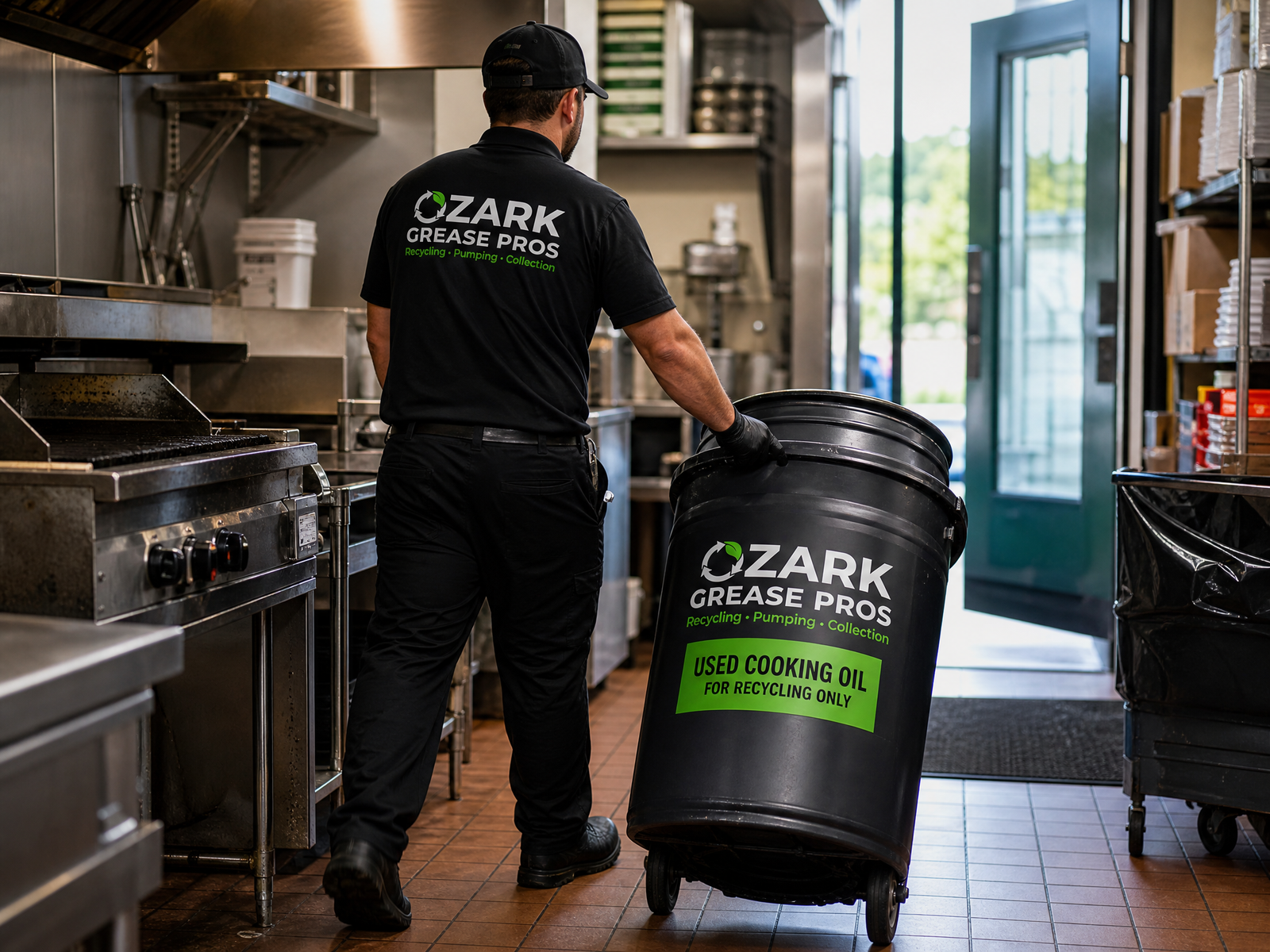
Grease trap pumping generates a significant volume of waste — a mix of fats, oils, and water extracted from commercial kitchen traps. That waste has to go somewhere. The question is where, and what happens to it when it gets there.
Most grease trap pumping companies in Northwest Arkansas are haulers. They pump your trap, load the waste into a vacuum truck, and transport it to a disposal facility — typically in Tulsa, Little Rock, or another out-of-market site. At those facilities, the waste is processed, or simply disposed of. The hauler has little visibility into what actually happens downstream, and the restaurant has even less.
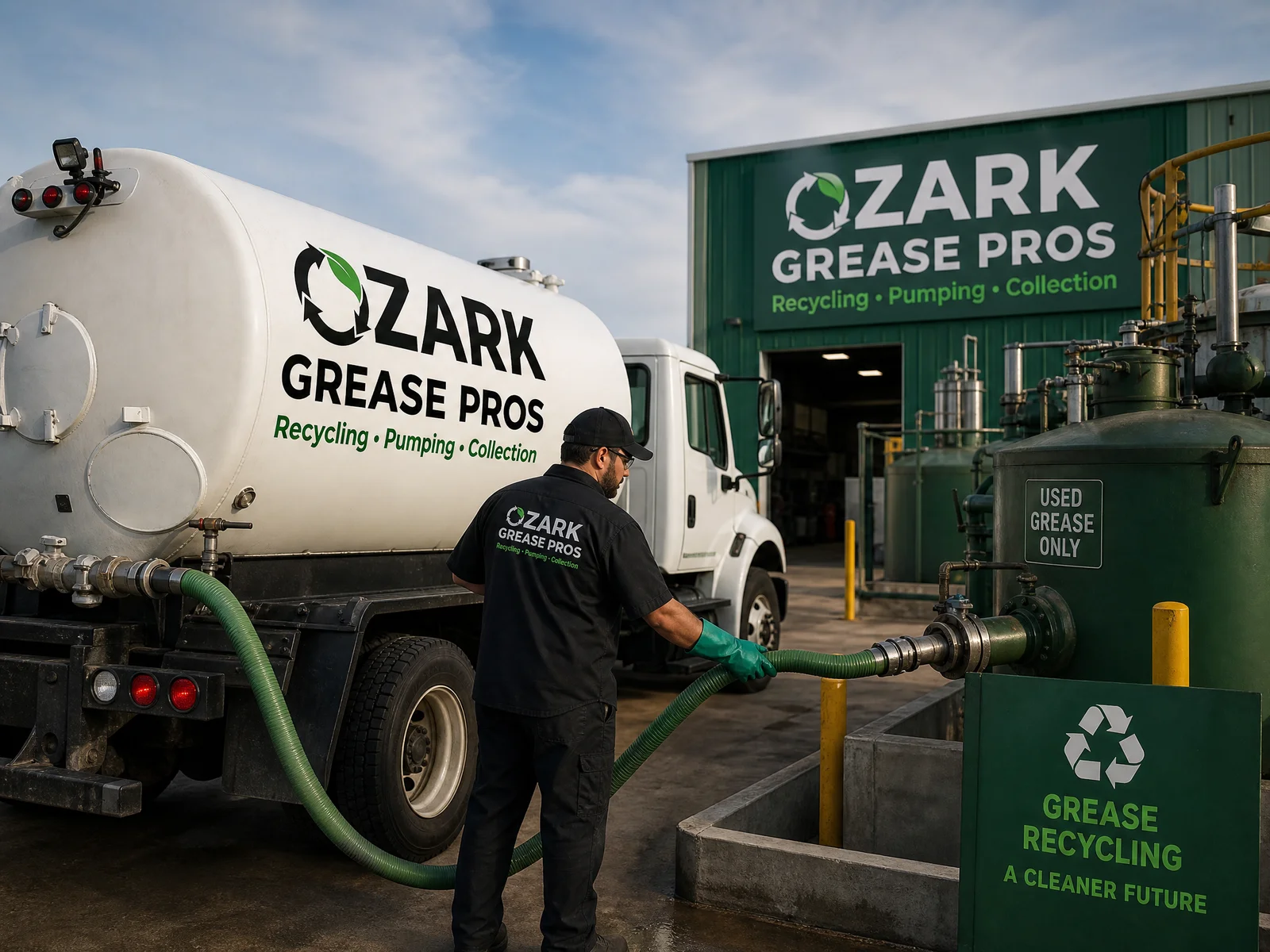
Ozark Grease Pros operates differently. We own and operate the only licensed grease processing and recycling facility in Northwest Arkansas, located in Siloam Springs, AR. When we pump your trap — or when a B2B hauling company brings waste to our facility — the material is processed on-site:
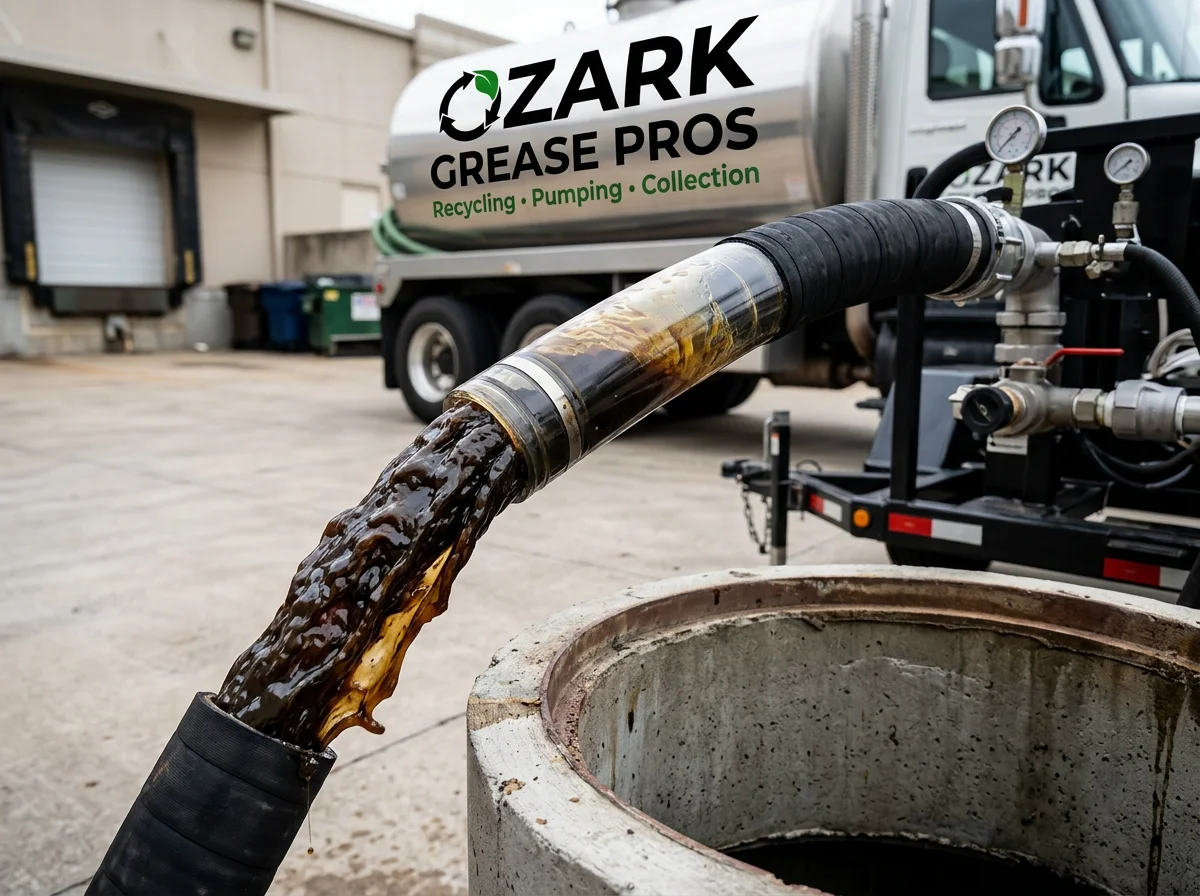
What happens at our Siloam Springs facility: Oil extraction: Fats and oils are separated from the water phase through physical and chemical separation processes, yielding a recoverable grease fraction that is processed for recycling or energy recovery. Water treatment: The water phase remaining after oil extraction is treated to meet Arkansas ADEQ pre-treatment discharge standards before release — it is not raw wastewater dumped in a field or a storm drain. Recycled output: Extracted oils are processed for downstream use — including applications in biofuel and biodiesel production, reducing the environmental footprint of commercial kitchen grease compared to landfill disposal. Manifest chain of custody: Every load received at the facility is logged against the originating manifest — creating an auditable chain of custody from the restaurant’s trap to compliant processing. |
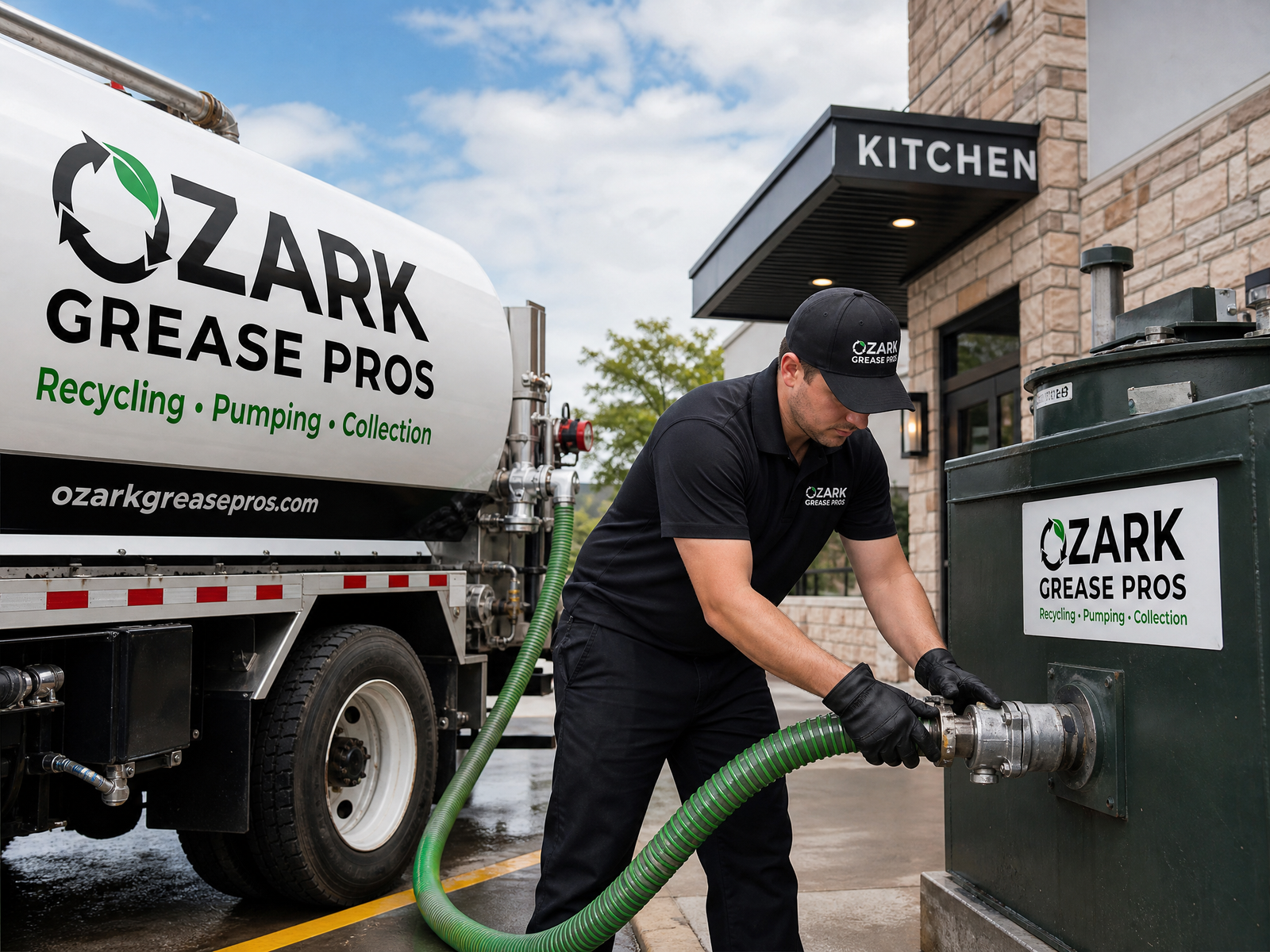
Here is the complete journey of grease trap waste through the Ozark Grease Pros system — from the moment the vacuum truck connects to your trap to the point at which processed output leaves our Siloam Springs facility:
Our vacuum truck arrives at your restaurant and removes all accumulated waste — the floating grease layer, wastewater, and settled solids. Volume is measured and documented on the waste manifest. This is the starting record in the compliance chain.
All waste is transported directly to our licensed grease processing facility in Siloam Springs, AR. The waste does not stop at an intermediate site, does not travel to Tulsa or Little Rock, and is not transferred to an unlicensed disposal location. Transport is documented against the originating manifest.
On arrival at the facility, the load is received and logged. The manifest from the originating service call is matched to the incoming volume. This creates the chain of custody record that connects the restaurant's service call to the disposal facility — the full documentation trail that satisfies FOG pre-treatment compliance requirements.
The waste enters a separation stage where the three-phase structure is allowed to separate naturally: the floating grease layer (mostly fats and oils) rises to the surface, the wastewater occupies the middle zone, and heavier solids settle to the bottom. This is the first stage of oil-water separation.
The separated grease fraction is extracted and concentrated. Further processing removes residual water from the oil phase, increasing the quality of the recovered grease material for downstream recycling applications. Higher-quality recovered oil can be directed toward biofuel and biodiesel production.
The water phase — after oil extraction — undergoes treatment to reduce FOG, biochemical oxygen demand (BOD), and suspended solids to levels that meet Arkansas ADEQ pre-treatment standards for discharge. This is what makes compliant disposal possible without impacting municipal sewer infrastructure.
Treated water meeting ADEQ discharge standards is released through the appropriate channels. This is not raw wastewater discharge — it is treated effluent that has been processed to meet regulatory thresholds. The regulatory framework for this discharge is what makes the facility a licensed operation rather than an informal disposal site.
Recovered oils are processed for downstream use. Applications include biodiesel feedstock, industrial biofuel, and other recycled grease products. This step closes the loop: grease that enters the kitchen as food-grade oil, exits as a waste product, and is recovered for energy-productive reuse rather than landfill disposal.
The Siloam Springs facility operates as both the disposal endpoint for Ozark Grease Pros’ direct restaurant service and as a regional disposal site for other pumping companies that haul waste from NWA accounts. Here’s how both audiences interact with the facility:
Restaurant Clients Direct grease trap service from Ozark Grease Pros | B2B Grease Haulers Other NWA pumping companies using our facility |
|
|
When a grease trap pumping company loads up a truck in Fayetteville or Bentonville and drives to Tulsa to dispose of the waste, a 200-mile round trip is baked into every service call. That distance adds haul time, fuel cost, and driver hours to the economics of every job — costs that ultimately affect what the restaurant pays and how reliably service can be scheduled.
It also adds risk. The further waste travels and the more intermediary handling points involved, the more opportunity for documentation gaps, unlicensed disposal, and regulatory exposure. A manifest that says ‘waste transported to licensed facility’ is only as credible as the actual chain of custody behind it.
Our Siloam Springs facility changes that equation for the entire NWA market. For restaurants, it means shorter haul distance = more reliable scheduling and lower downstream cost. For B2B haulers, it means a certified disposal site that is 100–150 miles closer than Tulsa — and a tipping fee ($0.15/gal) that makes the economics work without the long haul.
Factor
NWA to Siloam Springs
NWA to Tulsa
Haul distance (from Fayetteville)
~35 miles
~95+ miles
Haul distance (from Bentonville)
~45 miles
~105+ miles
Haul distance (from Rogers)
~40 miles
~100+ miles
Approximate round-trip
~70–90 miles
~70–90 miles
Tipping fee
$0.15/gal (Ozark Grease Pros)
Varies by facility
Recycling on-site
Yes — oil extracted
Depends on facility
ADEQ-licensed facility
Yes
Oklahoma facility — different regulatory framework
Documentation chain
Manifest → Siloam Springs → ADEQ compliant discharge
Manifest → Tulsa → variable documentation
Note: Tulsa distances are approximate estimates for illustration. Actual mileage varies by NWA origin point. See our full grease disposal cost comparison →
Commercial kitchen grease is one of the most common causes of sewer system blockages and municipal infrastructure failures across the United States. The EPA’s pre-treatment program exists specifically because unmanaged FOG discharge creates serious downstream consequences — from sanitary sewer overflows (SSOs) to environmental contamination of waterways and soil.
In Northwest Arkansas, where population growth has driven a rapid expansion of food service density across Benton and Washington Counties, the volume of commercial kitchen FOG generated daily is substantial. Managing that waste responsibly matters — both for the municipal sewer systems that serve the region and for the waterways those systems ultimately connect to.
Ozark Grease Pros’ recycling facility addresses that challenge at the regional level:
Environmental outcomes of grease recycling at our Siloam Springs facility:
This is the environmental positioning angle with the strongest press and media hook. See our full environmental compliance and FOG impact guide → |
Documentation Stage
What Is Recorded
Service manifest (restaurant)
Receiving log (facility)
Incoming load matched to originating manifest — volume confirmed, waste type recorded, receiving timestamp
Processing record (facility)
Oil extraction volume, water treatment batch record, discharge documentation
Compliance archive
Full chain-of-custody records available on request — for health inspections, permit renewals, and ADEQ compliance audits
Multi-location restaurant group
Manifest provided to restaurant on every service call — kept on file for health department review
For B2B haulers: our facility issues documentation on every received load that satisfies your own downstream compliance requirements. See B2B facility documentation details →
Every grease trap pumped by Ozark Grease Pros — across Fayetteville, Springdale, Bentonville, Rogers, Siloam Springs, and the full NWA service corridor — is processed at our Siloam Springs recycling facility. Restaurants in any city we serve receive the same compliant recycling documentation regardless of location.
For B2B grease haulers across the broader region — including operators who currently haul to Tulsa — our facility is accessible from across the 80-mile NWA radius. View our service area → | B2B hauler facility details →
At Ozark Grease Pros, all grease trap waste is transported to our licensed processing facility in Siloam Springs, AR — the only regional grease recycling facility in Northwest Arkansas. At the facility, oil is separated from the water phase through a multi-stage separation process. The oil fraction is extracted and processed for recycling — including applications in biodiesel and biofuel production. The water phase is treated to Arkansas ADEQ pre-treatment standards before discharge. Nothing is illegally dumped or disposed of at unlicensed sites.
We operate a licensed grease processing facility in Siloam Springs, AR — a physical infrastructure investment that includes separation equipment, oil extraction processing, and water treatment capacity licensed under Arkansas ADEQ. Most grease trap pumping companies in NWA are haulers only — they transport waste to disposal sites operated by other parties, typically in Tulsa or Little Rock. Our facility processes the waste on-site in NWA rather than sending it out of the region.
At our facility, extracted oil from grease trap waste is processed for downstream recycling use — including biodiesel feedstock and industrial biofuel applications. This is actual material recycling, not just compliant disposal. The water phase is treated for compliant discharge rather than landfilled. Not all grease disposal facilities recover the oil fraction for recycling — our facility does.
A restaurant’s FOG compliance record requires that grease trap waste be disposed of at a licensed facility, with the disposal destination documented on the signed manifest. Our Siloam Springs facility is a licensed receiving site — every manifest we issue names it as the disposal destination. For health inspections and FOG compliance audits, that documentation satisfies the chain-of-custody requirement.
Yes. We operate as a regional disposal site for B2B grease haulers — other pumping companies that service NWA restaurants and need a licensed facility for waste disposal. The tipping fee is $0.15 per gallon, billed against the manifest. Our facility is significantly closer than Tulsa for most NWA operators, reducing haul time and cost per load. Contact us to set up a hauler account.
The facility accepts grease trap waste and FOG material from commercial food service operations — the primary waste stream from grease trap pumping. Contact us directly to discuss specific waste types or volumes that fall outside standard restaurant grease trap waste. We do not accept residential waste streams or non-FOG commercial waste.
Grease trap waste that goes to landfill contributes to solid waste volume without recovering the energy value in the oil fraction. Recycled grease oil directed to biodiesel or biofuel production replaces fossil fuel inputs with a waste-derived feedstock — a meaningful carbon impact difference at scale. Additionally, treating the water phase to ADEQ standards before discharge prevents raw FOG-contaminated wastewater from reaching groundwater or surface waterways.
Grease Disposal Facility (B2B)
Grease Trap Waste Processing
Environmental FOG Compliance
Restaurant Operators
Schedule grease trap pumping service with documented recycling disposal at our Siloam Springs facility.
B2B Grease Haulers
Set up a hauler account for regular disposal at our Siloam Springs facility. $0.15/gal tipping fee. Closer than Tulsa.