~$0.40/Gallon Direct Rate
Manifest Every Service Call
NWA Recycling Facility
Scheduled Programs Available
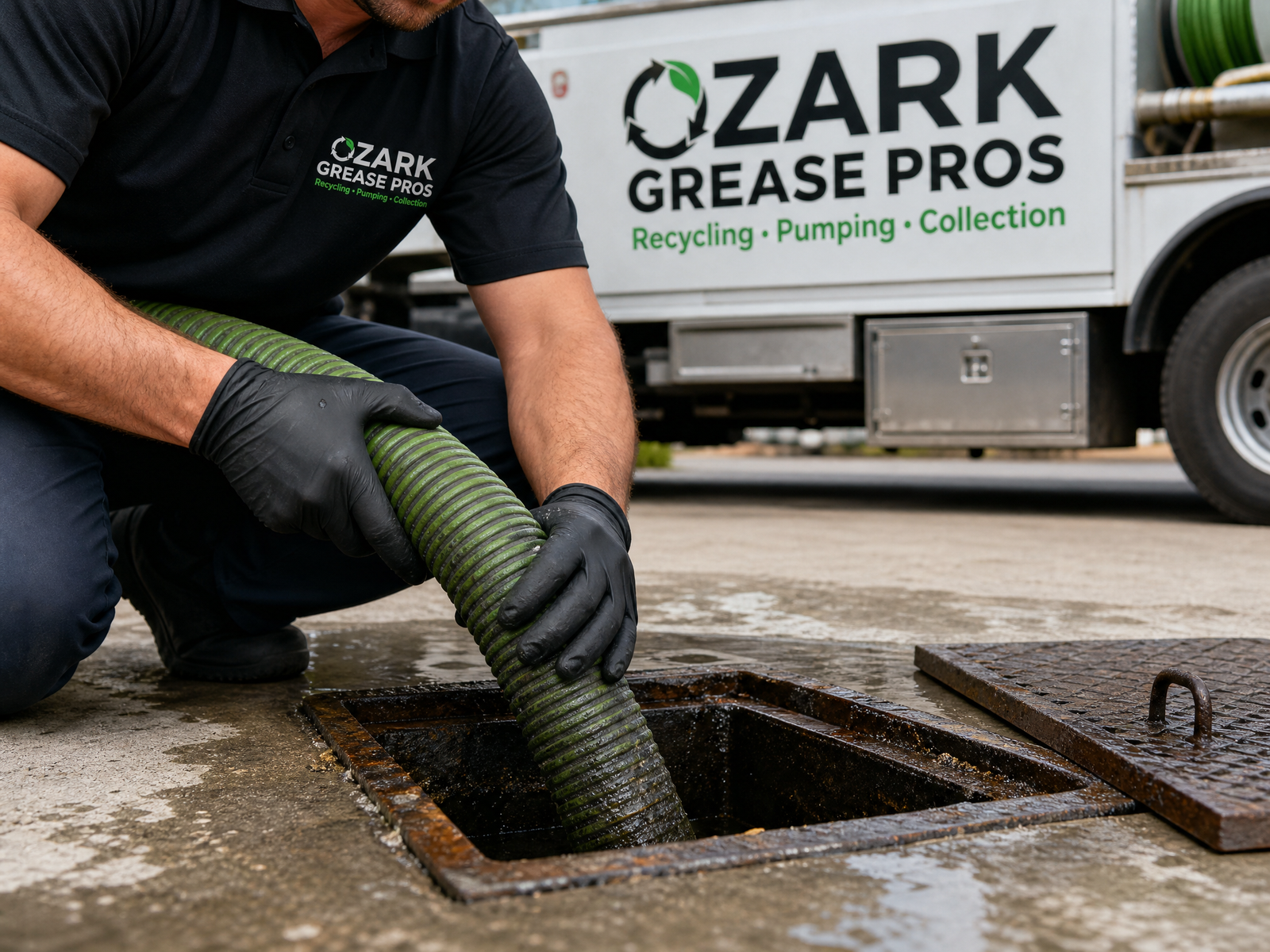
A grease trap is a passive separation device installed in a restaurant’s drain system, positioned between kitchen drains and the municipal sewer line. Its job is to capture fats, oils, and grease (FOG) before they enter the sewer — where they would cause blockages, overflows, and significant environmental damage. Every time a restaurant operates, FOG accumulates in the trap. Left unmanaged, that accumulation reduces trap efficiency, causes backups into the kitchen, creates serious health code violations, and eventually results in raw sewage overflow.
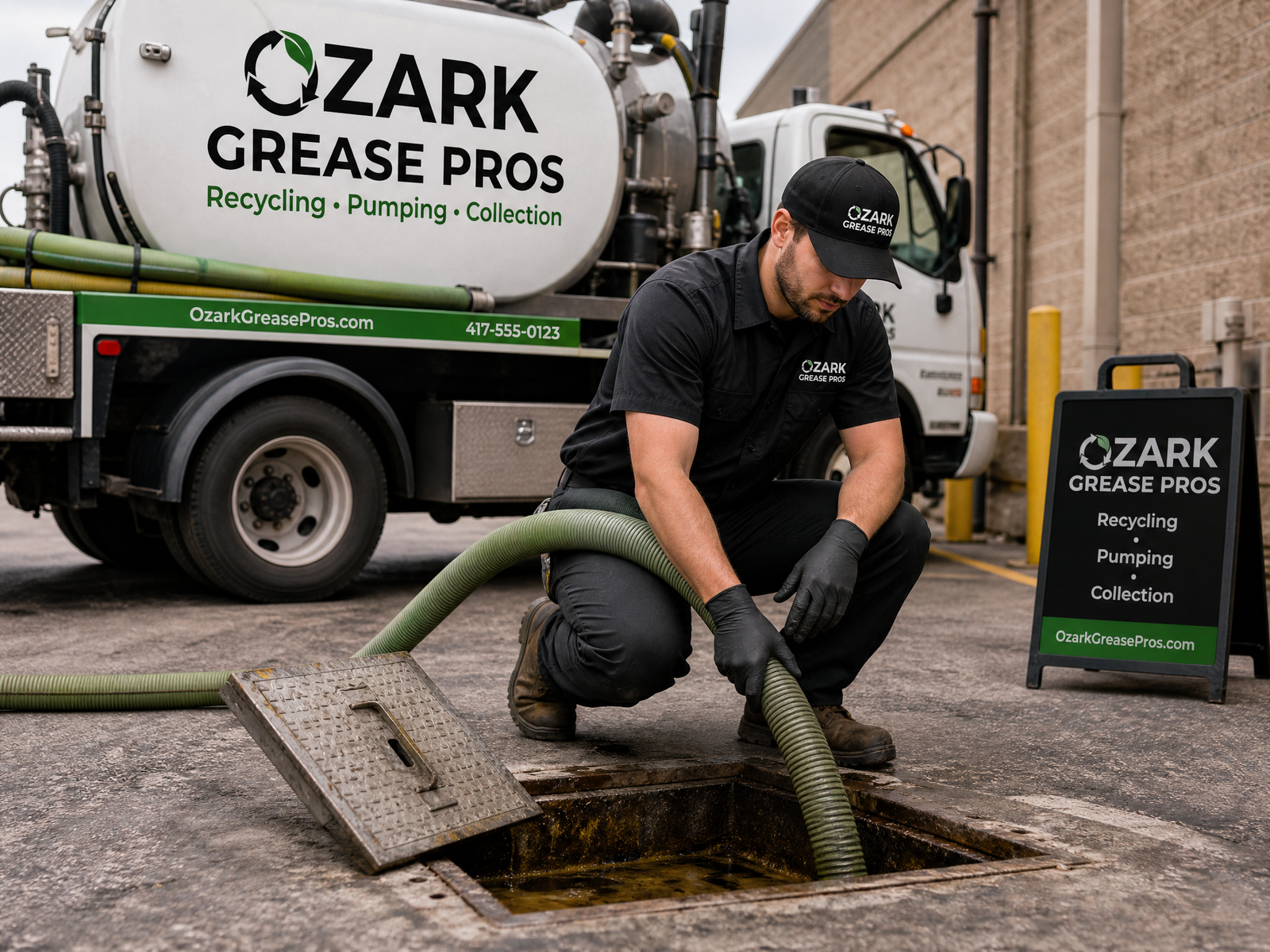
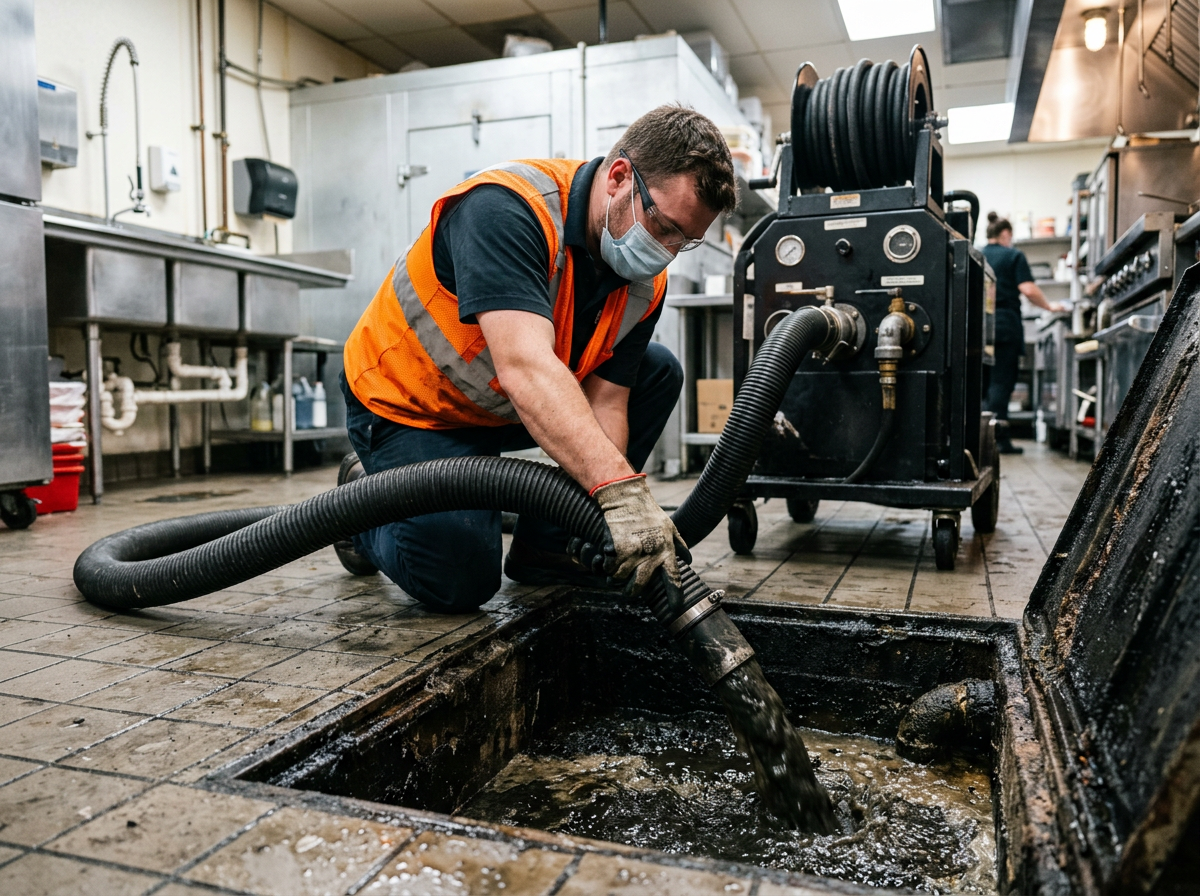
Grease trap pumping is the process of removing that accumulated waste — extracting the floating grease layer, the wastewater, and the settled solids from the trap using a vacuum truck, then transporting the waste to a licensed disposal facility for compliant processing. At Ozark Grease Pros, that facility is our licensed grease recycling plant in Siloam Springs, AR — the only regional processing facility in Northwest Arkansas.
Pumping is not optional. In Fayetteville, Springdale, Bentonville, Rogers, and across the NWA metro, restaurants are legally required under local FOG ordinances to maintain functioning grease traps and document regular service. Ozark Grease Pros provides that documentation — a signed manifest on every pump — so your compliance record is always current.
FOG (Fats, Oils & Grease) management is regulated at federal, state, and local levels. The EPA’s pre-treatment program requires commercial food service operators to control FOG discharge into municipal sewer systems. Arkansas ADEQ enforces state-level compliance. And at the local level, municipalities across Benton County and Washington County — including Fayetteville, Springdale, Rogers, and Bentonville — have adopted FOG ordinances that specify grease trap sizing, maintenance schedules, and documentation requirements for food service permits.
What that means practically: a restaurant operating without documented grease trap pumping is not just risking a clogged drain — it’s operating out of compliance with its food service permit. Health inspectors in NWA municipalities routinely request service manifests as part of FOG compliance checks. A missing or outdated record can result in a compliance finding, a fine, or in repeat cases, a permit suspension.
What a compliant grease trap pumping record looks like:
Ozark Grease Pros issues a fully compliant manifest on every pumping service call — waste goes to our licensed Siloam Springs facility, and your documentation is complete every time. |
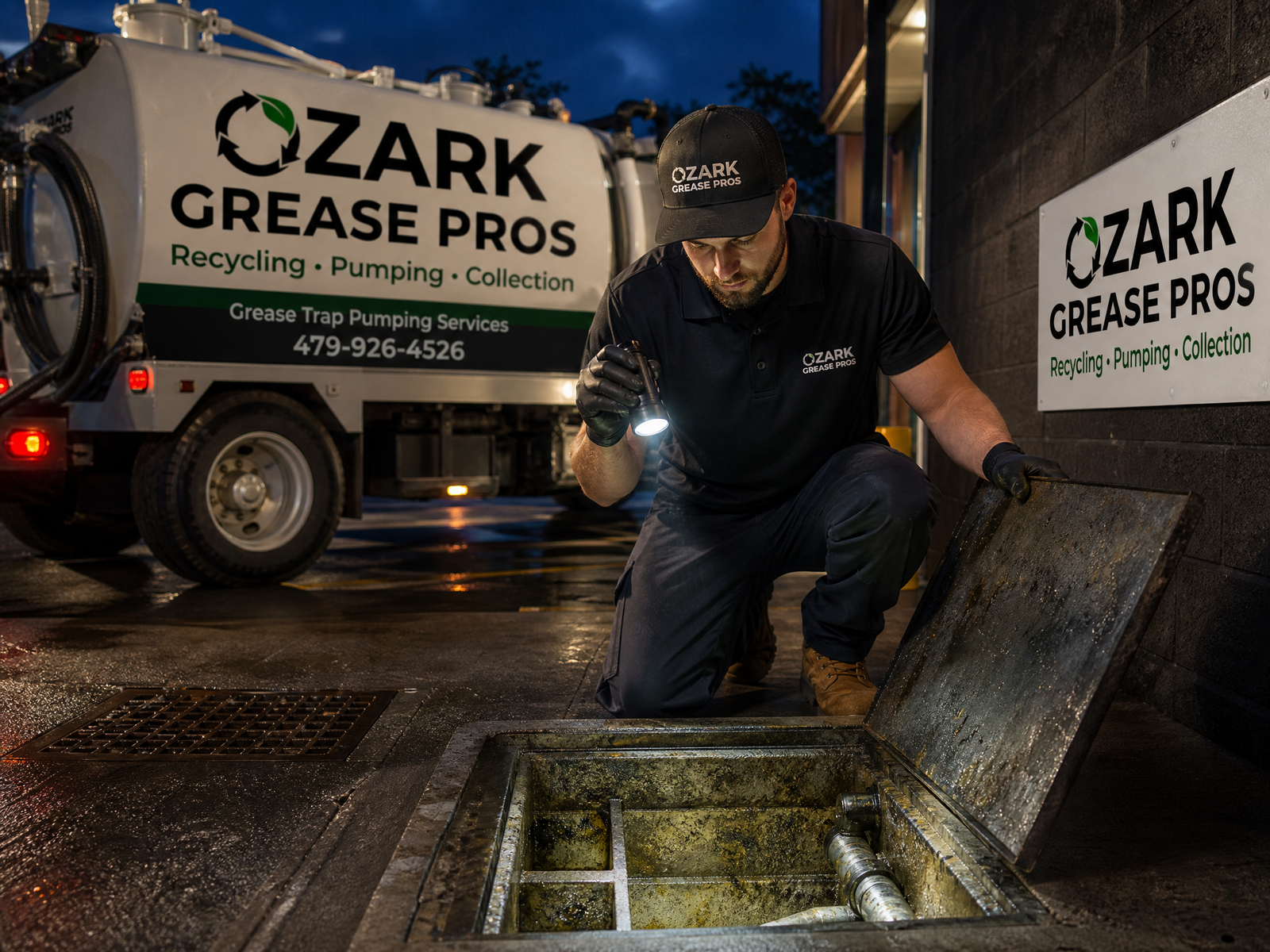
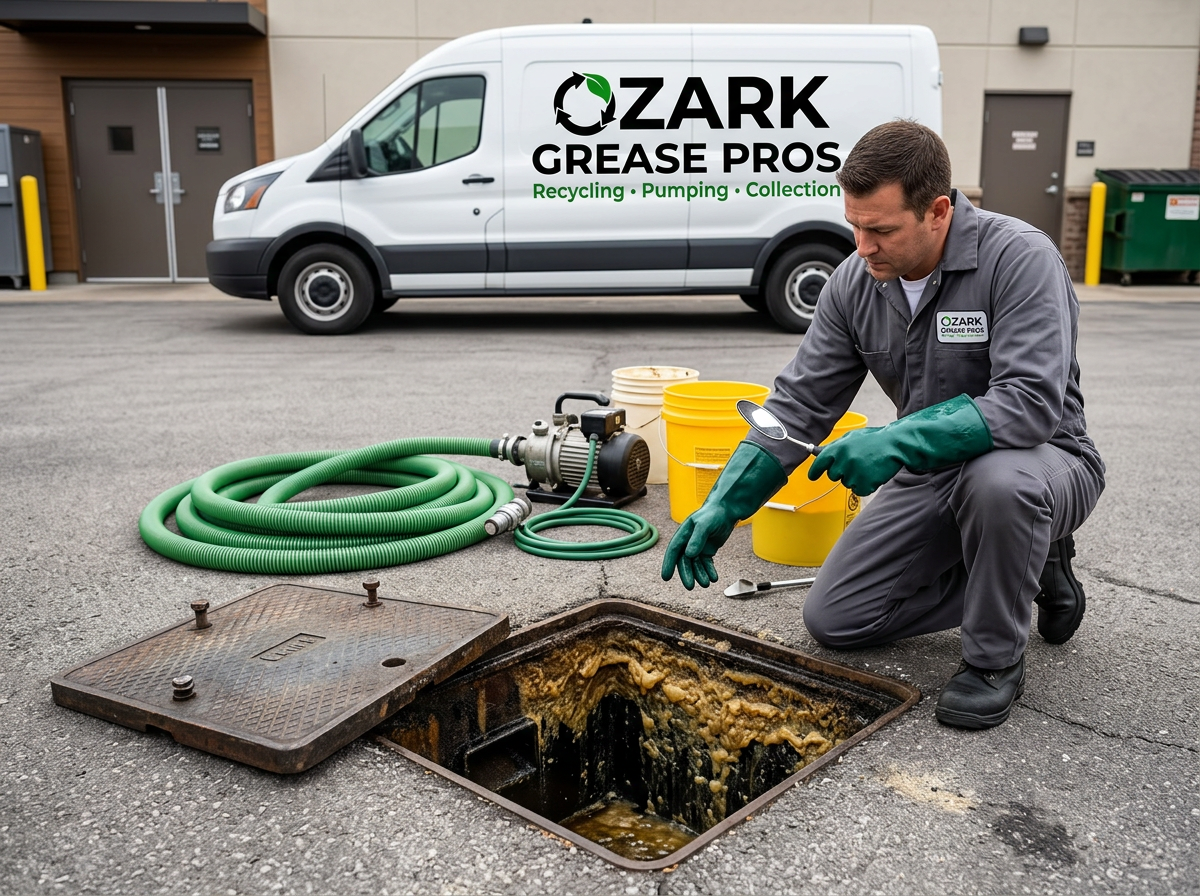
Before pumping begins, the technician inspects the grease trap: lid condition, grease layer depth, baffle integrity, and inlet/outlet pipe condition. This establishes the baseline condition for the service record and identifies any structural issues — cracked baffles, damaged lids, inlet blockages — that need to be documented or addressed.
The vacuum truck connects to the trap access point and removes all liquid waste — the floating grease layer at the top, the wastewater in the middle zone, and the settled solids (sludge) at the bottom. This three-layer waste profile is what makes grease trap management a specialized operation rather than a simple drain service.
Gallons removed are measured and recorded on the waste manifest. This is the billing baseline (per-gallon rate) and the compliance document. Every figure on the manifest — date, location, gallons, disposal destination — is accurate and verifiable.
With the trap emptied, the technician inspects baffles for damage or grease bypass, and checks inlet and outlet pipes for partial blockage. Grease bypass around damaged baffles is a common cause of compliance failures — catching it during a pump visit prevents a much larger problem.
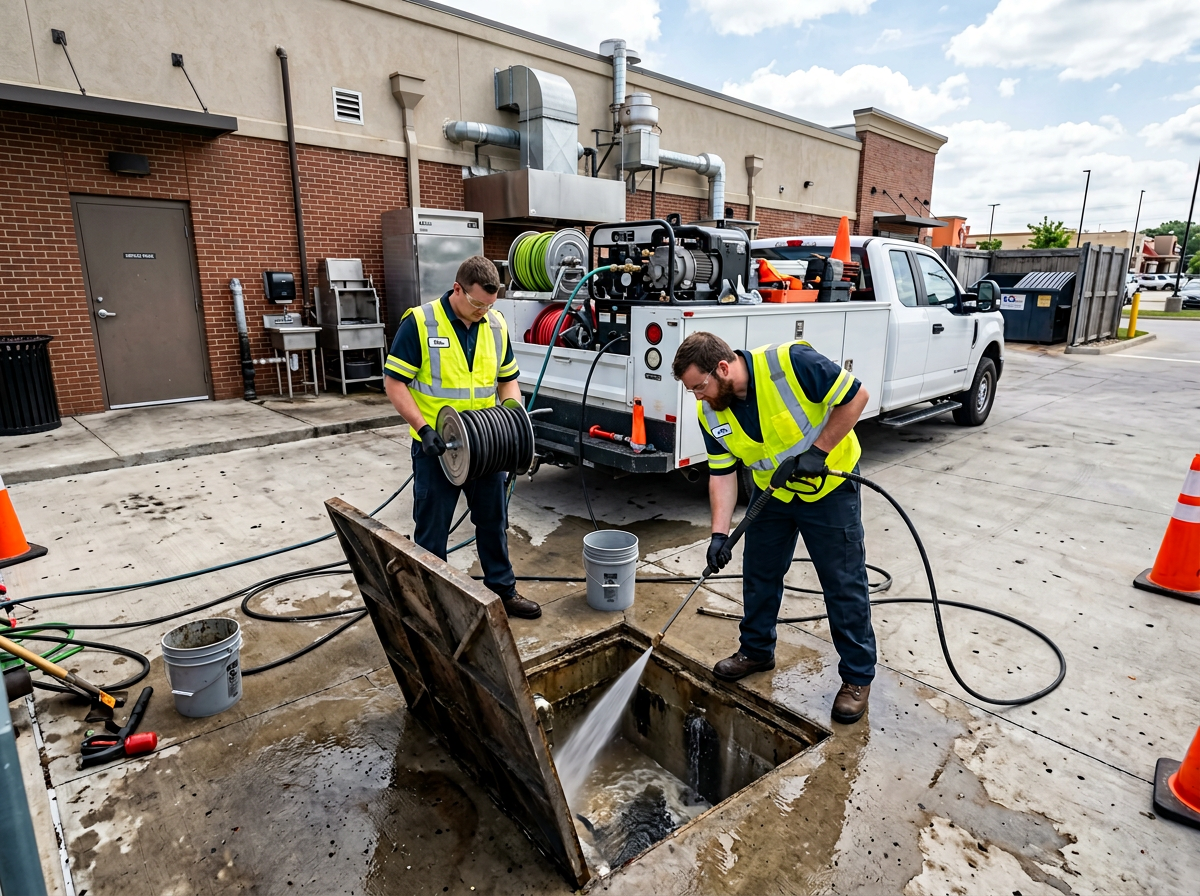
For scheduled maintenance accounts or combined pump-and-clean visits, interior walls, baffles, and surfaces are scrubbed to remove residual solids and bacteria film. This step is what separates a full cleaning service from a pump-only visit. See our grease trap cleaning page for full details on this phase.
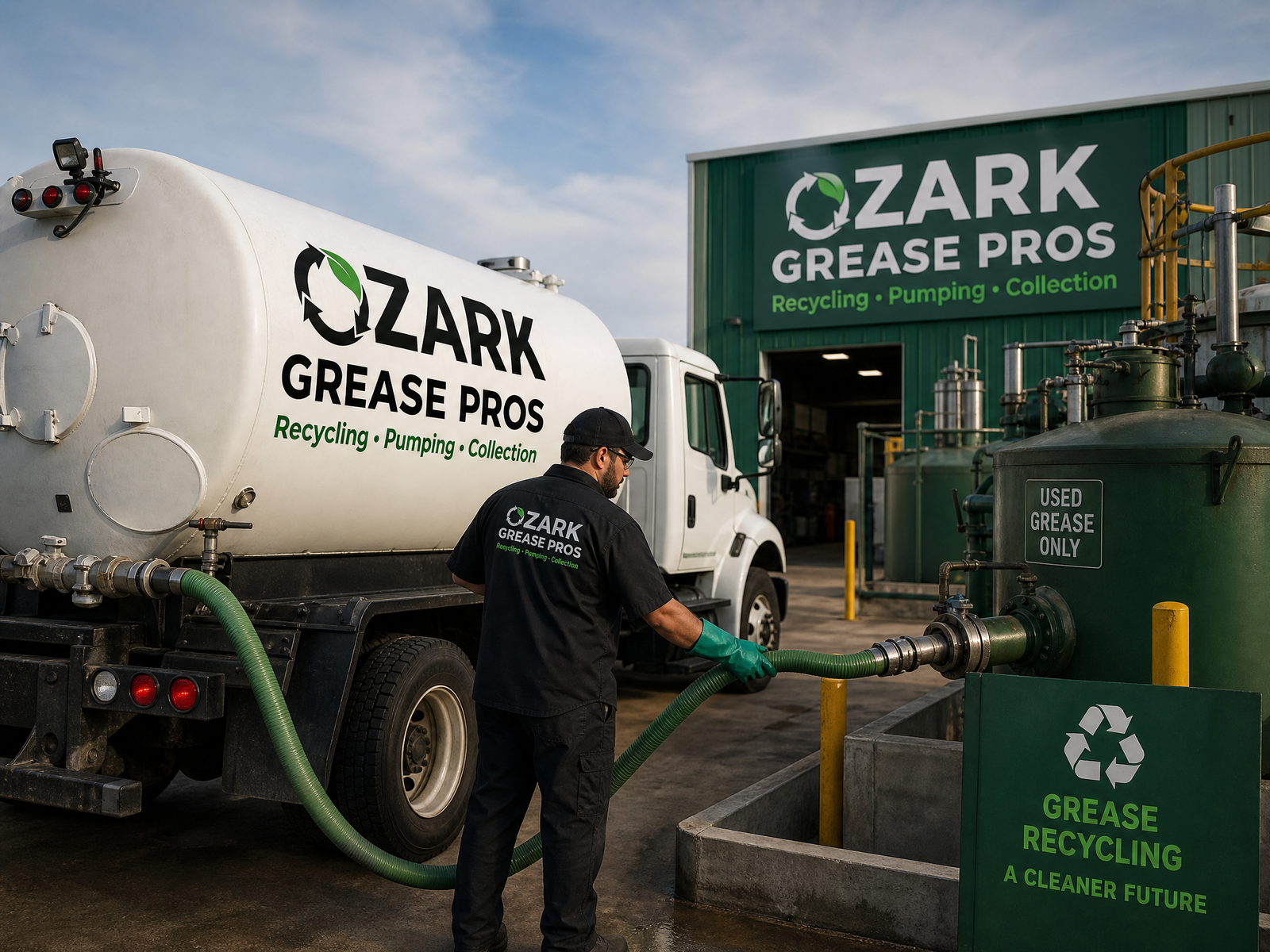
All waste removed from the trap is transported to our licensed grease processing and recycling facility in Siloam Springs, AR. It does not go to Tulsa. It does not go to an unlicensed site. It is processed on-site: oil is extracted for recycling and water is treated to Arkansas ADEQ discharge standards.
A signed waste manifest is issued, documenting the complete service record. The restaurant receives a copy. Ozark Grease Pros retains a copy. This is the document your health department will request if a FOG compliance inspection is conducted at your facility.
Restaurant Type & Trap Scenario | Recommended Pump Frequency |
High-volume QSR / fast food (250–500 gal trap, frying-heavy menu) | Every 30 days. High FOG output fills traps quickly — monthly service is the standard for most QSR operators in NWA. |
Full-service casual dining (500–1,000 gal trap, moderate FOG) | Every 30–60 days. Moderate output — bi-monthly service typically keeps compliance current. |
Cafeteria or institutional kitchen (500–1,500 gal trap) | Every 60–90 days. Lower per-meal FOG output, but high daily volume. Monitor fill rate and adjust. |
Restaurant with large grease interceptor (1,000–2,000+ gal) | Quarterly typically appropriate. Larger capacity means slower accumulation — but quarterly still meets most municipal minimums. |
Bar or light food service (limited frying, 250–500 gal trap) | Every 60–90 days. Lower FOG generation — but trap still needs regular documented service for permit compliance. |
Multi-location restaurant group | Varies by location. Ozark Grease Pros builds a consolidated schedule per site — one account, coordinated service calendar, single manifest archive. |
Any restaurant with persistent odors between pump cycles | Increase frequency immediately. Odor recurrence between scheduled pumps indicates the trap is reaching capacity sooner than the current schedule allows. |
The 25% Rule — and what NWA municipalities actually require: While the 25% capacity rule is an industry standard and is referenced in many EPA pre-treatment guidelines, municipal requirements in Fayetteville, Springdale, Rogers, and Bentonville may specify their own minimum service frequencies or require inspection documentation at set intervals. Contact us for city-specific compliance guidance, or see our FOG compliance guide for NWA. |
Service Type | Rate | Billing Method | Who It Applies To |
Direct grease trap pumping | ~$0.40/gal | Per gallon on signed manifest | Restaurants contracting service directly with Ozark Grease Pros |
Grease disposal tipping fee | $0.20/gal | Per manifest gallon, billed to hauler | B2B pumping companies hauling waste to our Siloam Springs facility |
Combined pump + cleaning | ~$0.40/gal | Per gallon — cleaning included in scope | Scheduled maintenance accounts — full service per visit |
Emergency grease trap pumping | Contact us | Per service — priority scheduling rate | Overflow, backup, or pre-inspection emergency situations |
Scheduled maintenance contract | Custom rate | Monthly or quarterly flat contract | Multi-location groups or high-frequency accounts |
Trap Size | Full Capacity Cost(@ $0.40/gal) | Typical Pump Volume(25–35% fill) | Estimated Cost Range |
250 gallons | $100 | 63–88 gal | $25–$35 |
500 gallons | $200 | 125–175 gal | $50–$70 |
750 gallons | $300 | 188–263 gal | $75–$105 |
1,000 gallons | $400 | 250–350 gal | $100–$140 |
1,500 gallons | $600 | 375–525 gal | $150–$210 |
2,000 gallons | $800 | 500–700 gal | $200–$280 |
Note: actual cost per service call is based on manifest volume (gallons actually pumped), not trap nominal capacity. The table above shows ceiling estimates only. See our full grease trap cost guide for complete pricing data, NWA vs. Tulsa disposal comparisons, and per-city rate context →
Stage | What Happens |
Trap reaches 25% capacity | FOG efficiency drops — trap begins passing more grease into the sewer line. Pumping is overdue at this point per industry and most municipal standards. |
Trap reaches 50–75% capacity | Noticeable odor from kitchen drains. Slower drain flow. Grease begins bypassing the trap into the municipal sewer — a compliance violation in most NWA municipalities. |
Trap reaches or exceeds capacity | Sewage backup into kitchen drains and floor drains is possible. Kitchen may become non-operational. Health department notification risk is high. |
Health inspection finds non-compliant trap | Compliance finding issued. Immediate service required before re-inspection. Fines possible depending on municipality and severity. Repeat violations can result in permit suspension. |
Grease enters municipal sewer system | Sewer line blockage downstream. Potential sewer overflow into streets or waterways. Environmental damage — and the restaurant’s FOG record will reflect the violation. |
Emergency service required | Emergency pump rates apply — higher cost than scheduled service. Kitchen downtime during service. No prior manifests on file makes the compliance situation worse, not better. |
The cost of a missed pump — in emergency service rates, compliance fines, kitchen downtime, and permit risk — far exceeds the cost of a scheduled maintenance program. Schedule recurring grease trap pumping with Ozark Grease Pros →
Grease Trap Cleaning
Scheduled Maintenance Programs
Grease Recycling Facility
Grease Trap Pumping Cost Guide