Grease Trap Cleaning for Northwest Arkansas Restaurants
Full interior cleaning — not just a pump-out. Residual solids removed. Bacteria eliminated. Odor sources cleared. Every job documented with a signed manifest for your FOG compliance records.
Manifest on Every Clean
Residual Solids Removed
Odor Eliminated at Source
NWA Facility-Backed
What Is Grease Trap Cleaning — and Why Pumping Alone Isn't Enough
Most restaurant operators know they need their grease trap pumped. Fewer understand that pumping and cleaning are two different operations — and that a pump-out without thorough cleaning leaves behind exactly the material that causes the most problems.
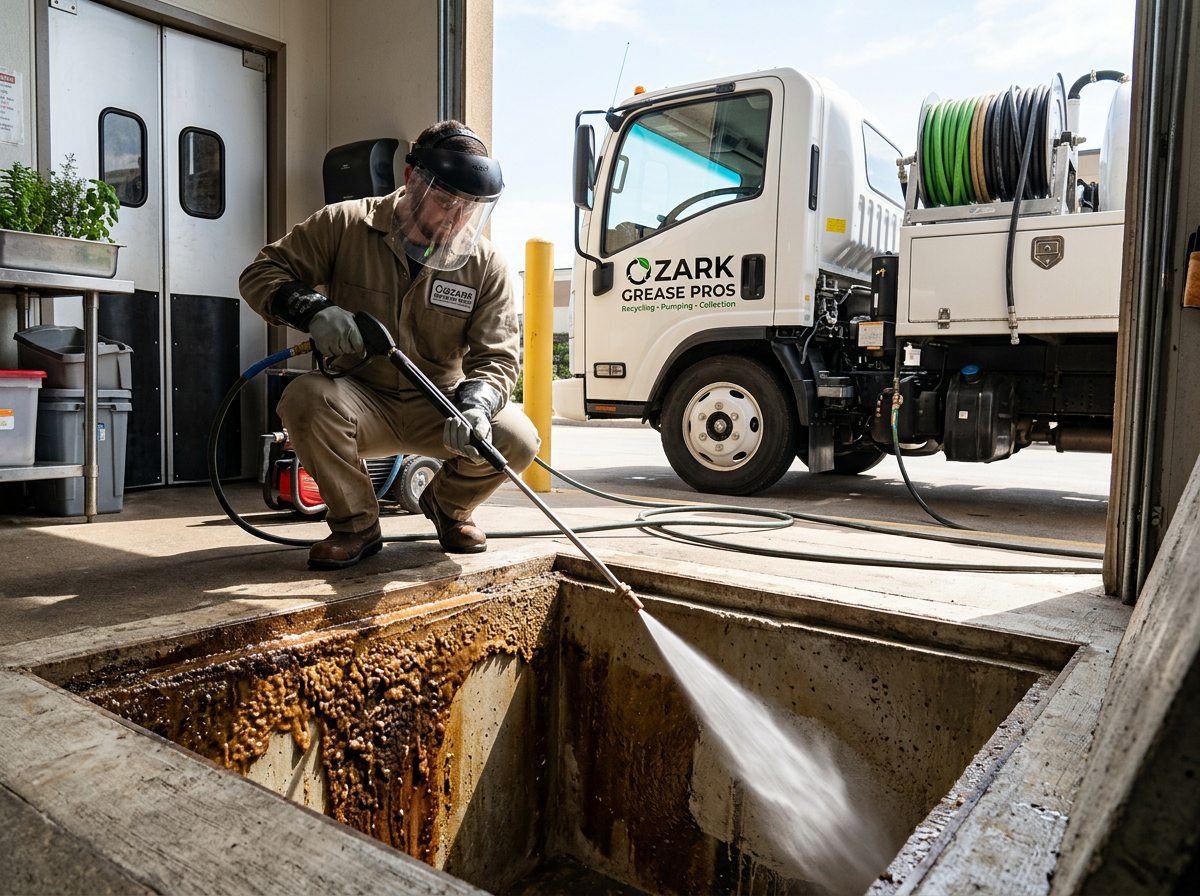
Grease trap pumping removes the bulk liquid waste: the floating grease layer, the wastewater in the middle, and most of the settled solids at the bottom. But it doesn’t remove everything. Residual solids adhere to interior walls and baffles. A grease-and-bacteria film builds up on surfaces over time. That accumulation is the source of most grease trap odor complaints — and, if left untreated, significantly reduces trap efficiency long before the next scheduled pump cycle.
Grease trap cleaning is the step that follows pumping — or is integrated into the same service visit. Interior walls are scrubbed. Baffles are cleared. Residual material is removed. The result is a trap operating at its designed capacity, with odor sources eliminated rather than temporarily reduced.
Pumping vs. Cleaning — the key distinction: Grease Trap Pumping: Removes liquid waste, floating grease, and most settled solids. Fast, high-volume. Billed per gallon on manifest. Required for FOG compliance documentation. Grease Trap Cleaning: Removes residual solids, wall buildup, baffle deposits, and bacteria film that pumping doesn’t fully reach. Eliminates odor at the source. Extends time between pump cycles. Combined Service (Recommended): Pump-out + full cleaning in a single visit. The standard for health-inspection-ready conditions. What Ozark Grease Pros delivers on scheduled maintenance accounts. |
How Grease Trap Cleaning Works — Step by Step
Here’s what the Ozark Grease Pros cleaning process looks like from start to finish. Every step happens on-site at your restaurant. The entire service — pump-out plus cleaning — typically takes 30 to 90 minutes depending on trap size and accumulation level.
Inspection & Condition Assessment
Before any material is removed, our technician inspects the trap — lid, baffles, inlet and outlet pipes, and grease layer depth. This establishes baseline condition, confirms trap sizing is appropriate for kitchen volume, and identifies any structural issues (cracks, baffle damage, blockages) that need to be flagged.
Full Pump-Out of Liquid Waste
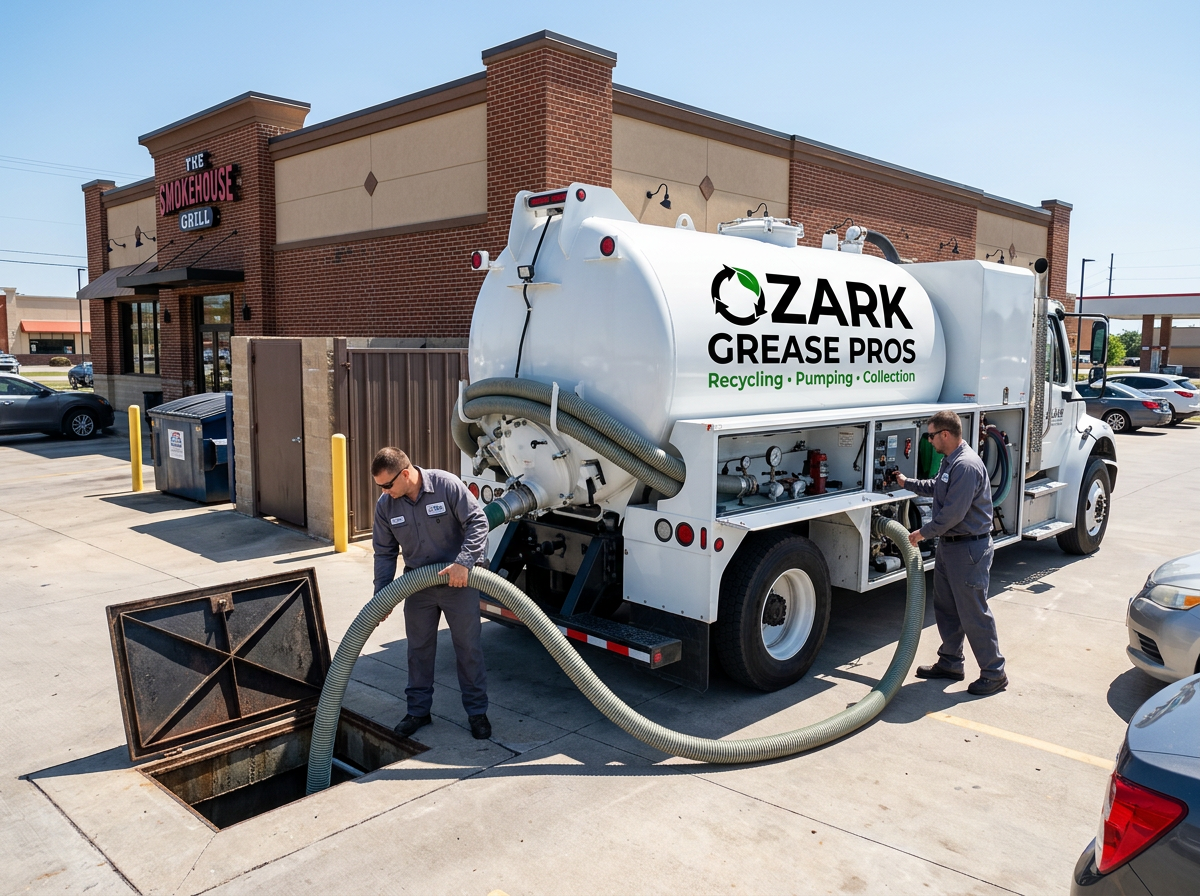
The vacuum truck removes all liquid waste from the trap — floating grease, wastewater, and settled solids. Volume is measured and recorded for the manifest. This is the pumping phase; cleaning follows.
Interior Wall & Baffle Scrubbing
With the trap emptied, our technician scrubs interior walls, baffles, and all surfaces that accumulate grease film and bacterial deposits. This is the step that pumping alone skips — and the step that eliminates the source of most trap odor complaints.
Residual Solids Removal
Material dislodged during scrubbing is removed from the trap. No residual solids are left behind. The trap should be visually clean when this step is complete — not just empty.
Inlet & Outlet Pipe Check
Inlet and outlet pipes are checked for blockage or grease buildup that could restrict flow. If partial blockages are found, they are cleared as part of the cleaning process. Any significant issues are noted on the service record.
Water Refill to Operating Level
Default descClean water is added to bring the trap back to its working water level. This maintains the water seal that prevents sewer gas from entering the kitchen drain lines — a step that matters for odor control.
Manifest Documentation & Sign-Off
A signed waste manifest is issued documenting: service date and location, gallons removed, disposal destination (our Siloam Springs facility), and technician signature. This is your FOG compliance record. Keep it on file for health department review.
Which Restaurants Need Grease Trap Cleaning — and How Often
Every commercial food service operation with a grease trap needs cleaning — the question is frequency. Pumping frequency and cleaning frequency are not always the same: some traps can be pumped quarterly but benefit from cleaning on a shorter cycle if the kitchen generates heavy grease output.
Restaurant Type / Situation
Recommended Cleaning Approach
High-volume fast food / QSR (frying-heavy menu)
Combined pump + clean every 30–60 days. High FOG output means rapid wall accumulation — cleaning at every pump cycle is standard.
Full-service / casual dining restaurant
Combined pump + clean every 60–90 days. Moderate FOG output — cleaning integrated with scheduled pump-out.
Cafeteria / institutional kitchen
Every 60–90 days. Large trap volumes but typically lower wall accumulation relative to frying-heavy QSR operations.
Restaurant with persistent odor complaints
Immediate cleaning service, then reassess frequency. Odor complaints almost always indicate bacterial accumulation that pumping alone has not addressed.
Pre-health inspection
Schedule combined pump + clean 7–14 days before any known health inspection. Clean trap condition = clean inspection record.
Restaurant with large grease interceptor
Quarterly cleaning typically appropriate — larger interceptors accumulate more slowly, but interior surfaces still require scrubbing on a regular cycle.
New restaurant / first service
Start with a full cleaning baseline regardless of trap condition. Establishes the starting point for your scheduled maintenance program.
Grease Trap Cleaning & FOG Compliance in Northwest Arkansas
FOG (Fats, Oils & Grease) compliance requirements in Northwest Arkansas are set at both state and municipal levels. Across Benton County and Washington County — covering Fayetteville, Springdale, Rogers, Bentonville, and surrounding communities — food service operators are required to maintain grease traps in proper working condition and, in most cases, to provide documented service records on demand.
A trap that has been pumped but not cleaned may technically have the volume capacity to pass an inspection — but if a health inspector observes heavy wall accumulation, baffle blockage, or odor from bacterial buildup, that can still trigger a compliance finding. The manifest from a combined pump-and-clean service is more defensible documentation than a pump-only record.
What Ozark Grease Pros provides on every cleaning service call:
|
Grease Trap Cleaning Cost in Northwest Arkansas
Grease trap cleaning is typically priced as a combined service with pumping — you receive a full pump-out and interior cleaning in a single visit. Pricing is based on the volume pumped (per gallon) with the cleaning included in the service scope. Separate cleaning-only visits (without pumping) are available for specific situations.
Service Configuration
Pricing
Combined pump-out + cleaning (standard)
~$0.40/gal based on manifest volume — cleaning included in service scope
Cleaning-only visit (post-pump residual)
Contact for current rate — typically a flat service fee
Emergency cleaning (overflow / pre-inspection)
Contact for rate — priority scheduling available
Scheduled maintenance program (pump + clean)
Custom contract pricing — monthly or quarterly cycle
Multi-location restaurant group
Consolidated billing — contact us for group pricing
For a complete breakdown of grease trap service pricing — including per-gallon rates, trap size comparisons, and how cleaning affects the overall cost vs. pump-only service — see our cost guide. View the full grease trap cost guide →
Grease Trap Cleaning in Your City
Ozark Grease Pros provides professional grease trap cleaning across Northwest Arkansas. Select your city for local service details, compliance context specific to your municipality, and scheduling information for your area.
Why NWA Restaurants Choose Ozark Grease Pros for Grease Trap Cleaning
Grease trap cleaning is only as good as what happens to the material after it leaves your restaurant. Here’s what sets our cleaning service apart from other NWA options:
What We Do
Why It Matters
Manifest on every cleaning visit
Your compliance record is complete — not just for pump-outs
Waste to our Siloam Springs facility
NWA's only recycling facility — oil recycled, water treated compliantly
Interior scrub included as standard
Not an add-on or upsell — it's what cleaning means
Scheduled programs, not reactive calls
You're protected before the trap fails — not scrambling after
Specialist grease-only company
Our technicians clean grease traps every day — not once a month
Service documentation available on request
Every record is available if an inspector asks for proof
Grease Trap Cleaning — Frequently Asked Questions
What is the difference between grease trap pumping and grease trap cleaning?
Pumping removes the bulk liquid waste — floating grease, wastewater, and most settled solids. Cleaning goes further: interior walls are scrubbed, baffles are cleared, residual solids are removed, and bacteria buildup is eliminated. Pumping empties the trap. Cleaning restores it to operating condition. Most restaurants benefit from combined pump-and-clean service rather than pump-only.
How often should a grease trap be cleaned?
Frequency depends on kitchen volume and menu type. High-volume frying operations (fast food, QSR) typically need combined pump-and-clean service every 30–60 days. Full-service restaurants usually run a 60–90 day cycle. If you’re experiencing persistent odors between pump cycles, that’s a sign cleaning frequency needs to increase.
Can I just pump my grease trap without cleaning it?
You can — but pump-only service leaves residual solids, bacteria film, and grease deposits on interior surfaces that continue to break down and cause odor. Over time, this accumulation reduces trap efficiency and can cause premature fill-up between scheduled pump cycles. Cleaning at the time of pumping is more cost-effective than separate pump and clean visits.
Does grease trap cleaning satisfy FOG compliance requirements in Northwest Arkansas?
Yes — combined grease trap cleaning and pumping service, documented with a signed manifest, satisfies FOG compliance documentation requirements in Fayetteville, Springdale, Bentonville, Rogers, and other NWA municipalities. Ozark Grease Pros issues a manifest on every service call that documents date, volume, and disposal destination at our licensed Siloam Springs facility.
Why does my grease trap still smell after it's been pumped?
Persistent odor after pumping is almost always caused by bacteria colonies and grease film on interior walls and baffles that the pump-out didn’t reach. A thorough interior cleaning — scrubbing walls, clearing baffles, removing residual solids — eliminates the odor source. If your current provider is only pumping without cleaning, the odor problem will keep returning.
How long does grease trap cleaning take?
A combined pump-out and cleaning typically takes 30 to 90 minutes depending on trap size, accessibility, and accumulation level. Larger grease interceptors or traps with heavy buildup from extended periods between service will take longer. Our technician will give you an estimated time when scheduling.
Related Grease Management Services
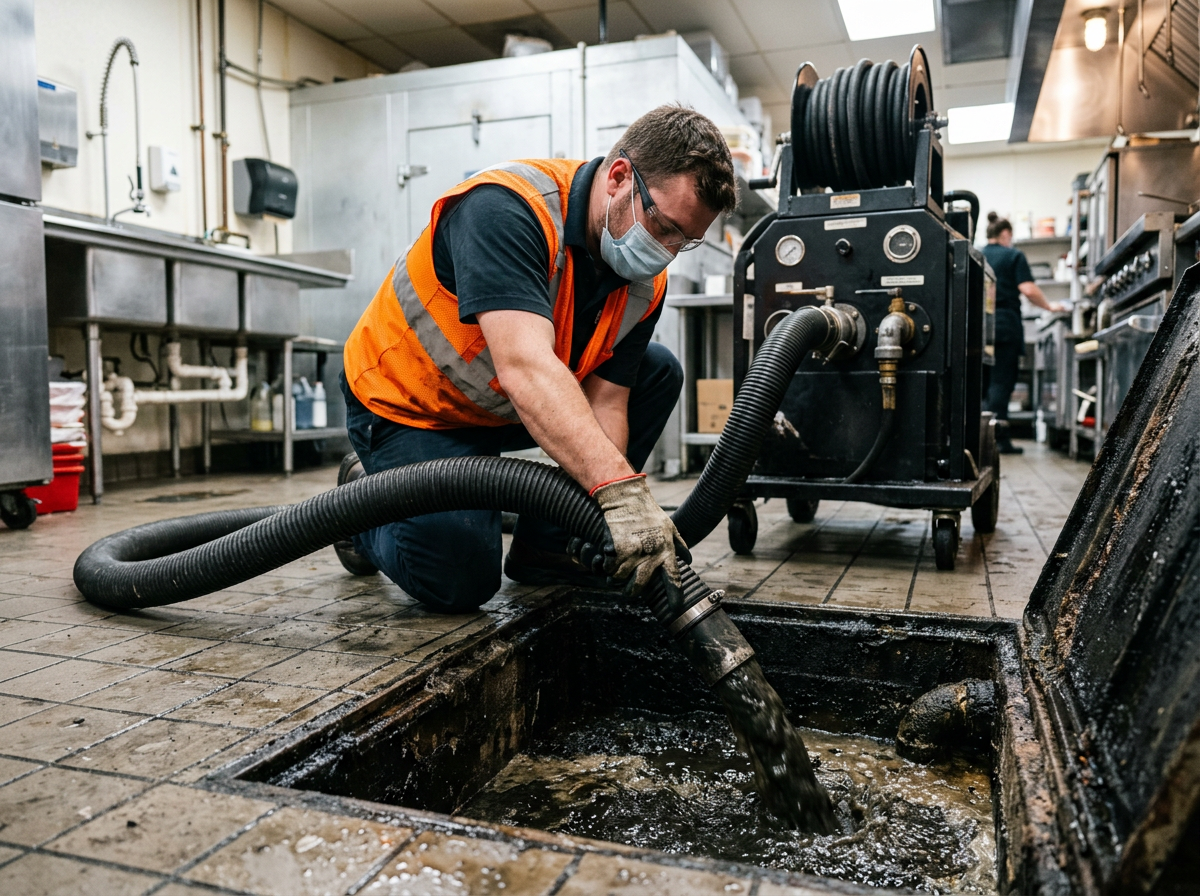
Grease Trap Pumping
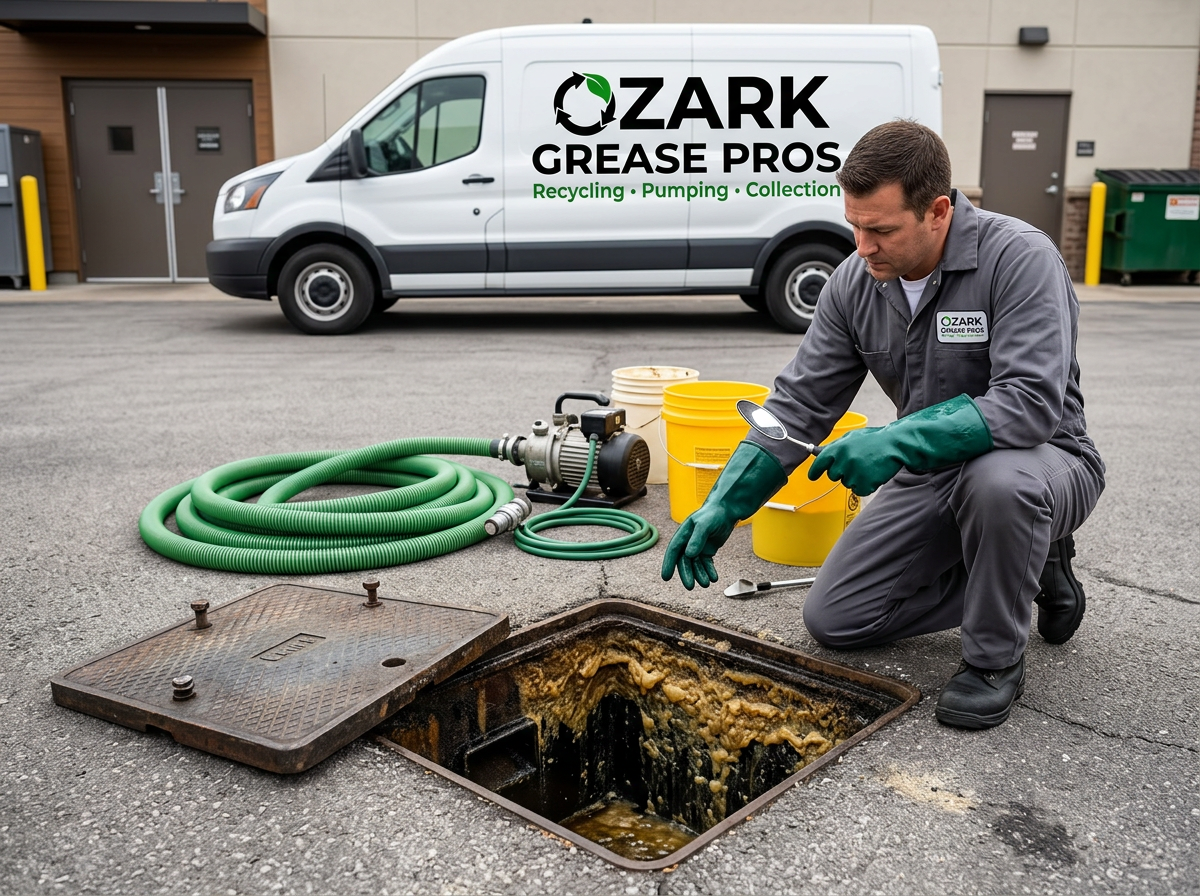
Scheduled Maintenance
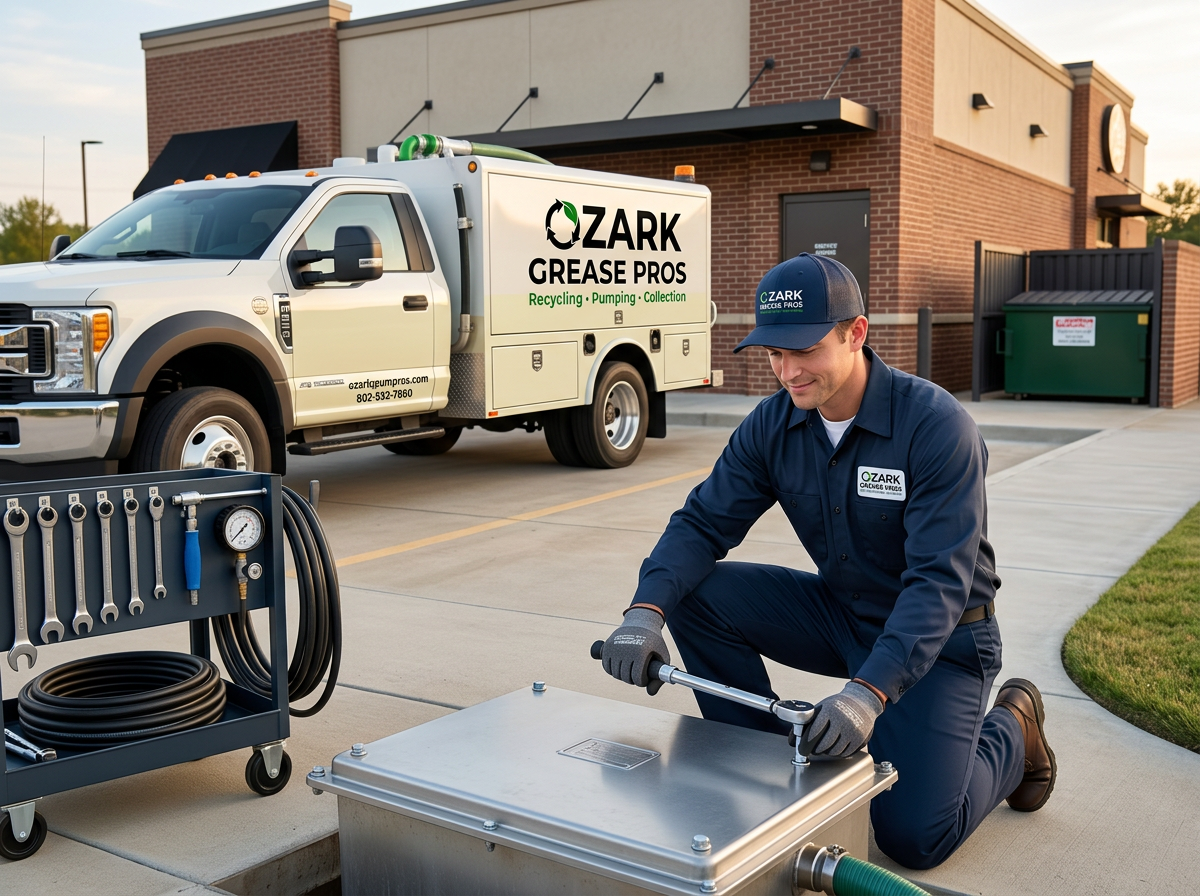
FOG Compliance Guide
Schedule Grease Trap Cleaning for Your NWA Restaurant
Get on a scheduled pump-and-clean cycle that keeps your kitchen compliant, your trap odor-free, and your health inspection records clean. Every service includes a signed manifest.