Bin placement and scheduled pickup for your restaurant’s used cooking oil — managed alongside your grease trap service under one account. No overflow bins. No drain disposal violations. No separate vendor to manage.
Bin Placement Included
Scheduled Pickup
Fire & Drain Safe
One Account — Both Services
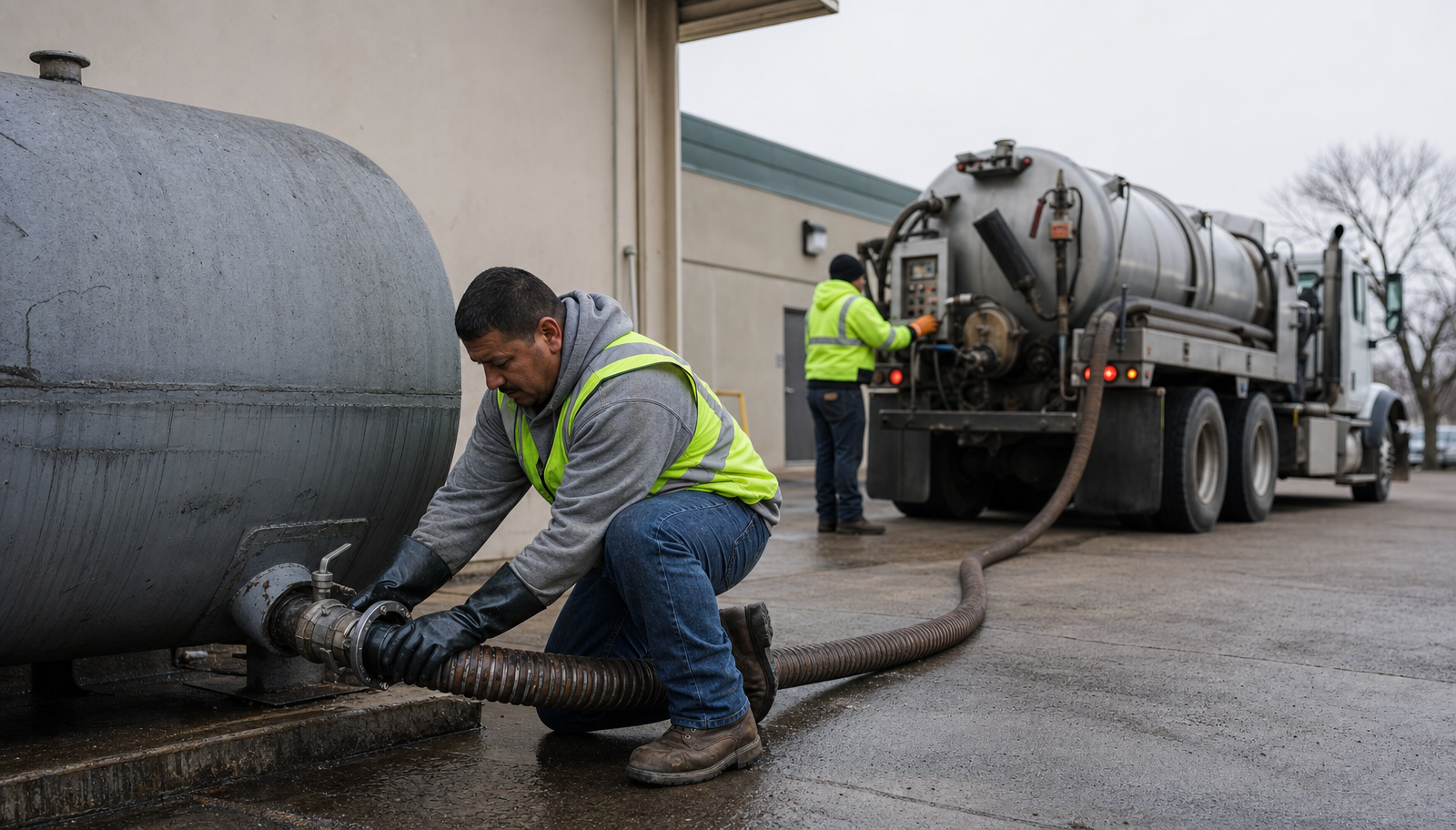
Used cooking oil (UCO) is the fryer oil, shortening, and other cooking fats that a restaurant accumulates during normal kitchen operations. It is not the same as grease trap waste — it’s a higher-quality, more recoverable material that comes directly from the fryer or cooking vessel rather than from the drain system.
Grease trap pumping removes the mixed FOG waste that drains from kitchen sinks and equipment into the trap. UCO collection removes the cooking oil itself — before it enters the drain at all. These are two parallel waste streams that every food-service kitchen generates, and they require two separate collection methods.
Most restaurants currently manage UCO disposal independently from their grease trap service — often through a separate vendor, or informally through disposal methods that create safety and compliance risks. Ozark Grease Pros eliminates that split by handling both under a single service account.
UCO vs. Grease Trap Waste — key distinctions: Used Cooking Oil (UCO): High-quality recovered cooking fat from fryers and cooking vessels. Higher oil content, more valuable for recycling. Collected from bins placed at the restaurant — not from the drain system. Grease Trap Waste: Mixed FOG and wastewater removed from the trap via vacuum truck. Lower oil concentration, regulated as a waste stream, requires licensed disposal and manifest documentation. Why both matter: Restaurants that manage UCO properly — keeping it out of the drains — reduce the FOG load entering their grease trap, which extends time between pump cycles and reduces total disposal cost. |
Used cooking oil is not a neutral waste product. Managed carelessly, it creates three distinct and serious risks for a restaurant kitchen — fire hazard, drain and FOG violation, and health department compliance exposure:
Fire Hazard |
Overfull UCO containers are a serious fire risk. Spilled oil near heat sources, ignition points, or kitchen equipment can cause flash fires. Improperly stored UCO in back-of-house areas creates conditions that fail fire code inspections. Prevention: properly sized bin + scheduled pickup before overflow. |
Drain & FOG Violation |
Pouring UCO down the drain — even in small amounts — contributes directly to the FOG load in the grease trap and the sewer system. This is a FOG ordinance violation in most NWA municipalities and accelerates grease trap fill rate, increasing service frequency and cost. Prevention: UCO bin as the only disposal method — no drain disposal. |
Health Code Compliance |
Health inspectors in NWA municipalities check for proper UCO storage and disposal during kitchen inspections. An unlabeled container, an overfull bin, or evidence of drain disposal are inspection findings. A documented UCO collection program demonstrates active management. Prevention: documented pickup schedule + properly maintained bins. |
The UCO collection service is straightforward — we place a properly sized collection bin at your restaurant, and we pick it up on a scheduled cycle before it reaches capacity. Here is the complete service model:
Service Component
What Happens
Initial consultation
We assess your kitchen output — which cooking methods you use, volume of oil per service period, and kitchen layout — to recommend the right bin size and pickup frequency.
Bin placement
We place a sealed, clearly labeled UCO collection container at the appropriate back-of-house location. Bin size is matched to your output volume — undersized bins create overflow risk; oversized bins take up unnecessary space.
Kitchen staff protocol
Your kitchen staff empties cooking vessels into the bin using the provided pump or spigot system. UCO goes into the bin — not down the drain, not into the trash. Simple, repeatable protocol.
Scheduled pickup
We pick up on a preset schedule — weekly, bi-weekly, or monthly depending on your oil volume. Pickup is coordinated with your kitchen's operating hours to minimize disruption.
Oil processing
Collected UCO is transported to our Siloam Springs facility alongside grease trap waste. Oil is processed for recycling — primarily biodiesel feedstock — closing the loop from kitchen output to recovered fuel.
Account consolidation
UCO service is billed under your existing Ozark Grease Pros account alongside grease trap service. One invoice, one contact, one service relationship.
Any restaurant that uses a fryer, grill, or cooking vessel with oil or fat generates UCO. Volume varies by menu type and service period — a fryer-heavy QSR generates far more UCO than a light-menu cafe. Here’s how UCO collection applies by restaurant type:
Restaurant Type / Kitchen Profile
UCO Output & Collection Recommendation
Fast food / QSR (fryer-heavy)
High UCO volume. Daily fryer filtering generates significant oil accumulation. Weekly or bi-weekly pickup typical. Bin sizing: large. Primary fire and FOG risk if not managed.
Casual dining with full fryer operation
Moderate to high UCO volume depending on menu. Bi-weekly to monthly pickup. Combined with grease trap service on coordinated schedule.
Chicken / seafood specialist (high frying)
High UCO volume. Fryer oil turns over frequently — weekly pickup often required. These kitchens generate the most recoverable UCO relative to kitchen size.
Pizza / Italian (fryer use varies)
Moderate UCO. Monthly pickup typically adequate unless fryer operation is significant. Coordinate with grease trap schedule.
Asian cuisine (wok and fryer heavy)
High UCO volume from wok cooking and deep frying. Bi-weekly pickup recommended. UCO management directly impacts grease trap fill rate.
Breakfast diner / café (griddle and fryer)
Moderate UCO from griddle grease and fryer oil. Monthly pickup. Griddle grease can be combined with fryer oil collection depending on composition.
Bar with limited food service
Lower UCO volume. Monthly or quarterly pickup. Even low-volume kitchens benefit from documented disposal over informal methods.
Most NWA restaurants currently manage UCO and grease trap service through separate vendors — a grease trap pumping company for the trap and either a dedicated UCO collector, a rendering company, or informal disposal for the cooking oil. Managing two separate vendors means two separate schedules, two invoices, two points of contact, and two potential gaps in service coverage.
Consolidating UCO collection under the same Ozark Grease Pros account that handles your grease trap service eliminates that complexity:
Two-Vendor Model
Ozark Grease Pros One-Account Model
Two separate service schedules to track
Single coordinated service calendar — trap + UCO on one schedule
Two invoices per month
One consolidated invoice covering all grease management services
Two contacts to call when something goes wrong
One contact for every grease management issue, UCO or trap
UCO pickup may not align with trap service visit
UCO pickup coordinated with trap service runs where possible
Separate documentation trails
Service records for both UCO and trap consolidated in one account archive
Risk of UCO vendor gap during busy periods
UCO pickup part of the same service relationship that keeps your trap current
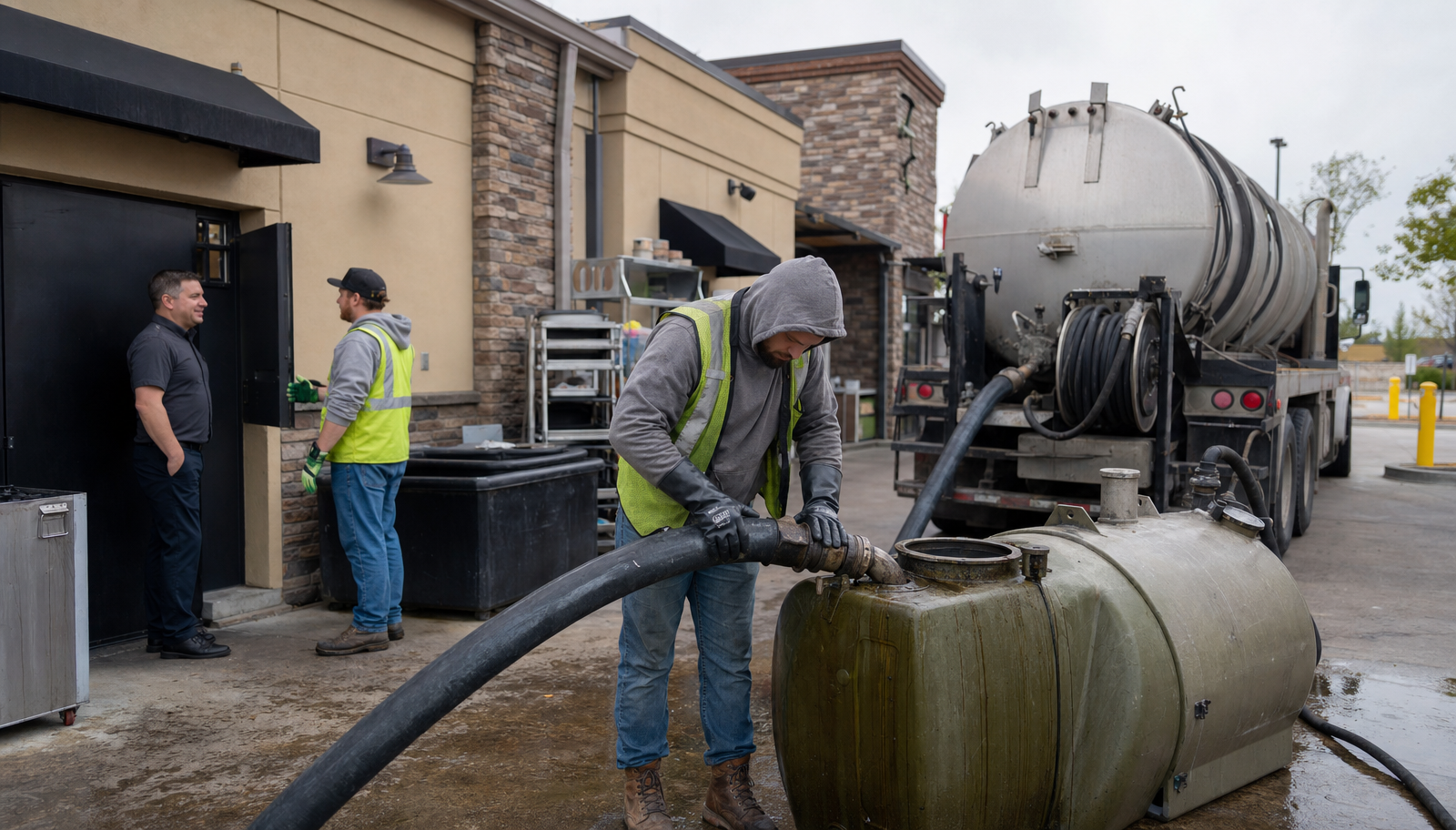
There is a direct operational relationship between UCO management and grease trap fill rate that most restaurant operators don’t know about. Every ounce of cooking oil that goes down a kitchen drain instead of into a UCO collection bin ends up in the grease trap — increasing FOG concentration, accelerating trap fill rate, and shortening the interval between pump cycles.
Restaurants with well-managed UCO programs — where kitchen staff consistently dispose of cooking oil into collection bins rather than down drains — consistently show lower grease trap fill rates per service period than comparable kitchens without UCO programs. In practical terms: better UCO management can extend the time between pump cycles, reducing the annual cost of grease trap service.
The operational connection:
|
Used cooking oil collected from NWA restaurants by Ozark Grease Pros is processed for recycling at our Siloam Springs facility. UCO is a higher-quality oil fraction than grease trap waste — it hasn’t been mixed with water or settled solids — which means more of it can be recovered and directed to productive downstream use.
The primary downstream application for quality UCO is biodiesel production — a renewable fuel that can substitute for petroleum diesel in vehicles and industrial equipment. UCO-derived biodiesel is one of the cleanest feedstocks in the biodiesel supply chain, with a carbon footprint significantly lower than petroleum-based alternatives. When your restaurant properly collects and disposes of cooking oil through a UCO program, that oil directly contributes to a cleaner fuel supply rather than becoming solid waste or a sewer system problem.
Full details on our grease recycling process → | Used cooking oil recycling specifics →
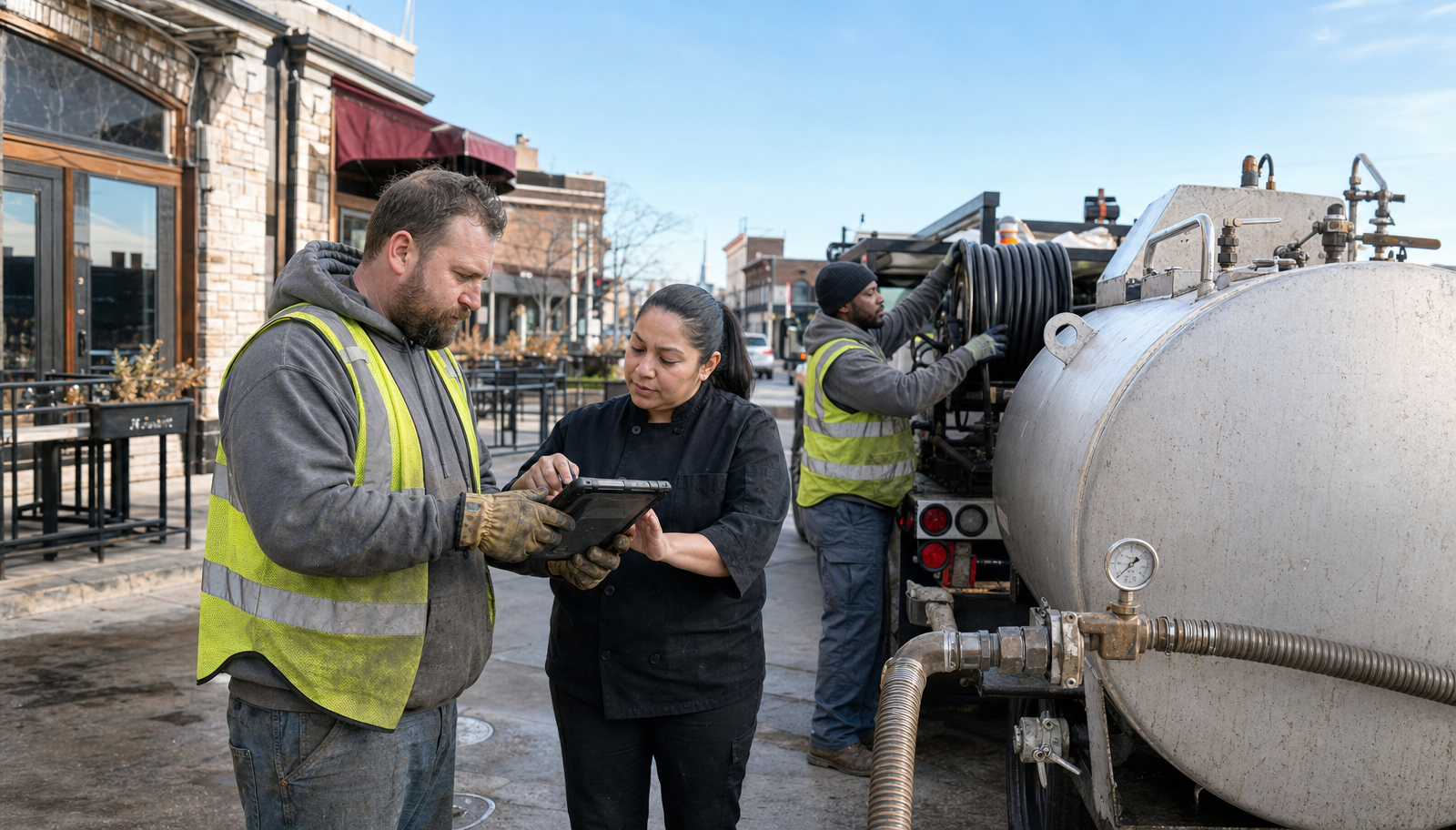
UCO collection service is available to restaurants across the NWA primary service area — Fayetteville, Springdale, Bentonville, Rogers, Siloam Springs, and surrounding communities within our 80-mile service corridor. Contact us to confirm UCO pickup availability for your specific location, particularly for secondary and outlying market areas.
View our full service area → | Contact us to set up UCO collection →
Pouring UCO down the drain is a FOG ordinance violation in most NWA municipalities and directly contributes to grease trap FOG load — accelerating fill rate and increasing your pumping frequency. It also adds to sewer system FOG accumulation, which is exactly the problem that grease traps exist to prevent. A UCO collection bin is the only compliant disposal method for commercial kitchen cooking oil.
Pickup frequency depends on your kitchen’s oil output — frying volume, number of fryers, and service periods all affect how quickly your bin fills. High-volume frying operations (QSR, chicken specialists) typically need weekly or bi-weekly pickup. Casual dining and lower-volume kitchens usually run monthly. We assess your output and recommend a frequency on initial setup — and we adjust if your volume changes.
Yes — this is the Ozark Grease Pros model. UCO collection and grease trap service are managed under a single account with coordinated scheduling, one consolidated invoice, and one contact for all grease management questions. For restaurants already using our grease trap service, adding UCO collection is a straightforward account addition.
Bin size is matched to your kitchen’s UCO output volume. We offer options ranging from smaller under-counter containers for low-volume operations to larger back-of-house collection units for high-volume frying kitchens. See our restaurant grease bin service page for full details on bin sizes, placement options, and specifications.
Yes — directly. Cooking oil that goes into a UCO collection bin instead of down a drain doesn’t enter the grease trap. Restaurants with proper UCO programs consistently show lower grease trap fill rates, which can extend the interval between pump cycles and reduce annual trap service cost. UCO management and grease trap management are complementary — managing both optimizes your total grease disposal program.
UCO collected by Ozark Grease Pros is processed at our Siloam Springs facility for recycling — primarily directed to biodiesel feedstock production. UCO is a premium feedstock for biodiesel compared to grease trap waste because of its higher oil content and lower contamination. Your restaurant’s collected cooking oil becomes a component of renewable fuel rather than landfill waste.
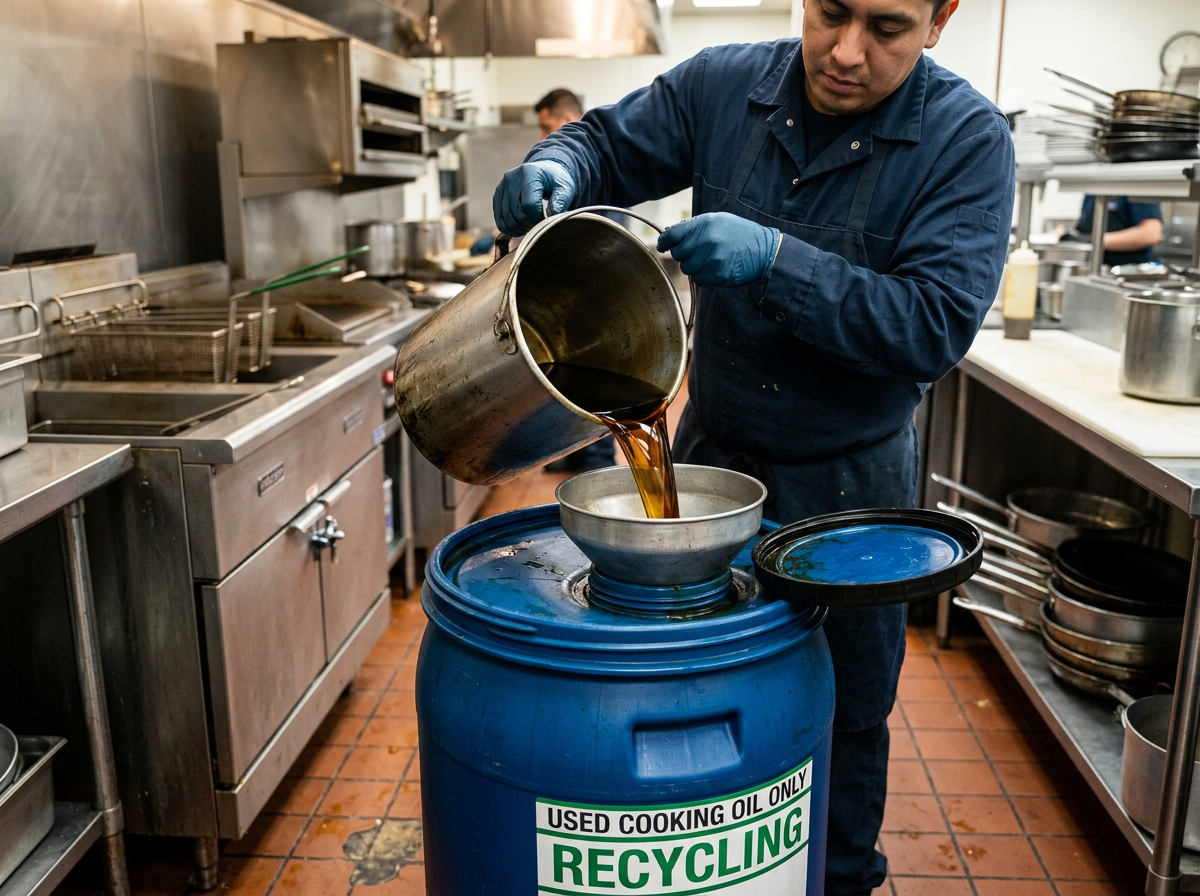
Used Cooking Oil Recycling
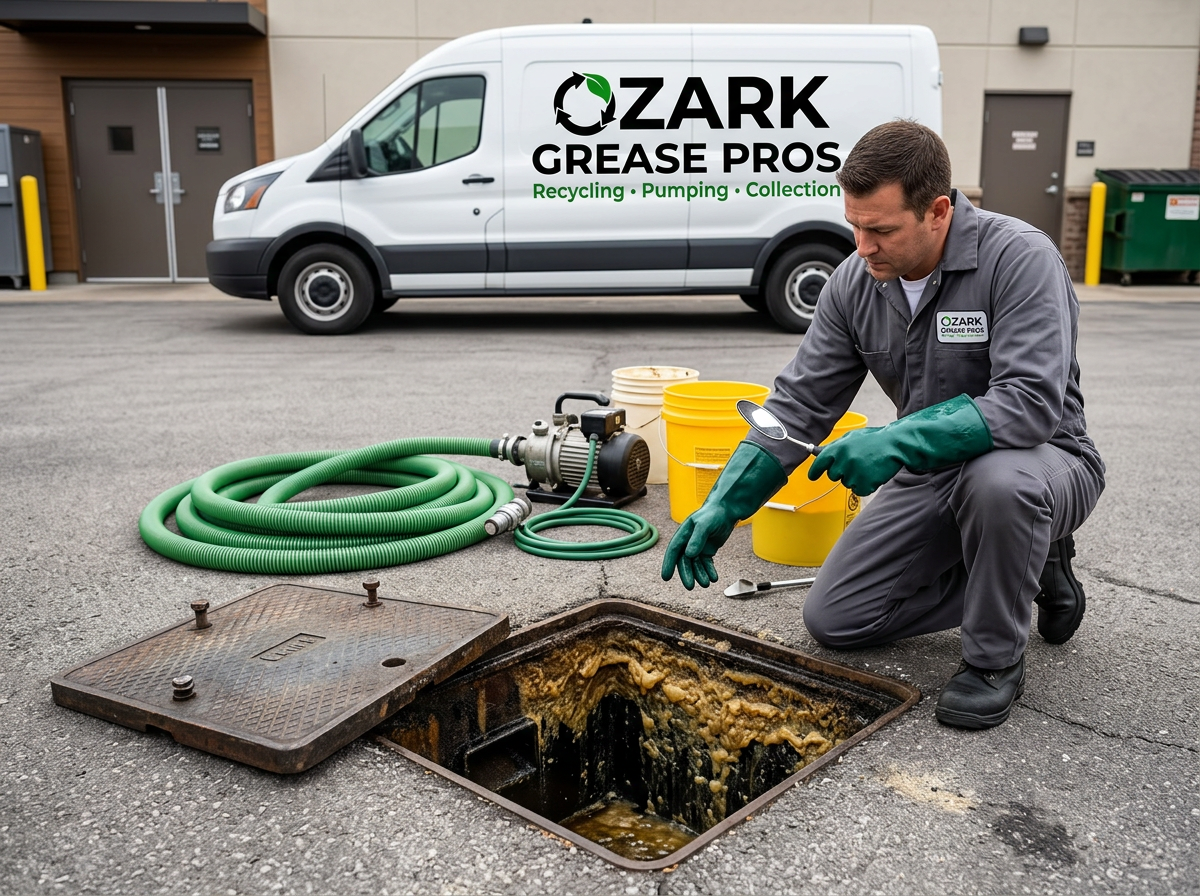
Restaurant Grease Bin Service
Whether you’re an existing Ozark Grease Pros grease trap client or setting up service for the first time — UCO collection integrates into the same account, the same schedule, and the same invoice. One company. All your grease.