
When Ozark Grease Pros collects your restaurant’s used cooking oil, it doesn’t go to landfill. It goes to our Siloam Springs facility for processing into biodiesel feedstock — a renewable fuel that replaces petroleum diesel. NWA’s responsible UCO disposal option.
Biodiesel Feedstock
Siloam Springs Facility
Landfill Diverted
Carbon Footprint Reduced
Not all UCO collection services recycle the oil — many simply dispose of it as waste. The distinction matters for restaurants that want their environmental claims to be accurate, and for operators who want to understand what happens to the material after pickup.
At Ozark Grease Pros, collected UCO goes to our Siloam Springs processing facility and is directed to a recycling pathway — not landfill, not wastewater treatment, and not informal dumping. Here’s the precise meaning of each outcome:
Outcome
What It Means
UCO to biodiesel feedstock
The most valuable recycling pathway. Collected UCO is processed and sold as feedstock for biodiesel production — a renewable fuel that can substitute for petroleum diesel in transportation and industrial applications. Carbon lifecycle advantage over petroleum diesel is well documented.
UCO to biofuel/energy
Lower-quality UCO that doesn't meet biodiesel feedstock specs may be directed to industrial biofuel applications — including co-processing at power generation facilities. Still recycling, not disposal.
UCO to animal feed
In some regulatory frameworks, food-grade UCO can be directed to animal feed ingredient production. Applicability depends on oil quality and state regulations — contact us for current pathway details.
UCO to landfill (what we avoid)
Cooking oil in landfill generates methane during decomposition and contributes to leachate contamination. This is the outcome that UCO collection and recycling programs exist to prevent. Every gallon recycled is a gallon diverted from this outcome.
UCO down the drain (violation)
Cooking oil poured down a kitchen drain enters the grease trap and the sewer system — contributing to FOG blockages, sanitary sewer overflows, and environmental contamination. A FOG ordinance violation in most NWA municipalities.
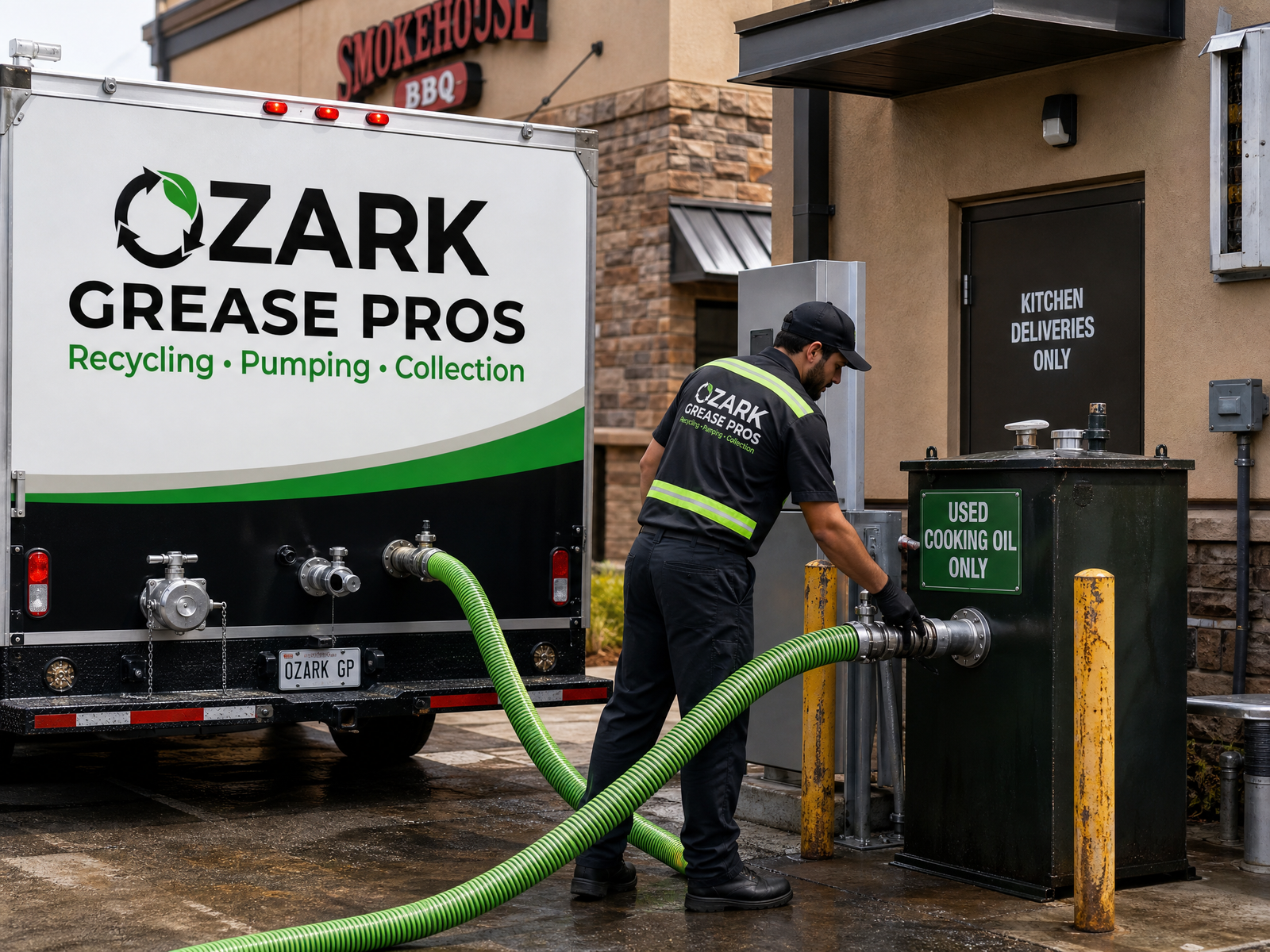

Biodiesel is a renewable fuel produced from vegetable oils, animal fats, and recycled cooking grease through a chemical process called transesterification. It can be used in diesel engines either in its pure form (B100) or blended with petroleum diesel (B20, B5, etc.) and produces significantly lower lifecycle carbon emissions than petroleum diesel.
UCO is one of the most valued feedstocks in the biodiesel supply chain — specifically because it is a waste product that has already served its primary purpose. Using UCO as biodiesel feedstock does not compete with food production (unlike virgin vegetable oils), and it converts material that would otherwise create disposal and environmental problems into a usable energy resource.
Why UCO makes better biodiesel feedstock than alternatives: No food vs. fuel competition: UCO is a waste product — diverting it to biodiesel does not displace food production, unlike soy or palm oil feedstocks. It converts a problem into a resource. Lower carbon intensity: The carbon intensity of UCO-based biodiesel is among the lowest of any liquid fuel, primarily because the feedstock is a waste material with a near-zero carbon allocation from its original production. Established supply chain: UCO from commercial kitchens is one of the most reliable biodiesel feedstock sources — consistent quality, high volume, and geographically distributed collection infrastructure (collection services like ours). Regulatory recognition: UCO biodiesel qualifies under the EPA Renewable Fuel Standard (RFS) as an advanced biofuel, meaning it generates Renewable Identification Numbers (RINs) that have value in the biofuel compliance market. |
Not all UCO from a commercial kitchen is identical in quality. The recycling pathway available for a given batch of UCO depends on its quality — primarily its free fatty acid (FFA) content, moisture level, and degree of contamination with non-oil material. Here’s what restaurant operators should know:
Quality Factor
What It Means for Recycling
Free Fatty Acid (FFA) content
FFA increases as oil is repeatedly heated. High FFA content reduces suitability for standard biodiesel production — it may be directed to pre-treatment before biodiesel processing or to alternative biofuel pathways. Fresher oil changes produce lower FFA UCO with higher recycling value.
Moisture content
Water in UCO reduces its energy value and creates challenges in biodiesel transesterification. Keeping UCO bins covered and not mixing water with oil improves quality. Condensation from steam in commercial kitchens is the primary moisture source.
Contamination
Food particles, breading, and solid debris mixed into UCO reduce quality. Standard fryer filtration before oil disposal removes most solid contamination. Gross contamination may divert UCO from biodiesel to lower-value pathways.
Oil type
Vegetable oils (soybean, canola, corn) and animal fats (lard, beef tallow) have different chemical compositions and slightly different processing requirements. Most commercial kitchen UCO is a blend — processed accordingly.
Storage temperature
UCO stored in very cold conditions can solidify, particularly animal fat blends. This doesn't reduce recycling value but does affect pumpability at pickup. Bins positioned in temperature-controlled back-of-house areas are preferable.
For NWA restaurant operators: the quality of your UCO does not change the collection program — we collect regardless of quality level. But restaurants that maintain good kitchen practices (regular fryer filtration, covered bins, no water mixing) consistently produce higher-quality UCO that generates more recycling value downstream. See our restaurant grease bin service page for kitchen protocol guidance →
Northwest Arkansas is a sustainability-aware market. Walmart’s global supply chain sustainability programs have created a culture of environmental accountability in the region’s business community. The University of Arkansas has an active sustainability research agenda. And a growing generation of NWA diners expects food service operators to demonstrate environmental responsibility in how they operate.
UCO recycling is one of the most tangible and measurable environmental contributions a restaurant can make. The impact of switching from informal UCO disposal to a documented recycling program is specific and quantifiable:
Environmental outcomes per gallon of UCO recycled (rather than landfilled or drained):
|
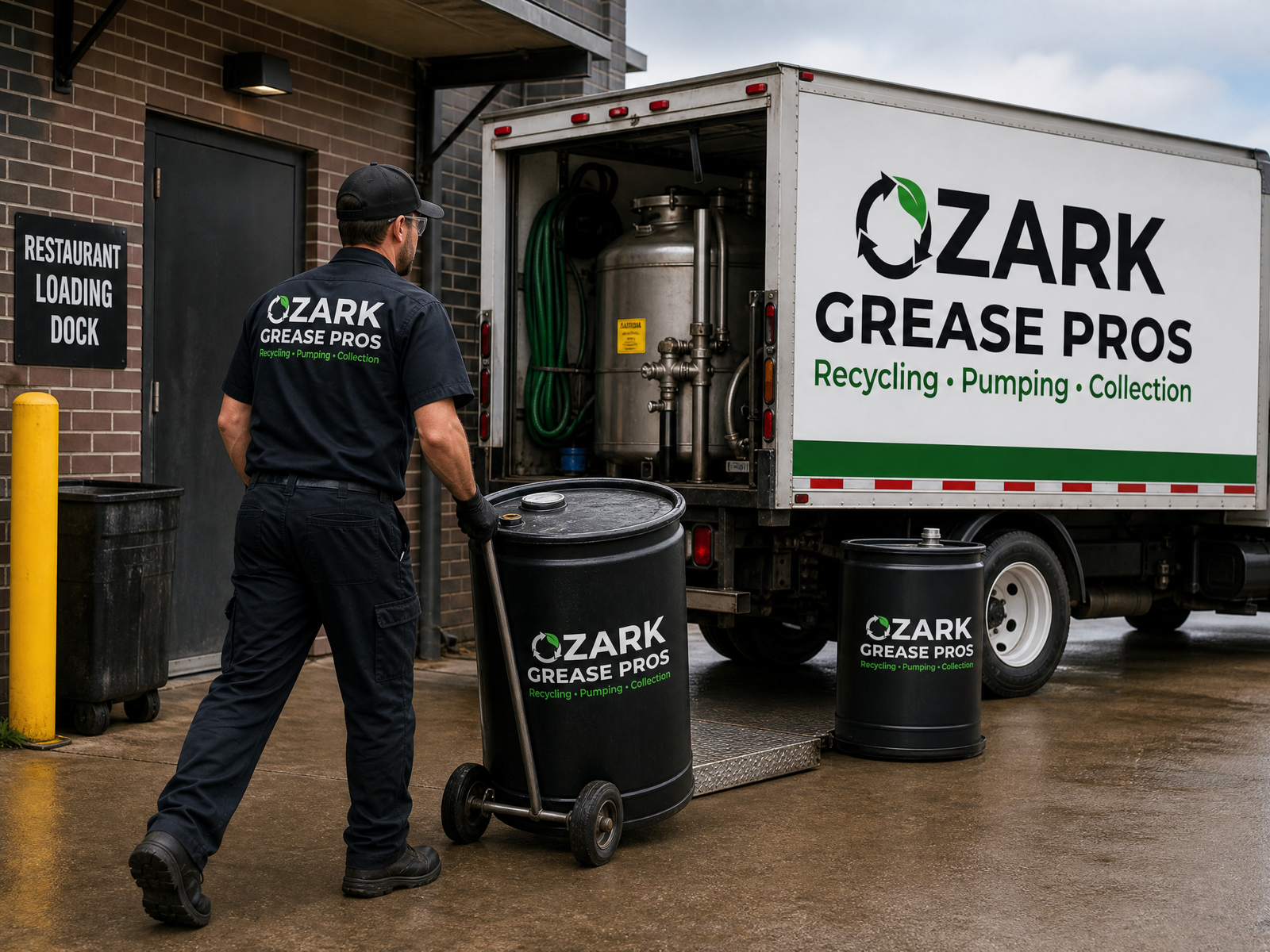
For NWA restaurants operating under sustainability commitments — including franchise operators with corporate ESG requirements, hotel food service programs with green certification targets, and independent restaurants pursuing sustainability recognition — UCO recycling documentation provides measurable evidence of responsible waste management.
Ozark Grease Pros can provide documentation of UCO collection and recycling that supports sustainability reporting. Here’s what that documentation looks like and how it supports common reporting frameworks:
Documentation Type
What It Supports
Collection volume records (gallons/period)
Quantifiable waste diversion metric — reporting period totals suitable for sustainability reports, ESG disclosures, and green certification applications
Recycling destination confirmation
Demonstrates material is recycled (biodiesel/biofuel pathway) rather than disposed — required for waste diversion claims
Collection schedule records
Documents ongoing program participation — relevant for continuous improvement tracking and year-over-year comparison
Processor identity and type
Confirms the recycler is a licensed facility processing UCO into a specified downstream product — needed for supply chain documentation
Restaurant sustainability programs that benefit from UCO recycling documentation:
Contact us to discuss documentation formats and reporting frequency for your specific program. Contact Ozark Grease Pros →
Both UCO and grease trap waste can be processed at our Siloam Springs facility — but they are different materials with different processing requirements and different recycling outcomes. Understanding the distinction helps restaurants accurately describe their waste management practices:
Factor
Used Cooking Oil (UCO)
Grease Trap Waste
Source
Direct from fryer / cooking vessel
Mixed with wastewater through drain system
Oil content
High — 80–95% oil fraction
Lower — mixed with water and solids, 20–50% oil fraction
Quality
Premium feedstock for biodiesel
Lower-quality recovered grease; some biodiesel, some lower-value applications
Collection method
Bin emptied at source
Vacuum truck extraction from trap
Water treatment
Not required — minimal water content
Required — wastewater phase treated to ADEQ discharge standards
Primary recycling
Biodiesel feedstock (high RIN value under EPA RFS)
Biodiesel, industrial biofuel, or lower-value recovery
Regulatory doc
Collection record / recycling certificate
Waste manifest — FOG compliance requirement
Both services are available through Ozark Grease Pros — and managing both under one account creates a complete kitchen grease management program that addresses every waste stream your kitchen generates. View the full grease recycling overview →
For journalists and editors covering NWA food industry, sustainability, or environment: Northwest Arkansas is one of the fastest-growing restaurant markets in the mid-South — and it sits at the intersection of Walmart’s sustainability supply chain influence, the University of Arkansas sustainability research community, and a food service sector that is increasingly measured against environmental benchmarks. Yet commercial kitchen waste management — grease in particular — has received almost no attention in this market. Ozark Grease Pros is the only company in NWA operating both a grease trap pumping service and a licensed on-site recycling facility that processes restaurant waste — including UCO — into biodiesel feedstock. Every gallon of cooking oil collected from NWA restaurants through our program is converted to renewable fuel rather than landfilled or dumped. At regional scale, the volume is meaningful. For media inquiries, story pitches, or data requests on NWA restaurant UCO recycling volumes and environmental impact: |
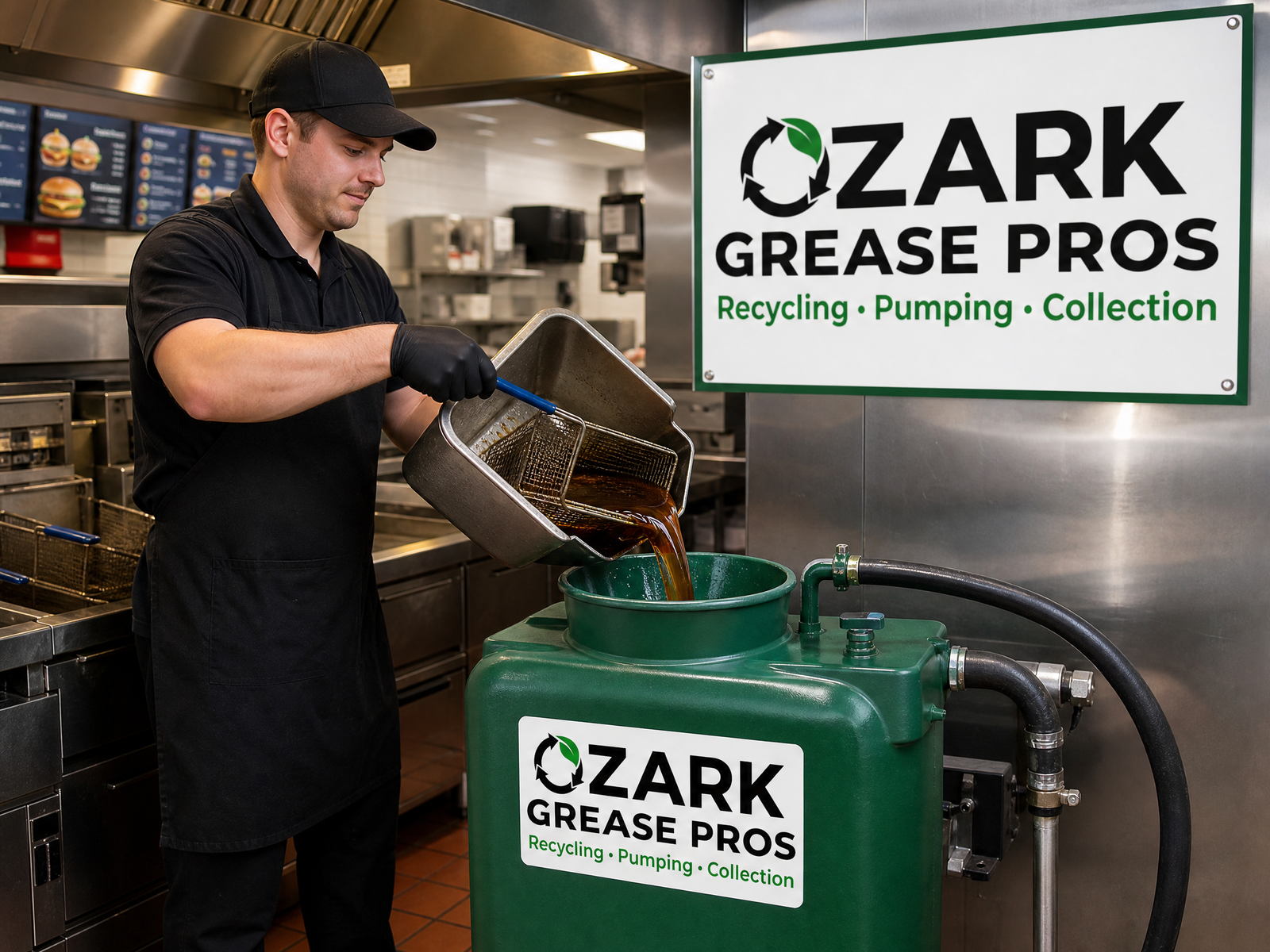
UCO collection and recycling is available to restaurants across the NWA primary service area — Fayetteville, Springdale, Bentonville, Rogers, Siloam Springs, and surrounding communities. All collected UCO is processed at our Siloam Springs, AR facility.
At Ozark Grease Pros, collected UCO is directed to a recycling pathway — primarily biodiesel feedstock production. Biodiesel made from UCO is a renewable fuel that can substitute for petroleum diesel. We do not landfill UCO. This is material recovery, not disposal.
Biodiesel is a renewable fuel produced from vegetable oils, animal fats, and recycled cooking grease through transesterification. UCO-based biodiesel is one of the most carbon-efficient biodiesel feedstocks because it is a waste material with a near-zero carbon allocation from its original production. It qualifies under the EPA Renewable Fuel Standard as an advanced biofuel.
UCO does not compete with food production (unlike soy or palm oil), has a near-zero carbon intensity allocation, and is a reliable, high-volume waste stream from commercial kitchens. It converts a disposal problem into a renewable energy resource.
Yes — higher quality UCO (lower free fatty acid content, lower moisture, minimal contamination) commands greater value in biodiesel feedstock markets. Restaurants that maintain good fryer filtration practices and use covered, dedicated bins consistently produce better quality UCO. However, we collect regardless of quality and process accordingly.
Yes. Ozark Grease Pros can provide collection volume records, recycling destination confirmation, and collection schedule documentation suitable for sustainability reports, ESG disclosures, green certification applications, and corporate franchise sustainability reporting.
UCO comes directly from the fryer — it’s high-quality oil suitable for biodiesel feedstock. Grease trap waste is mixed with wastewater through the drain system — lower-quality oil fraction that requires water treatment in addition to oil extraction. Both are recycled at our Siloam Springs facility, but through different processing paths.
Properly collected and recycled UCO avoids methane generation from landfill decomposition, displaces petroleum diesel with renewable biodiesel, keeps FOG out of the sewer system, prevents water contamination from illegal disposal, and contributes to the national renewable fuel supply under the EPA RFS.
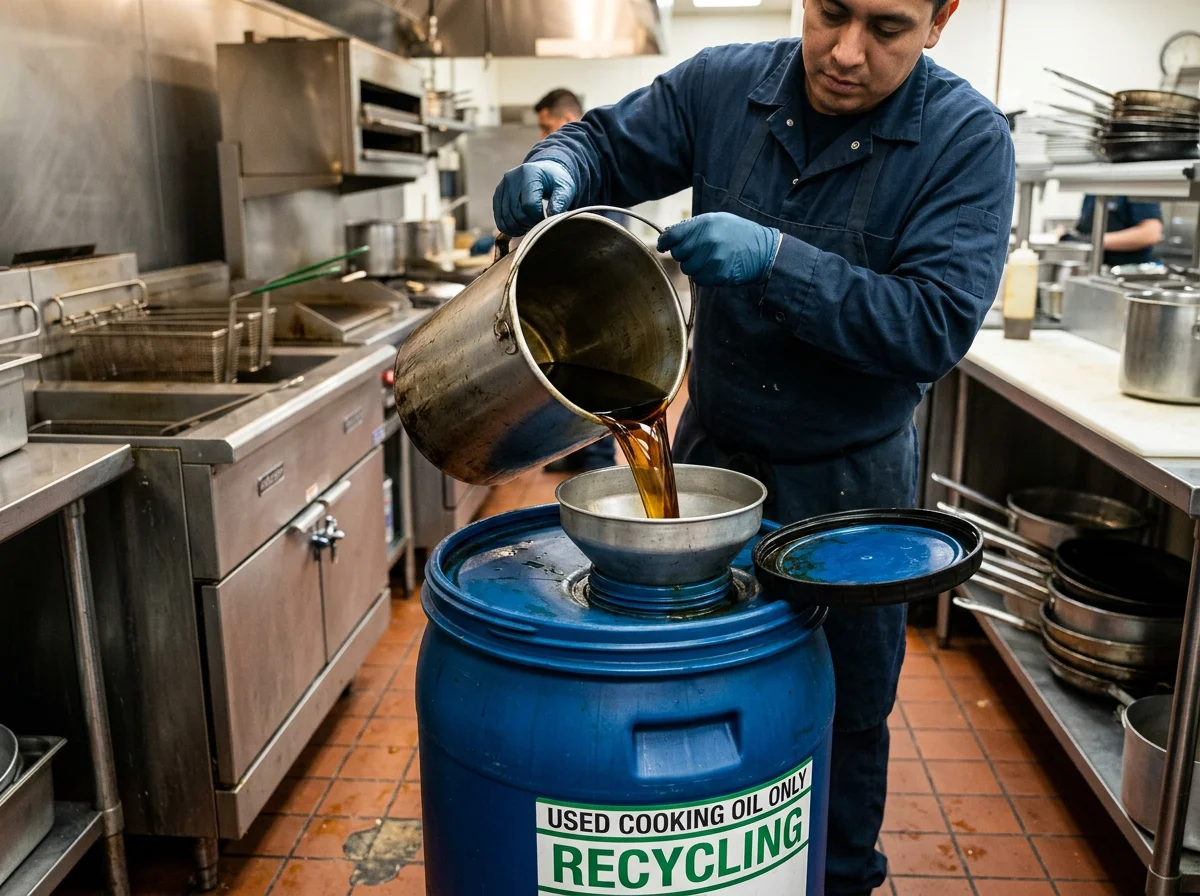
Used Cooking Oil Collection
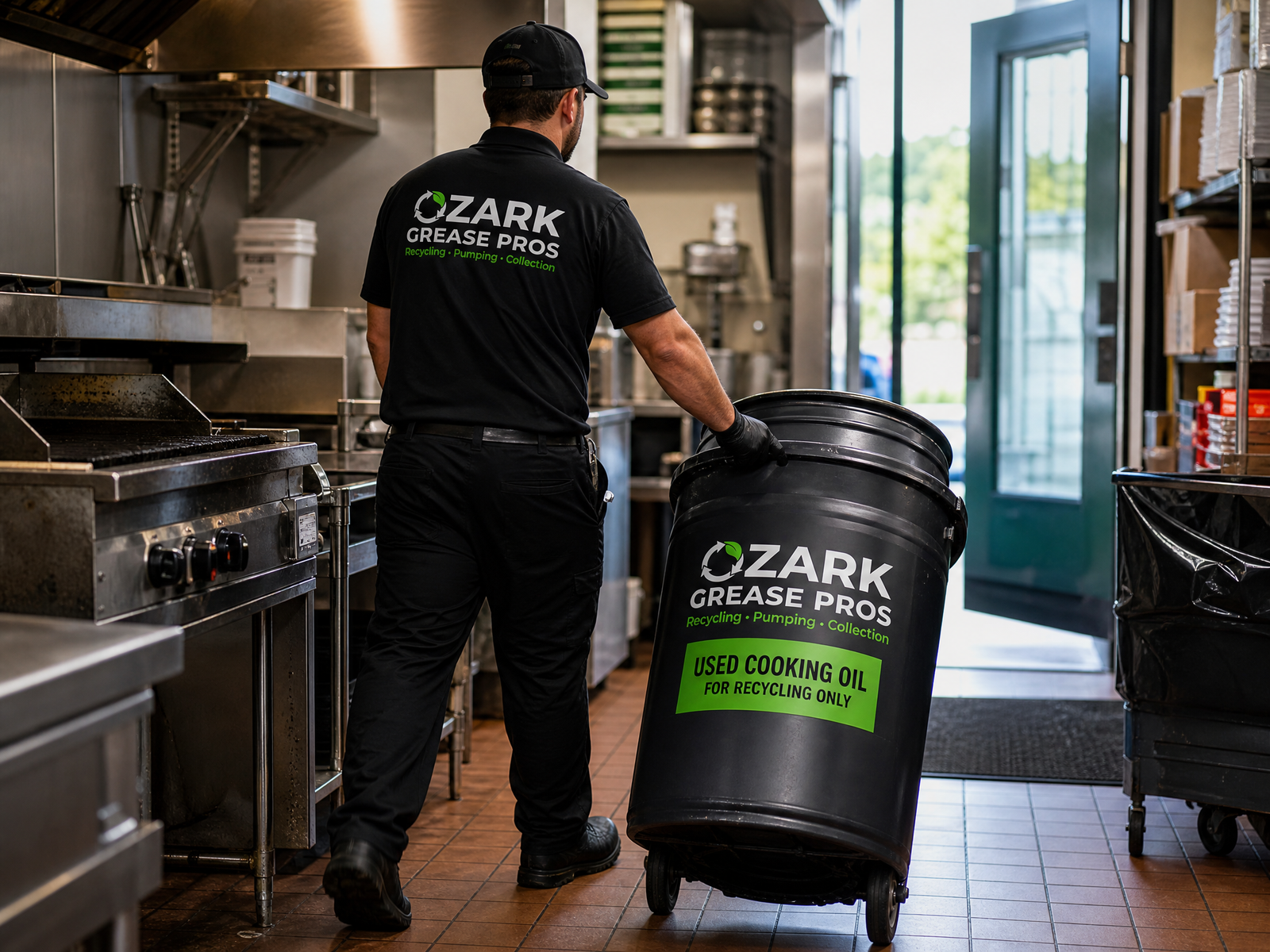
Restaurant Grease Bin Service
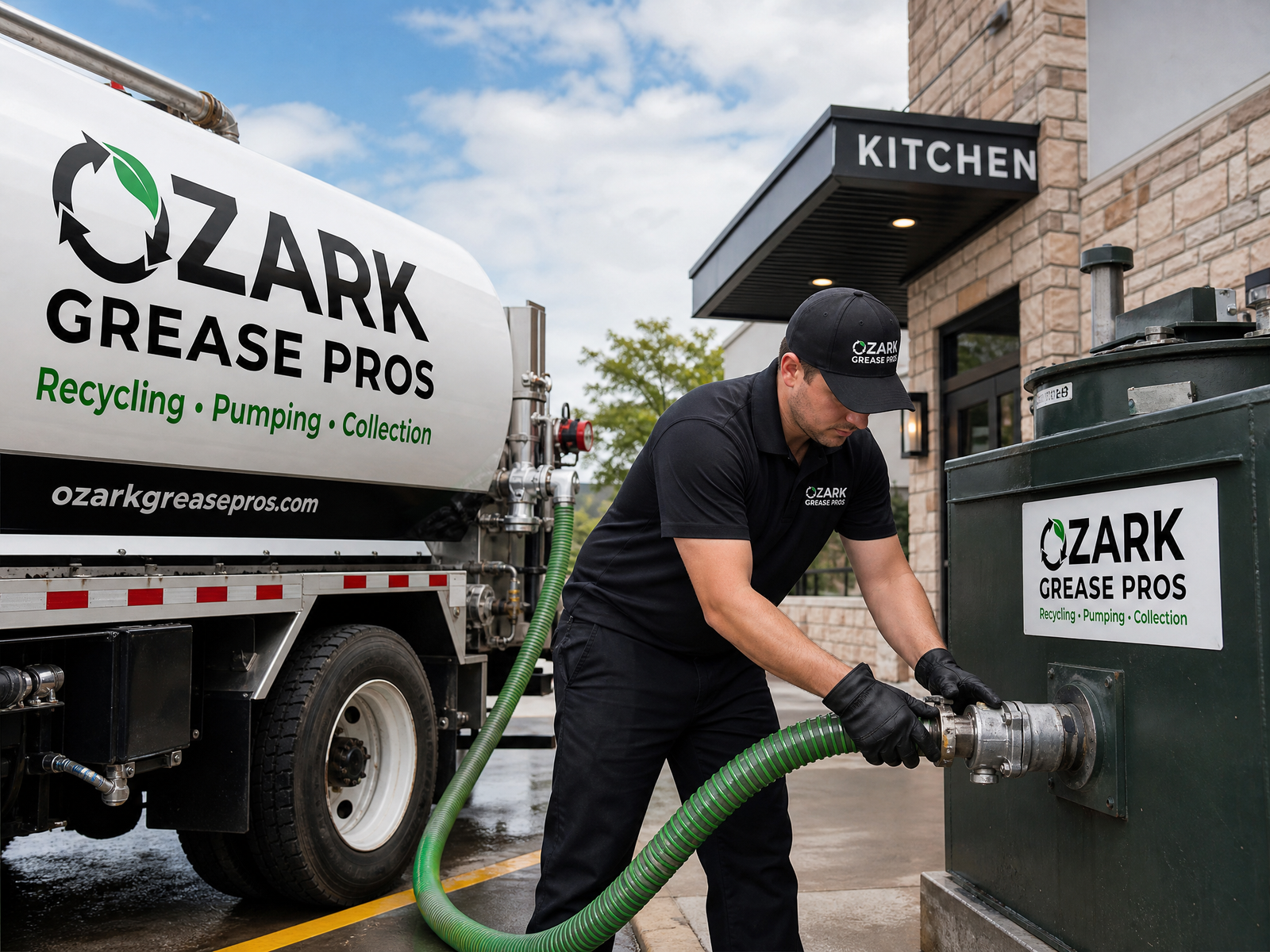
Grease Recycling Hub
Ozark Grease Pros collects UCO from NWA restaurants and processes it into biodiesel feedstock at our Siloam Springs facility. Bin placement included. Scheduled pickup. Documentation available for sustainability reporting.