Properly sized UCO collection bins placed in your kitchen, picked up before overflow. Ozark Grease Pros handles the container, the schedule, and the collection — so your kitchen staff have a simple, safe disposal option and your health inspection records stay clean.
Right-Sized for Your Kitchen
Placed at the Source
Pickup Before Overflow
Inspection-Ready Setup
The most common grease bin problem in NWA restaurants is a mismatch between container size and kitchen output. An undersized bin fills and overflows before the next scheduled pickup. An oversized bin takes up valuable back-of-house space and may encourage delaying oil changes. The right bin is sized to your actual weekly UCO volume, with enough buffer for occasional heavy-production periods.
Bin Size | Approx. Capacity | Best For | Typical Pickup Frequency |
Small / Under-Counter | ~35 gal | Low-volume kitchens, bars, light-food cafes, sandwich shops | Monthly |
Standard | ~55–65 gal | Full-service casual dining, moderate fryer use, pizza restaurants | Monthly to bi-monthly |
Large / Back-of-House | ~100–125 gal | High-volume QSR, frying specialists, high-output kitchens | Weekly to bi-weekly |
Multiple Units | Varies | Multi-fryer operations, food courts, high-volume institutional | Custom schedule per unit |
Bin placement is not arbitrary. A grease collection bin in the wrong location creates operational friction that causes kitchen staff to bypass it — defeating the purpose of having it. The right placement puts the bin where the oil is generated, within safe reach, and outside of fire and pest risk zones.
Placement Principle | What It Means Practically |
Place at the point of generation | The bin should be as close to the fryer as safely possible. If staff have to carry hot oil across the kitchen to reach the bin, they will eventually find a shortcut — usually the drain. Adjacent or immediately behind the fryer station is ideal. |
Clear of ignition and heat sources | Cooking oil is flammable. The bin must not be positioned near open flame, pilot lights, or high-heat equipment surfaces. A minimum clearance from heat sources applies — confirm with your local fire marshal for specific requirements. |
Accessible for pump or transfer | The bin needs to be accessible for the draining method your kitchen uses — a valve-and-drain setup, a pump system, or tipping from a smaller collection vessel. Staff should be able to transfer oil without awkward lifting or reaching over equipment. |
Level and stable surface | Bins must be on a flat, stable surface. An unstable bin that tips is a fire hazard and a significant cleanup problem. Non-slip matting under the bin is recommended for kitchens with wet floors. |
Away from food prep and storage | UCO collection bins should not be positioned near uncovered food, prep surfaces, or dry storage. Odors from aging oil and condensation can affect nearby product. |
Accessible for pickup vehicle | The bin must be reachable for our collection vehicle at pickup time — either accessible from the back door or positionable near an exterior access point on pickup day. We confirm access on initial setup. |
Covered when not in use | Bin covers reduce moisture contamination (from steam condensation), control odors, reduce pest attraction, and are required for health code compliance in most NWA municipalities. Our bins include sealed lids. |
Kitchen Task | Correct Protocol |
Fryer oil change | Drain fryer oil into the UCO collection bin — not into a trash can, not down the drain. Use the bin valve, pump attachment, or fryer drain connection as appropriate for your equipment. Allow oil to cool to a safe handling temperature before transfer if required. |
Fryer filtering | Oil removed during filtering that is being discarded goes into the bin. Oil being recirculated back into the fryer stays in the fryer. Do not mix filtered return oil with bin oil unnecessarily. |
Griddle and cooking surface grease | Griddle scraping and surface grease collection: separate from UCO in most cases unless confirmed with us. Griddle grease mixed with fryer oil may affect recycling quality — check with management on your kitchen’s specific protocol. |
Small amounts from pans and vessels | Cooking oil residuals from pans and cooking vessels: pour into the bin if it’s clean cooking oil. Do not add water, cleaning chemicals, or food debris — these reduce oil quality and create contamination. |
Keeping the drain clear | No cooking oil down the drain — not even small amounts, not even diluted with hot water. Every bit of oil that enters the drain system contributes to grease trap FOG load and is a FOG ordinance violation. The bin is the only correct destination for cooking oil. |
Checking bin level | A quick visual check of bin level during the weekly kitchen walkthrough allows early notice if the bin is approaching capacity ahead of the scheduled pickup. If approaching full, contact us to arrange an early pickup. |
Bin area cleanliness | Wipe down the exterior of the bin and the collection area regularly. Spilled oil on the floor or bin exterior attracts pests and creates slip hazards. The area around the bin should be part of the regular kitchen cleaning schedule. |
Staff training recommendation:
Post a laminated protocol card near the UCO collection bin with the three key rules: (1) All cooking oil goes in the bin. (2) No water, chemicals, or food debris in the bin. (3) If the bin is near full, tell the manager. This three-rule protocol prevents the majority of bin contamination and overflow incidents in commercial kitchens.
A grease bin that is poorly maintained or improperly managed creates three secondary problems that are worse than the original disposal challenge: kitchen spills and floor hazards, persistent odors, and pest attraction. Here is the complete prevention guide:
| Spill Prevention |
|
| Odor Control |
|
| Pest Prevention |
|
Health inspectors in NWA municipalities examine UCO storage and disposal as part of routine kitchen inspections. A well-maintained grease bin setup that passes inspection has several specific characteristics — here is the complete checklist:
Inspection Item | What ‘Pass’ Looks Like |
Container clearly labeled | Bin labeled as ‘Used Cooking Oil’ or ‘UCO’ — not unlabeled or labeled informally. A label template is provided with your Ozark Grease Pros bin. |
Container sealed with lid | Lid is present, functional, and closed when the bin is not in active use. Damaged, missing, or propped-open lids are typically flagged. |
No overflow or exterior spillage | Bin is not filled past the maximum fill line. No oil on the exterior of the bin or on the floor surface around it. Active overflow is a significant finding. |
Container on stable, cleanable surface | Bin is on a hard, cleanable floor surface — not carpeted, not on cardboard, not on elevated shelving without securing. Spill containment tray recommended. |
Positioned away from food contact surfaces | Bin is not positioned where it could contaminate uncovered food, prep surfaces, or plating areas. |
No evidence of drain disposal | No oil residue in floor drains or sinks near the fryer that indicates oil is being poured down the drain. Inspectors look for FOG buildup at drain grates as evidence. |
Scheduled collection in place | Inspectors may ask how UCO is disposed of. Being able to name your collection service and frequency demonstrates active management. Our service documentation confirms ongoing pickups. |
For restaurants with an inspection approaching: contact us for a pre-inspection bin assessment. We can confirm your bin is properly sized, sealed, labeled, and that your pickup schedule is up to date. See emergency grease trap service for pre-inspection trap pumping →
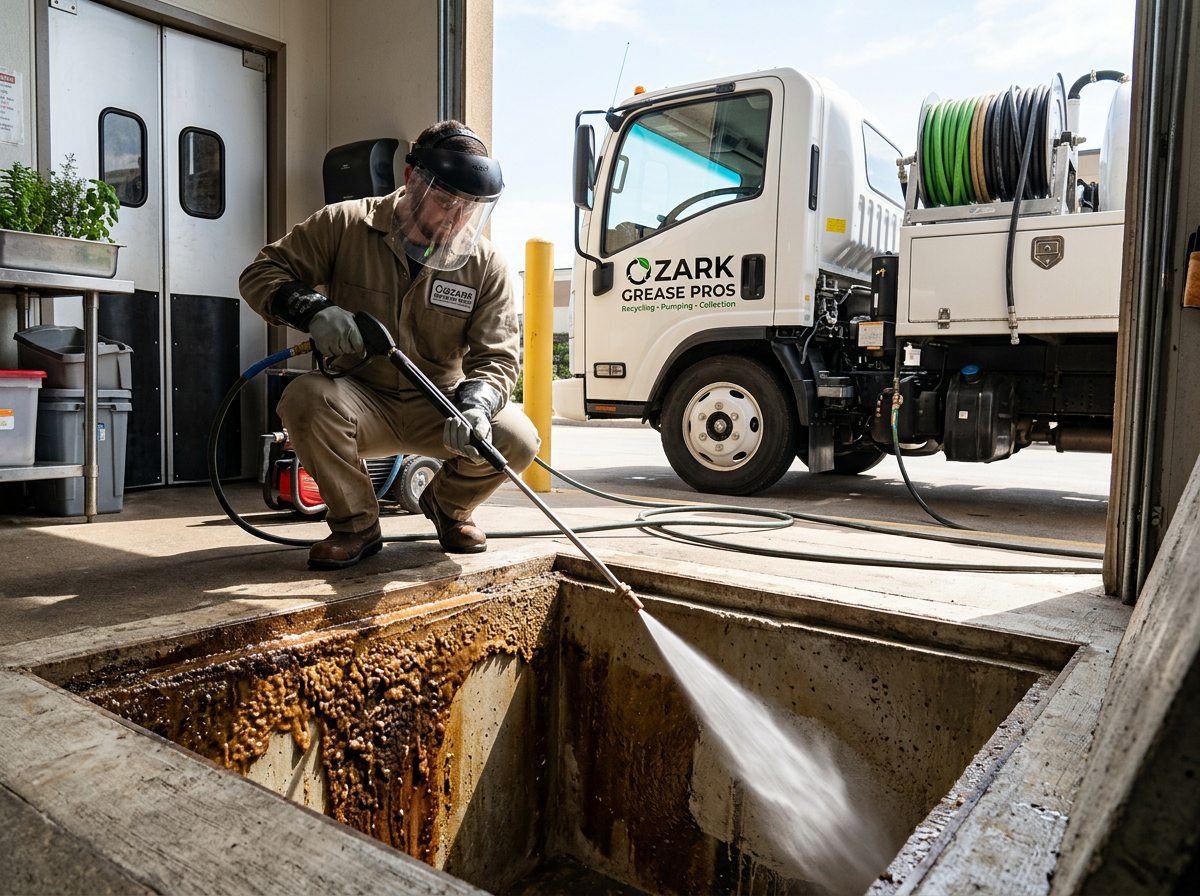
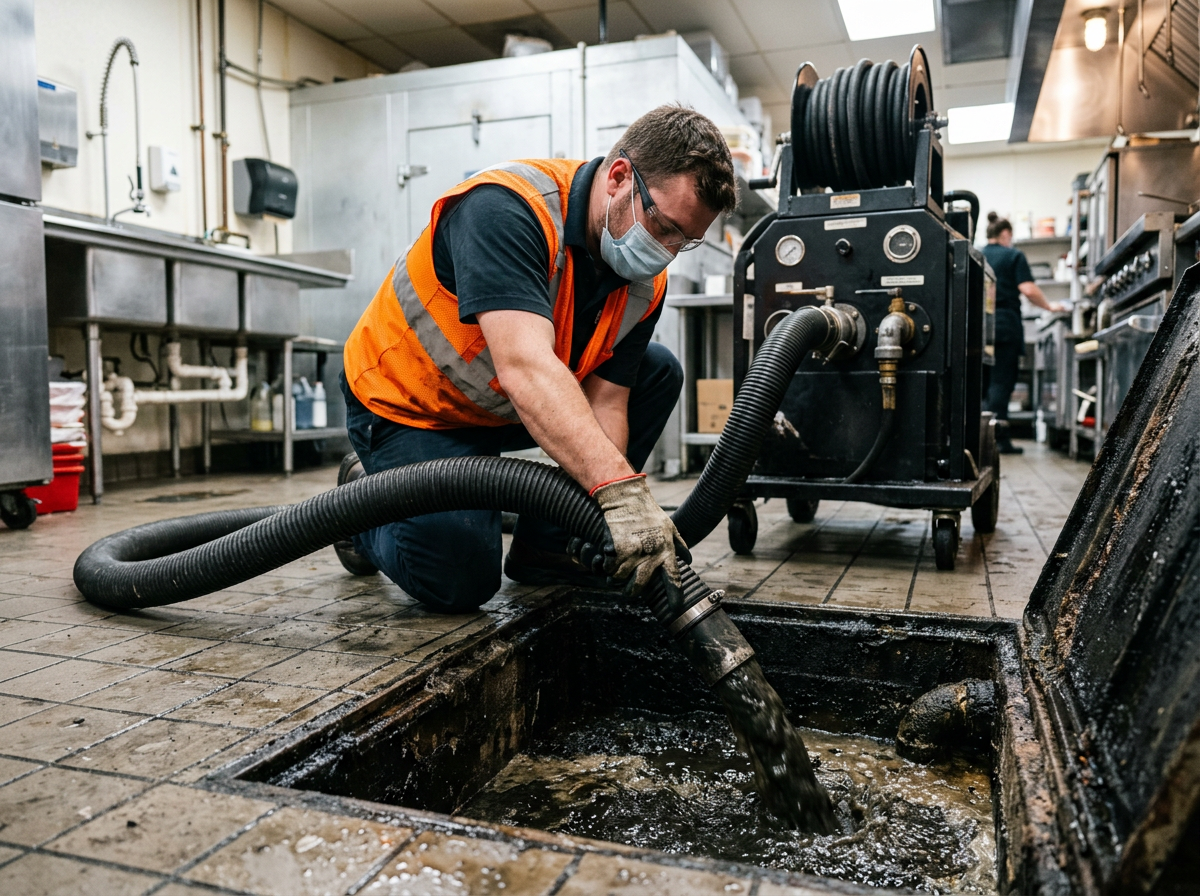
There is a direct and measurable relationship between UCO bin compliance and grease trap fill rate. Every ounce of cooking oil that enters the bin instead of the drain is an ounce that never reaches the grease trap — reducing the FOG load the trap has to process per service period.
Restaurants that implement proper UCO collection programs alongside grease trap service typically observe three operational benefits:
|
Pickup scheduling is one of the most overlooked logistics details in UCO collection programs. A pickup scheduled for 11:00 AM at a restaurant that serves lunch at 11:30 AM creates unnecessary kitchen disruption. A pickup during off-peak hours — early morning before prep, between meal services, or after close — creates zero disruption.
Kitchen Type / Schedule | Recommended Pickup Window |
Full-service restaurant | 7:00–9:00 AM (before prep) or 2:30–4:00 PM (between lunch and dinner service). Both windows avoid peak kitchen activity. |
QSR / fast food (extended hours) | Early morning before opening — typically 5:00–7:00 AM. Or immediately after the kitchen closes if late-night closing time permits. |
Breakfast and brunch focused | After 2:00 PM — after brunch service winds down and before any dinner prep begins. |
Dinner-only restaurant | Midday window — 10:00 AM–12:00 PM is typically clear for dinner-only operations that open at 5:00 PM. |
Hotel / hospitality kitchen | Coordinate with banquet and catering calendar — avoid event setup windows. Morning or mid-afternoon typically works for most hotel operations. |
Institutional / cafeteria | Mid-morning between breakfast close and lunch prep, or mid-afternoon between lunch service and dinner prep. |
On initial account setup, we discuss your service schedule with your kitchen manager and establish a pickup window that works consistently. If your hours change seasonally or for events, contact us to adjust — the schedule is not locked.
We offer under-counter small bins (~35 gallons) for low-volume kitchens, standard containers (~55–65 gallons) for moderate-output full-service restaurants, and large back-of-house units (~100–125 gallons) for high-volume frying operations. Multi-fryer kitchens can have multiple units. We assess your kitchen on initial setup and recommend the size that keeps you from overflow between pickups.
Placement should be adjacent to or immediately behind the fryer station — close to the point of generation. The bin must be clear of open flame, ignition sources, and high-heat equipment surfaces. It needs to be on a stable, level, cleanable floor surface with enough clearance for staff to safely transfer oil. It should be away from uncovered food, prep surfaces, and dining area airflow. We confirm placement on initial setup.
All cooking oil from fryers and cooking vessels — fryer oil changes, oil removed during filtering that is being discarded, and clean cooking oil residuals from pans. Do not put water, cleaning chemicals, food debris, or non-oil materials in the bin. The bin is for cooking oil only.
Keep the lid sealed when not actively depositing oil. Clean spills from the bin exterior and surrounding floor immediately — residual oil is the primary pest attractant. Do not mix water with the oil (it accelerates rancidity and odor). Position the bin away from HVAC intakes. Regular scheduled pickup prevents aging oil from becoming a persistent odor source.
Inspectors typically check: bin is clearly labeled, lid is present and sealed, no overflow or exterior spillage, bin is on a stable cleanable surface, no evidence of oil being poured down drains. Being able to name your collection service and pickup frequency demonstrates active management.
Directly — every ounce of cooking oil in the bin is an ounce that doesn’t enter your drain and your grease trap. Proper UCO collection reduces the FOG load entering your trap, which slows fill rate and can extend the interval between pump cycles. Many high-fryer-output kitchens find that adding UCO collection reduces their annual grease trap service cost.
Yes — on initial account setup, we establish a pickup window that works for your kitchen schedule. Common windows are early morning before prep, between meal services, or after close. We coordinate with your kitchen manager to confirm timing and adjust it if your schedule changes.
Used Cooking Oil Collection
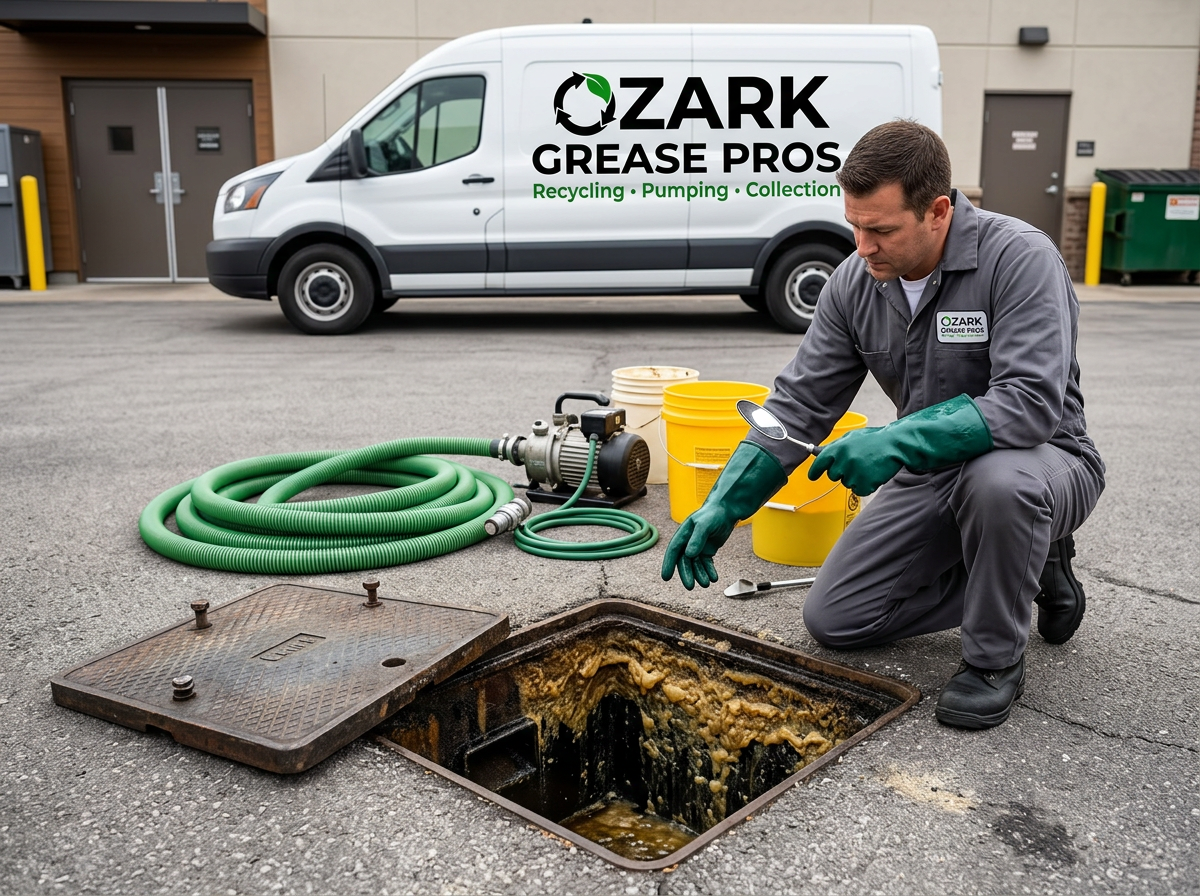
Used Cooking Oil Recycling
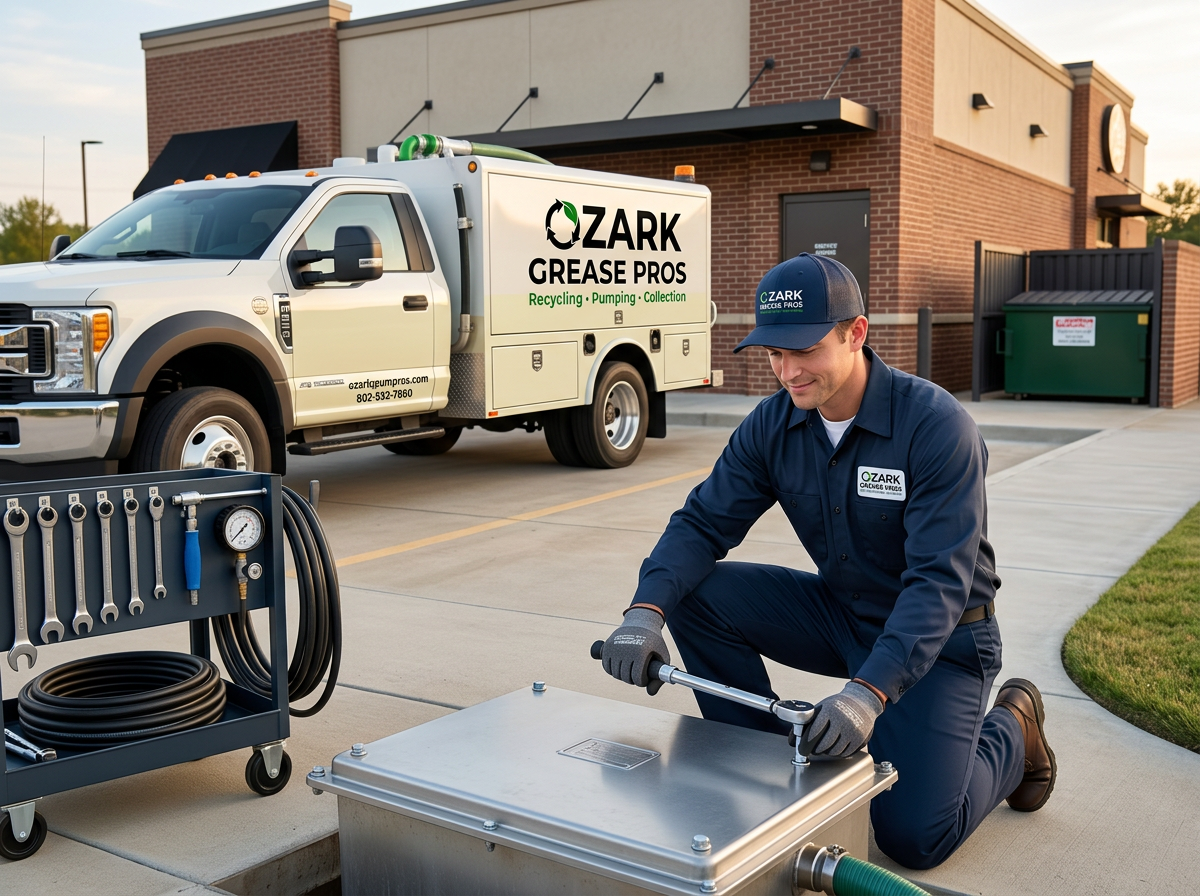
Scheduled Grease Trap Maintenance
We assess your kitchen output, place the right bin, establish a pickup schedule around your hours, and handle collection. Your kitchen staff gets a clear, safe disposal method. Your inspections stay clean.