A complete explanation of how Ozark Grease Pros processes grease trap waste at our licensed Siloam Springs, AR facility — from separation through oil extraction, water treatment, and compliant discharge.
Quick answer (for restaurant operators):
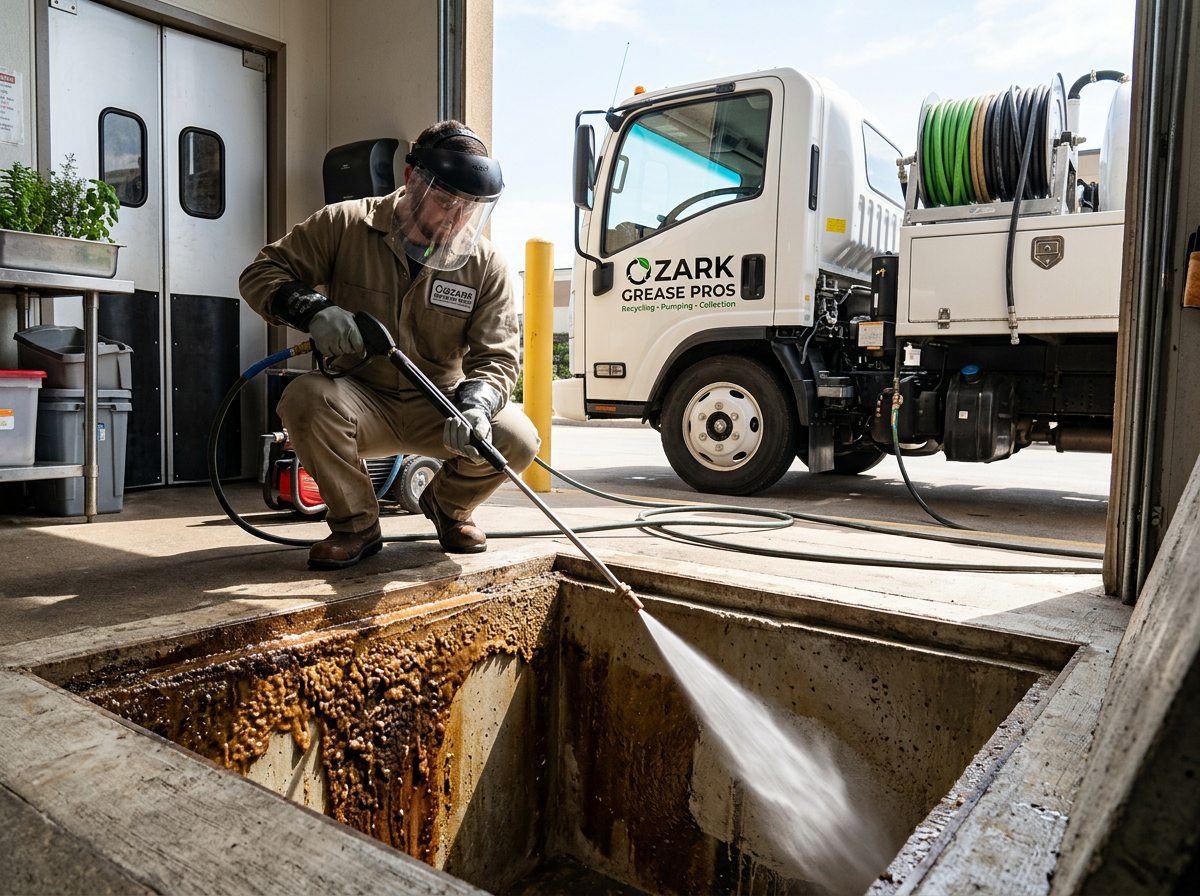
When Ozark Grease Pros pumps your grease trap, all waste is transported to our licensed processing facility in Siloam Springs, AR — the only regional grease recycling plant in Northwest Arkansas. At the facility, the waste goes through a multi-stage processing sequence: (1) gravity separation divides the waste into its three components — floating grease, wastewater, and settled solids; (2) oil extraction recovers the grease fraction for recycling; (3) the water phase is treated to Arkansas ADEQ pre-treatment standards; (4) treated water is discharged compliantly. The recovered oil is processed for downstream use including biodiesel and biofuel applications. Nothing is illegally dumped.
Every load is documented on a signed manifest — the chain-of-custody record for FOG compliance.
Before explaining how grease trap waste is processed, it helps to understand what the material actually is. Grease trap waste is not a single substance — it is a three-phase mixture that forms in layers inside the trap as kitchen wastewater passes through:
Phase
Position in Trap
Composition
Processing Destination
Floating grease layer
Top of trap
Fats, oils, and grease (FOG) — lighter than water, rises to surface. The primary target for oil extraction.
Oil extraction → recycled output
Wastewater zone
Middle
Gray water mixture with dissolved FOG, food particles, detergents, biochemical oxygen demand (BOD) load.
Wastewater treatment → compliant discharge
Settled solids (sludge)
Bottom of trap
Heavier food solids, grit, inorganic material — settles by gravity. Contributes to total suspended solids (TSS) in the waste stream.
Processed with liquid waste → treatment system
Understanding this three-phase composition is what makes grease trap pumping a specialized operation. A vacuum truck extracts all three phases together — but processing them requires separating them back out. That separation is what the Siloam Springs facility is built to do.
The following is the complete processing sequence at our Siloam Springs facility. This is the answer to ‘what happens to grease after pumping’ — in full technical detail:
Incoming loads are received at the facility and matched against the originating service manifest. Volume is confirmed (gallons), waste type is identified, and the hauler's documentation is recorded. The manifest match is the start of the chain-of-custody record that connects this load to its origin restaurant.
Technical note: Manifest volume vs. received volume discrepancies are noted and reconciled at this stage.
Incoming waste enters a primary receiving tank where the three-phase separation process begins. FOG material (less dense than water) rises to the surface layer. Wastewater occupies the middle zone. Heavier solids settle to the bottom. This is passive gravity separation — no mechanical agitation, relying on density differentials between phases.
Technical note: Separation efficiency at this stage depends on temperature and waste composition. Warmer waste separates more quickly. High-solids loads from heavily accumulated traps require more residence time.
Settled solids from the bottom of the receiving tank are removed and directed to solids handling. This step reduces the suspended solids load on downstream water treatment and improves oil extraction efficiency by removing material that would otherwise contaminate the oil phase.
Technical note: Solids from restaurant grease traps typically contain food particles, grit, and organic material. Total suspended solids (TSS) at this stage can exceed 10,000 mg/L in heavily loaded waste.
After coarse solids removal, the partially separated liquid waste undergoes secondary separation to improve the purity of the oil fraction. The objective is to remove residual water from the oil layer and residual oil from the water layer to the greatest extent possible before extraction and treatment respectively.
Technical note: Separation at this stage is enhanced by residence time, temperature management, and in some configurations, coalescing media that promote droplet coalescence and faster separation.
The separated oil fraction is skimmed from the surface and directed to the oil concentration system. Residual water in the oil phase is further reduced through heating and mechanical separation, increasing the quality of the recovered grease product. Higher oil purity is required for downstream applications including biodiesel feedstock.
Technical note: Recovered grease from commercial kitchen sources is classified as yellow grease or trap grease depending on purity and fatty acid composition. Trap grease, being a post-separation recovered product, typically has different specifications than UCO (used cooking oil) and is directed accordingly.
The water phase — after oil extraction — enters wastewater pre-treatment. The treatment objective is to reduce biochemical oxygen demand (BOD), total suspended solids (TSS), fats/oils/grease (FOG) concentration, and other regulated parameters to levels that meet Arkansas ADEQ discharge limits. Pre-treatment approaches for this waste stream typically include physical screening, biological treatment, and chemical treatment stages.
Technical note: ADEQ pre-treatment standards for FOG waste processing facilities set discharge limits on parameters including BOD, TSS, FOG residual, and pH. Specific limits are governed by the facility's ADEQ permit.
Treated water is sampled and tested against ADEQ discharge parameters before release. This is the compliance verification step — it confirms that the treated effluent meets the regulatory thresholds required for compliant discharge. The facility's ADEQ permit governs the monitoring and reporting requirements for this stage.
Technical note: Discharge monitoring records are maintained as part of ADEQ permit compliance. These records are part of the facility's regulatory documentation and demonstrate ongoing compliance with pre-treatment standards.
Verified treated water is discharged through the appropriate channel — either to the municipal sewer system under the facility's pre-treatment permit or through another compliant disposal pathway specified in the ADEQ permit. This is not raw wastewater discharge — it is treated effluent that has passed quality verification.
Technical note: The distinction between 'compliant discharge' and 'illegal dump' is the entire point of the pre-treatment system. Untreated FOG waste contains BOD loads far in excess of municipal sewer discharge limits — pre-treatment is what makes compliant discharge possible.
The extracted and concentrated oil fraction is transferred to downstream processing. Depending on quality and market conditions, recovered trap grease may be directed to biodiesel production facilities, used as industrial biofuel, or processed through other grease recycling channels. This step converts a waste material into a resource — the defining characteristic of recycling vs. disposal.
Technical note: The recovered oil market for trap grease fluctuates with commodity prices for biodiesel feedstocks. The environmental value of recovery is independent of market price — diverting this material from landfill regardless of market conditions is the baseline objective
The following terms appear in regulatory documentation, ADEQ permits, and health department FOG compliance records related to grease trap waste processing:
Term
Definition & Relevance
FOG (Fats, Oils & Grease)
The collective regulatory term for the organic material that grease traps are designed to capture. FOG is the regulated parameter in EPA pre-treatment programs and NWA municipal FOG ordinances.
BOD (Biochemical Oxygen Demand)
A measure of the oxygen required to biologically degrade organic material in wastewater. High BOD in untreated grease trap waste is why it cannot be directly discharged to the sewer system — it depletes oxygen and damages downstream biological treatment processes.
TSS (Total Suspended Solids)
The mass of solid particles suspended in wastewater. Grease trap waste has very high TSS from food particles and organic solids — reducing TSS is a key pre-treatment objective before discharge.
Pre-treatment
Treatment of industrial or commercial wastewater before it enters the municipal sewer system. Required by the EPA pre-treatment program. What our Siloam Springs facility does to grease trap waste is pre-treatment.
Manifest
The waste tracking document that follows grease trap waste from the originating restaurant through to the receiving disposal facility. Required under FOG compliance programs and the RCRA hazardous waste tracking framework.
ADEQ
Arkansas Department of Energy and Environment (formerly Arkansas Department of Environmental Quality). The state regulatory body that issues permits and oversees discharge and pre-treatment compliance for facilities like ours.
Gravity separation
The passive physical process by which waste components of different densities separate in a holding tank — FOG rises, water occupies the middle, and solids settle. The fundamental mechanism behind both grease trap operation and the initial separation stage at a processing facility.
Yellow grease / trap grease
Industry classifications for recovered cooking and FOG waste. Yellow grease typically refers to higher-quality used cooking oil; trap grease refers to the FOG fraction recovered from grease trap processing. Both can be directed to biodiesel production but are valued differently.
Compliant discharge
Discharge of treated wastewater that meets all applicable regulatory limits — ADEQ permit parameters, municipal sewer pre-treatment standards. Distinguished from illegal discharge, which is untreated FOG waste released to ground, storm drain, or sewer without treatment.
The word ‘recycling’ is used broadly in grease management marketing. Here’s what it actually means at the Ozark Grease Pros facility, and why it matters:
What ‘recycling’ means in grease processing — specifically: Extraction: The oil fraction is physically separated from the waste stream — not simply disposed of along with it. This is the distinction between a recycling facility and a disposal-only site. Concentration: Extracted oil is processed to remove residual water and improve purity — producing a material with defined specifications, not just a liquid waste product. Downstream application: The concentrated recovered grease is directed to end-use markets. The primary application for trap grease is as a feedstock for biodiesel production — a renewable fuel that displaces petroleum diesel. Other applications include industrial biofuel and animal feed ingredient production in some regulatory frameworks. What ‘recycling’ is NOT: Recycling is not the same as compliant disposal. A facility that treats wastewater to discharge standards and sends the oil fraction to landfill is not a recycling operation — it is a treatment and disposal operation. At our facility, oil extraction and downstream recycling is the intended outcome, not a secondary consideration. |
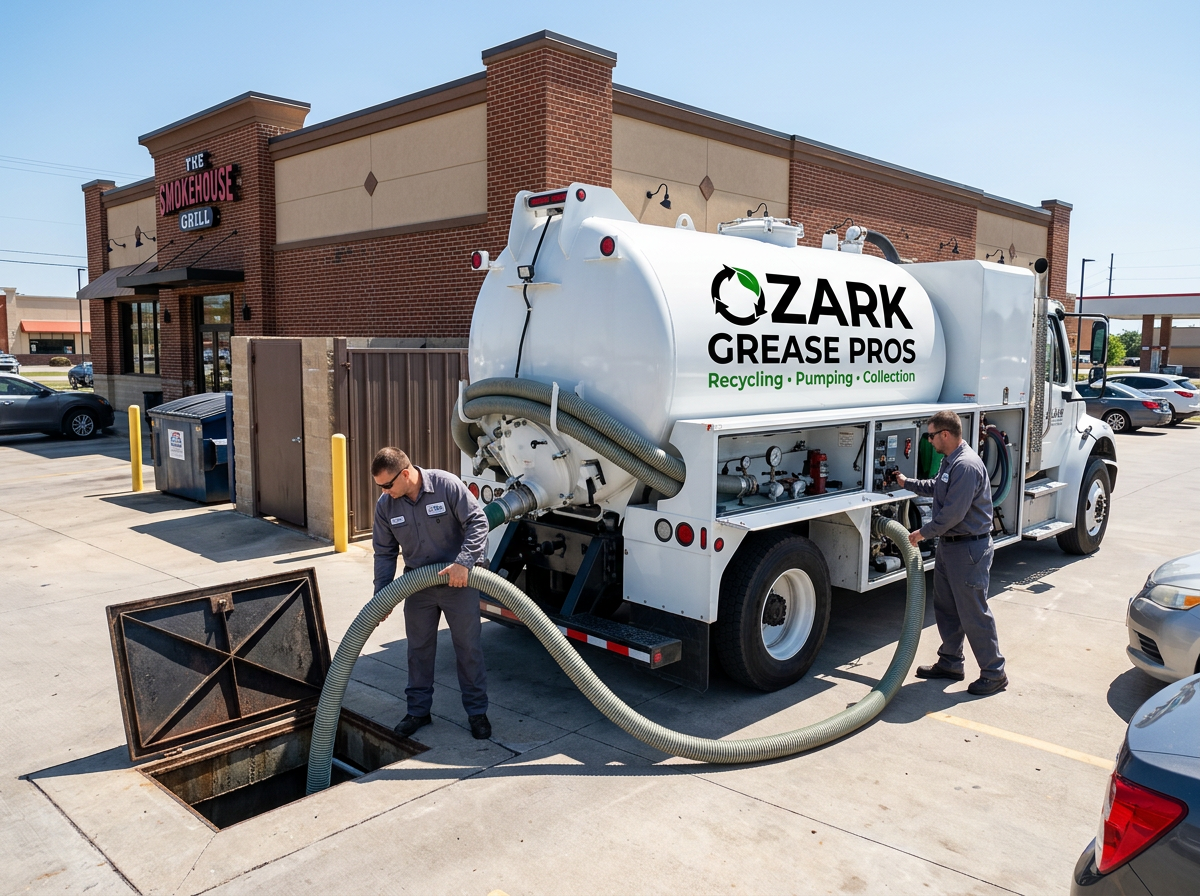
For restaurant operators in Fayetteville, Springdale, Bentonville, Rogers, and across NWA — the processing destination of your grease trap waste is a compliance document, not just an operational detail. Your service manifest must name a licensed receiving facility. Our Siloam Springs plant is that facility.
A manifest that says ‘waste transported to Ozark Grease Pros facility, Siloam Springs AR’ is a defensible compliance record. It documents:
For health inspectors and ADEQ compliance officers, this is the documentation standard that satisfies FOG pre-treatment requirements. Read our full FOG compliance guide → |
Ozark Grease Pros transports all grease trap waste to our licensed processing facility in Siloam Springs, AR. The waste goes through a multi-stage process: gravity separation divides it into floating grease, wastewater, and settled solids. Oil is extracted from the grease fraction and processed for recycling — primarily biodiesel feedstock. The water phase is treated to Arkansas ADEQ pre-treatment discharge standards before release. Nothing is illegally dumped or sent to unlicensed disposal sites.
Grease trap waste is a three-phase mixture: (1) a floating grease layer at the top — fats, oils, and grease (FOG) that are less dense than water; (2) a wastewater zone in the middle — gray water with dissolved FOG, food particles, and biological oxygen demand (BOD) load; (3) settled solids (sludge) at the bottom — heavier food solids, grit, and organic material. Processing involves separating these phases and handling each appropriately.
BOD stands for biochemical oxygen demand — the amount of oxygen required to biologically break down organic material in wastewater. Grease trap waste has extremely high BOD, which is why it cannot be discharged directly to the municipal sewer system without treatment. Pre-treating the waste to reduce BOD before discharge is what makes compliant disposal possible and what our Siloam Springs facility is licensed to do.
At our facility, the extracted oil fraction is directed to downstream recycling applications — primarily as feedstock for biodiesel production. This is material recovery, not landfill disposal. The oil extracted from grease trap waste can substitute for petroleum-derived feedstocks in biodiesel production, reducing fossil fuel demand. Not all processing facilities recover oil for recycling — facilities that simply treat and discharge the entire waste stream are disposal operations, not recycling operations.
ADEQ is the Arkansas Department of Energy and Environment, the state regulatory body overseeing wastewater discharge and treatment in Arkansas. A pre-treatment permit governs how a facility treats wastewater before it is discharged, setting limits on parameters like BOD, TSS, and FOG concentration. Our facility operates under ADEQ permit requirements — meaning our water treatment process is regulated and monitored to ensure compliant discharge. This permit is what makes the facility a licensed disposal destination rather than an informal dump.
Grease disposal means treating waste to a discharge-compliant state and releasing it — the waste stream is managed but the material value (the oil) is not recovered. Grease recycling means extracting the oil fraction and directing it to a productive downstream use. At Ozark Grease Pros, we do both: the water phase is treated for compliant disposal, and the oil fraction is extracted and recycled. A ‘recycling facility’ that only treats and discharges without oil recovery is, technically, a treatment and disposal facility.
Your FOG compliance record requires a signed manifest naming a licensed receiving facility as the disposal destination. Our Siloam Springs plant is a licensed, ADEQ-regulated facility. A manifest naming it as the destination is a defensible compliance record for health inspections, permit renewals, and FOG enforcement audits.
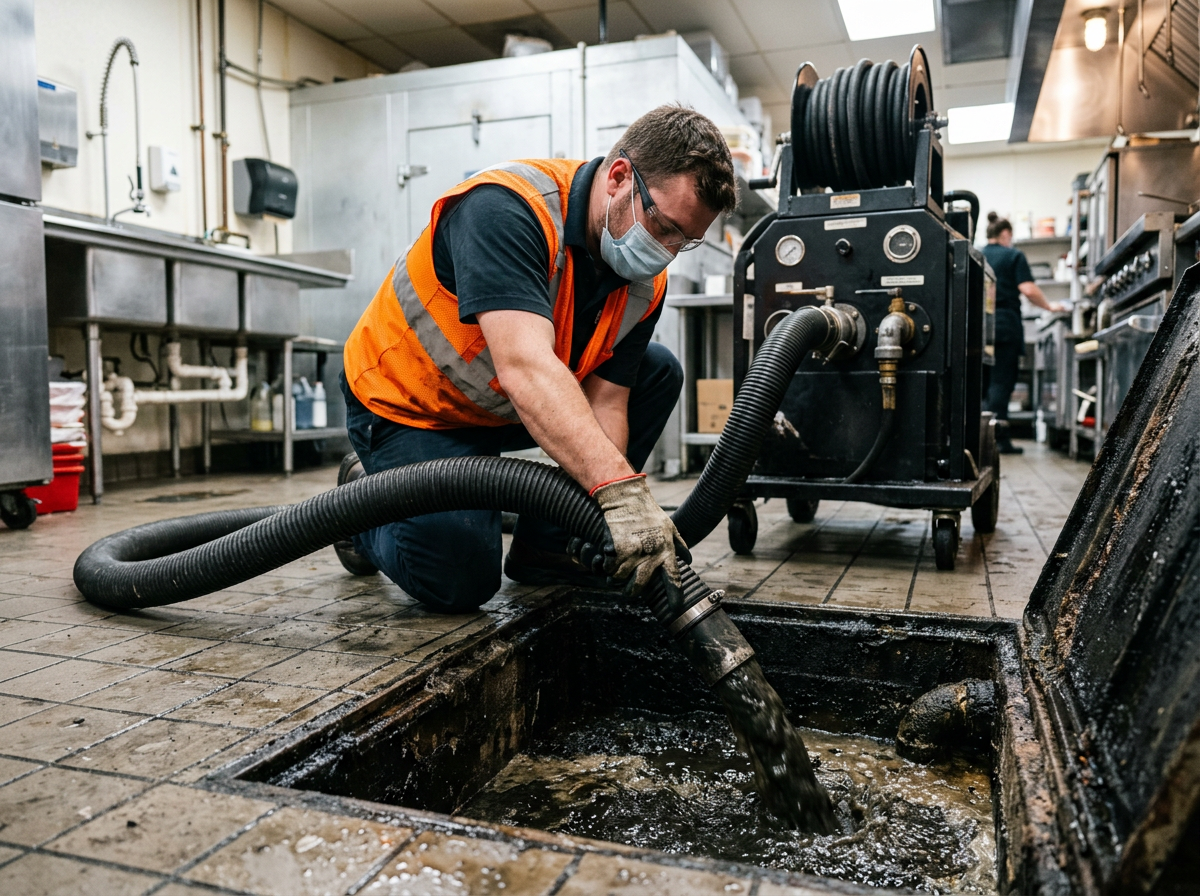
Grease Recycling Hub
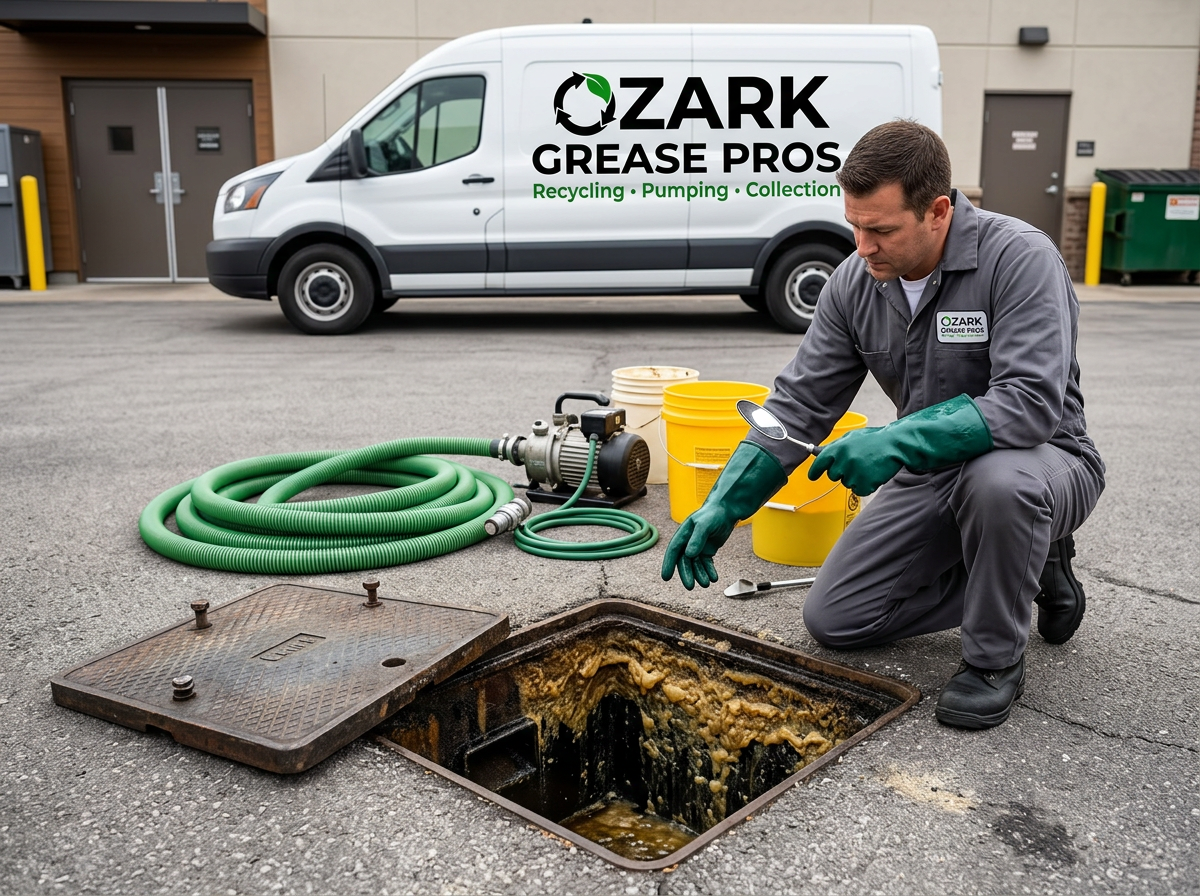
Grease Disposal Facility (B2B)
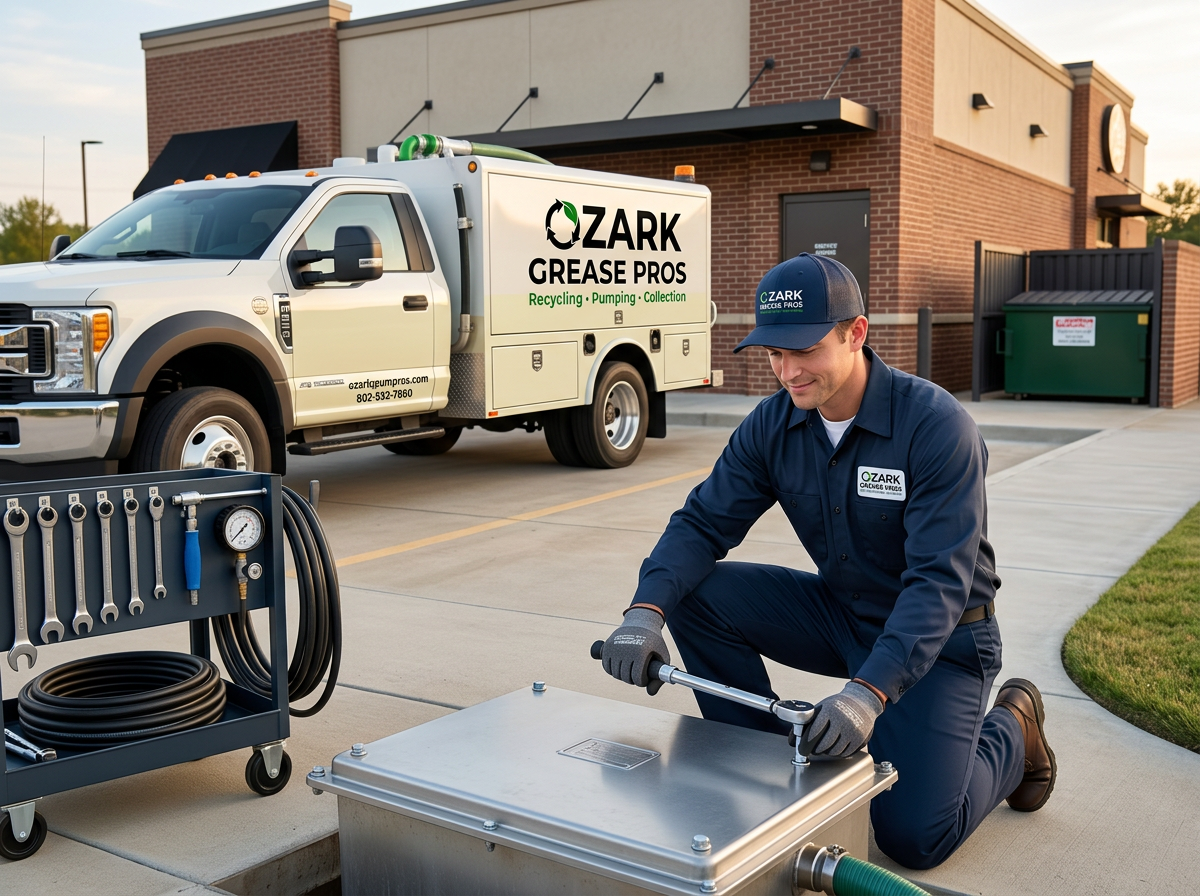
FOG Compliance Guide
Every gallon pumped by Ozark Grease Pros goes through the processing sequence described on this page — oil extracted and recycled, water treated to ADEQ standards, and a signed manifest documenting the complete chain.