
Grease Disposal Facility
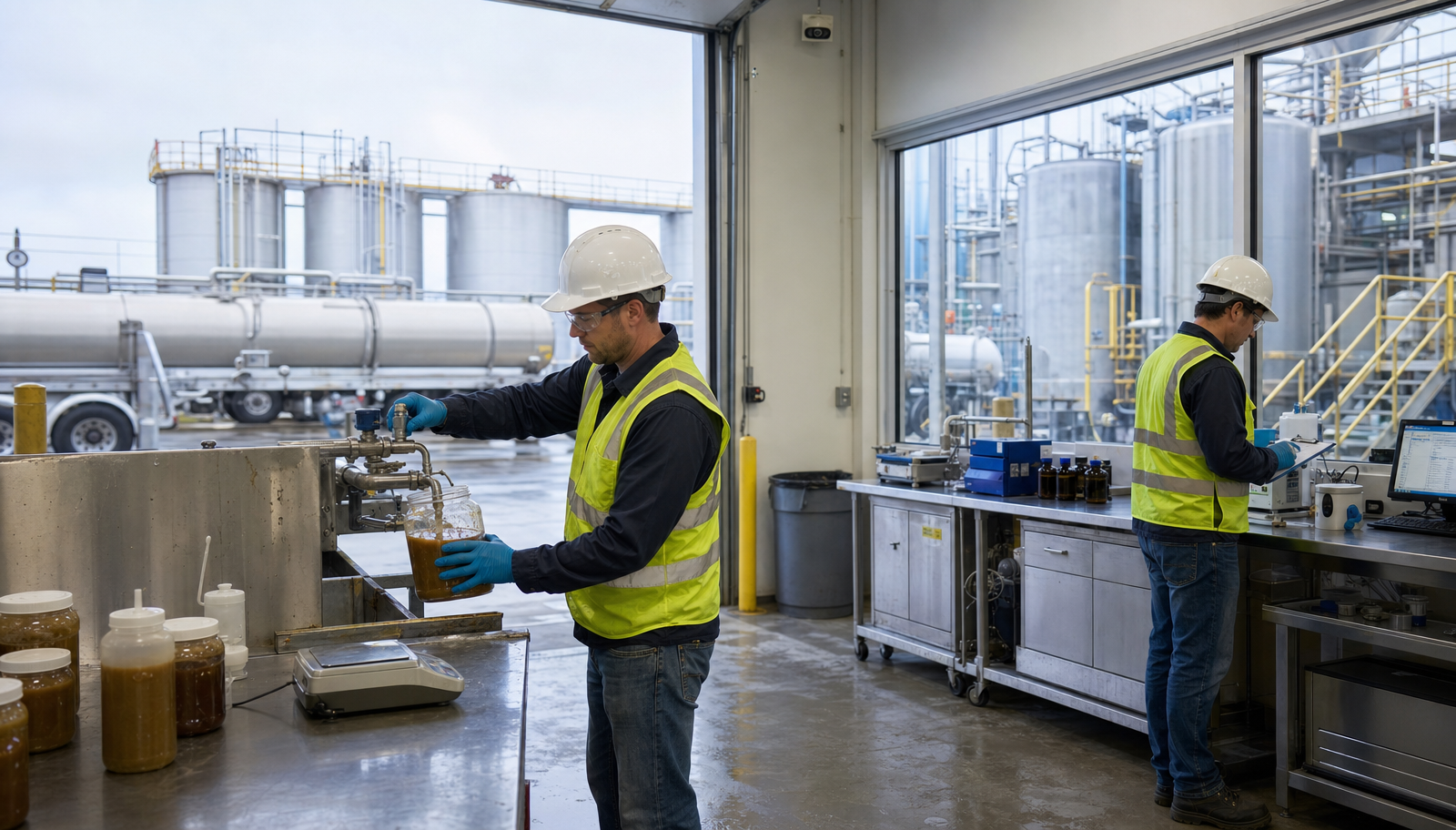

Ozark Grease Pros operates the only licensed grease-recycling and FOG receiving facility in Northwest Arkansas. Located at 930 East Jefferson, Siloam Springs, AR 72761, the facility accepts manifested grease trap waste from licensed transporters across an approximately 80-mile service radius — covering all of Northwest Arkansas and significant portions of eastern Oklahoma. For pump-truck operators, septic haulers, and environmental services contractors working FOG accounts, this is the closest permitted discharge point. The next-nearest options are Tulsa, Little Rock, and Kansas City — each adding hours of round-trip time and significantly higher per-load disposal cost.
This page is built for operators. Pricing, manifest format, accepted waste streams, and hours are listed in full below. To schedule a first-time dump, confirm rates, or arrange a recurring discharge account, call 479-448-7755.
A ‘licensed’ grease disposal facility is not a marketing word. It is a regulatory status. Under EPA pretreatment rules and Arkansas state code, FOG waste removed from a grease trap must be transported by a permitted hauler and delivered to a permitted receiving facility. Delivering manifested waste to a location without the right permits exposes both the hauler and the originating restaurant to enforcement — and the manifest paper trail makes that exposure traceable for years.
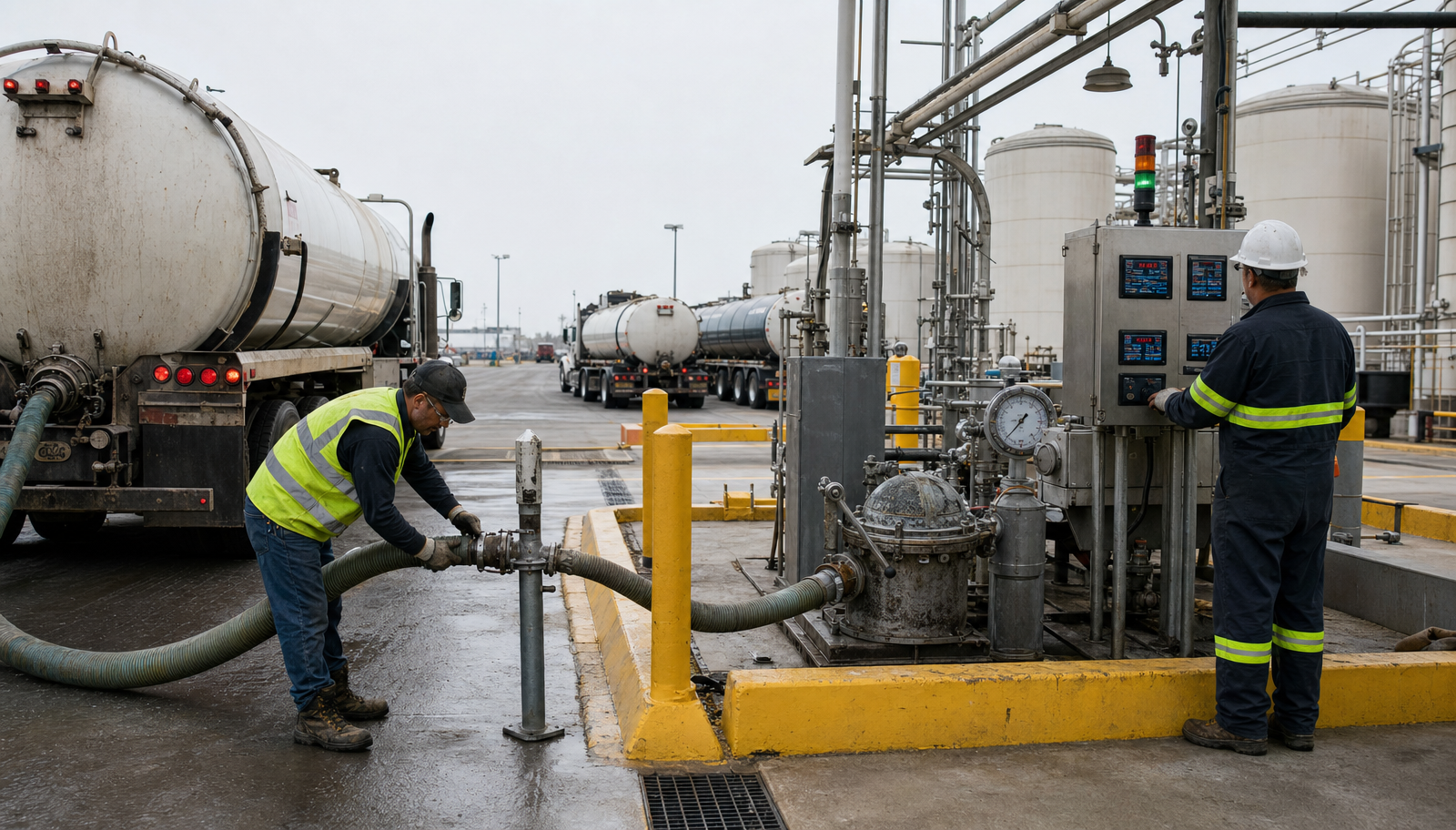
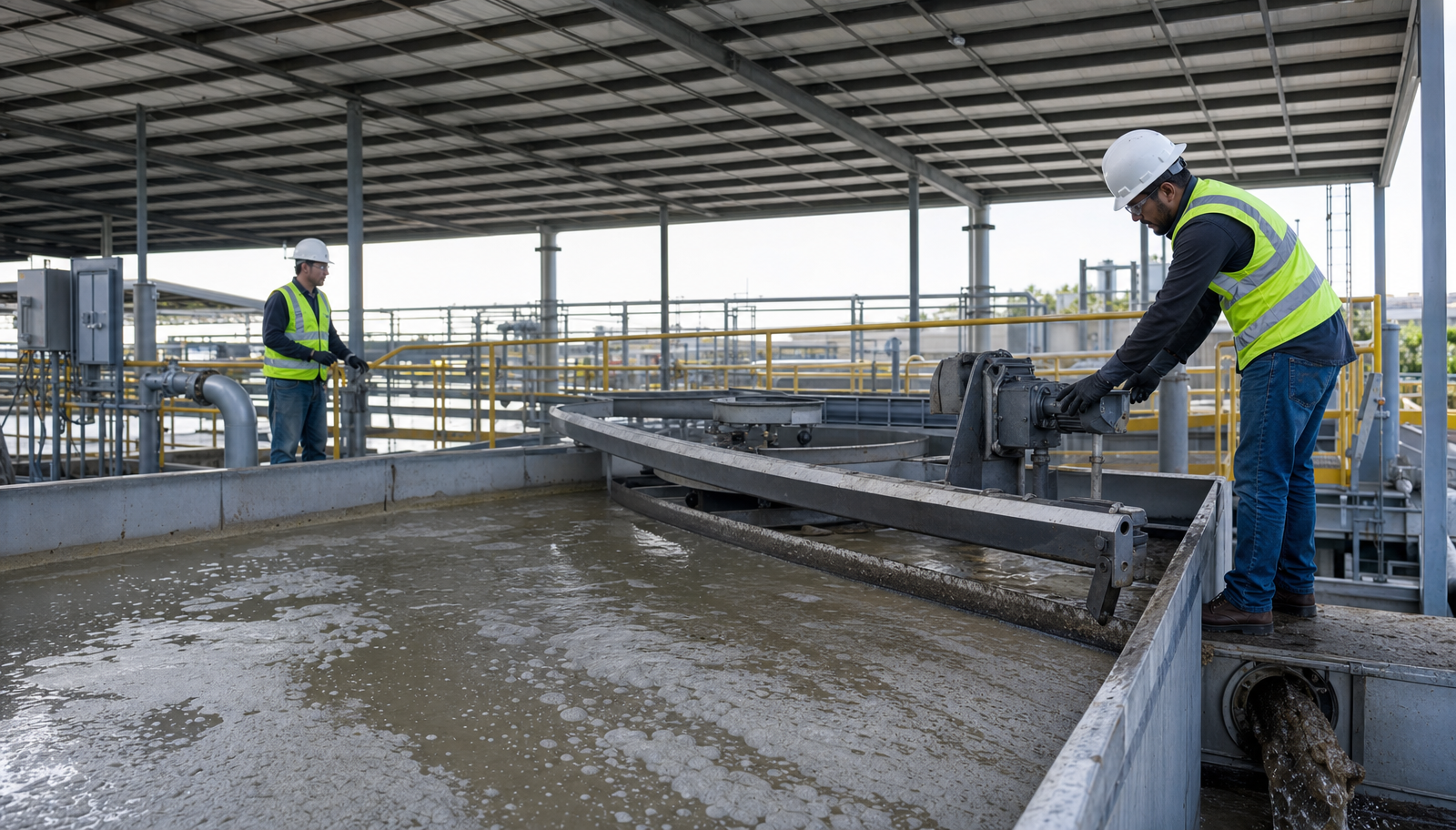
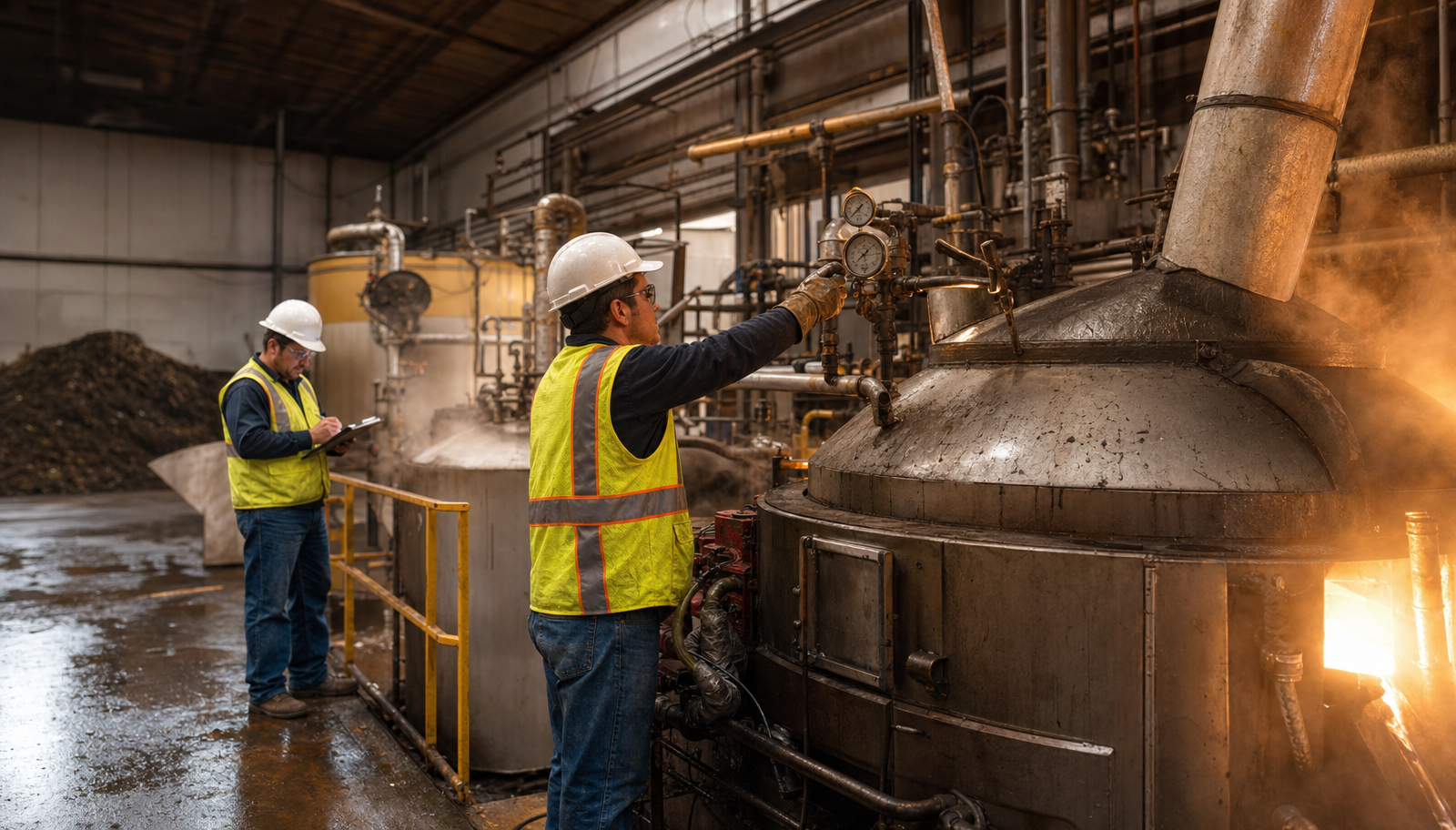
Ozark Grease Pros holds the operating permits, processing infrastructure, and water-treatment capacity required to legally receive, process, and discharge the residual water stream. The captured oils are routed to recycling — biofuel feedstock and rendered product markets — and the residual water is treated to discharge standards before release. Nothing untreated leaves the facility. That chain of custody is the regulatory product as much as the physical capacity is.
| Address | 930 E Jefferson St, Siloam Springs, AR 72761, USA |
| Phone | 479-448-7755 |
| Operator | Ozark Grease Pros |
| Hours (receiving) | Monday–Friday by appointment; emergency / off-hours by prior arrangement |
| Service radius | Approximately 80 miles — all of Northwest Arkansas + eastern Oklahoma |
| License status | Only licensed FOG / grease-trap waste receiving facility in Northwest Arkansas |
| Tipping fee (current) | $0.20 per gallon (based on manifest-stated volume) |
| Volume measurement | Manifest-stated; facility reserves the right to verify by tank gauging |
| Manifest format | Standard transporter manifest accepted; must name licensed hauler + receiving facility |
| Accepted waste streams | Grease trap pumpings, grease interceptor pumpings, separated FOG, used cooking oil (separate account) |
| Not accepted | Septic / domestic sewage, industrial process wastewater, hazardous waste, paint/solvent waste, automotive fluids |
| Insurance / licensing required | Yes — copy of transporter permit + COI must be on file before first dump |
Pricing is per gallon, based on the manifest-stated volume at the time of discharge. Volume is taken from the originating grease trap manifest in the standard format — for example, a 500-gallon trap manifest is billed as 500 gallons. The facility reserves the right to verify volume by tank gauging on the receiving end, but in practice the manifest is the binding figure.
| Account Type | Per-Gallon Rate | Billing | Notes |
|---|---|---|---|
Open (per-dump) account | $0.15 / gallon | Per discharge — cash, card, or invoice | First-time haulers; one-off dumps; out-of-area transporters |
| Recurring transporter account | $0.15 / gallon (volume tiers available) | Net-30 monthly invoice | Local pump-truck operators; consistent weekly/monthly volume |
| Used cooking oil (UCO) — separate | Negotiated — credit or no-charge depending on quality | Per-load | Pure separated UCO only; not mixed with trap waste |
Rates are current as of May 2026 and are reviewed annually. Long-haul operators discharging significant monthly volume should ask about tiered pricing — there is room to negotiate for steady, predictable accounts.
The case for using Ozark Grease Pros instead of hauling to the next-nearest permitted disposal facility is a transparent fuel-and-time math problem. The table below uses Siloam Springs as the origin and compares the round-trip cost of hauling a typical 2,500-gallon load to each alternative.
| Destination | Round-Trip Distance | Approx. Round-Trip Time | Fuel Cost (est. $5/gal, 6 mpg) | Net Cost Impact |
|---|---|---|---|---|
| Ozark Grease Pros (Siloam Springs, AR) | On site / local | Minutes | Local fuel only | Baseline |
| Tulsa, OK alternative | ~180 mi | ~3.5–4 hrs | $150–$170 | +$150–$300 vs. local |
| Little Rock, AR alternative | ~440 mi | ~7–8 hrs | $360–$400 | +$400+ vs. local |
| Kansas City, MO alternative | ~580 mi | ~9–10 hrs | $480–$520 | +$550+ vs. local |
The fuel number is the headline cost, but the binding cost for most operators is driver-hour and asset-utilization. A truck spending half a day hauling to Tulsa is a truck not pumping a paying job. Several Northwest Arkansas haulers and Tulsa-area operators discharge at the Siloam Springs facility specifically because the math works out in their favor even after accounting for the inbound haul.
Operators currently hauling to Tulsa: it is worth running the round-trip math for one month of your discharge volume. If the savings make sense, we can have a recurring account set up in a single phone call.
Every load discharged at the facility must arrive with a complete, legible manifest. This protects the hauler, the originating restaurant, and the facility itself — manifests are the chain-of-custody record that satisfies state and federal pretreatment audits. Standard transporter manifests are accepted; the required fields are below.
| Required Field | Why It Matters |
|---|---|
| Date and time of service | Establishes the service window and confirms the load is fresh, not aged. |
| Originating facility (restaurant) name + address | Identifies the generator — required by both the originator’s water utility and the receiving facility. |
| Trap size and stated volume removed | Sets the billable figure. 500-gallon trap = 500 gallons billed. |
| Hauler name + transporter license # | Confirms the hauler is permitted to transport FOG waste in Arkansas. |
| Truck unit # or VIN | Ties the specific load to the specific asset — required for incident traceability. |
| Receiving facility (Ozark Grease Pros) | Closes the chain of custody and tells the originator’s water utility where the waste actually went. |
| Driver signature + receiver signature | Legally binds the transfer. |
| Measured % grease / solids at pump (best practice) | Documents 25%-rule compliance — strongly recommended even where not city-required. |
Loads arriving with incomplete manifests will be received and held, but discharge cannot be authorized until missing fields are corrected. For most operators this is a one-time setup conversation — the manifest software you already use almost certainly captures these fields.
The facility receives waste from any licensed transporter operating within the practical service radius. Northwest Arkansas operators are the natural local base, but the math regularly works for transporters from a much wider geography:
| Stream | Accepted | Notes |
|---|---|---|
| Grease trap pumpings (commercial kitchens) | Yes | Primary intake — full volume tipped at standard rate. |
| Grease interceptor pumpings (large in-ground) | Yes | Full-size loads welcome; large-trap manifest acceptable. |
| Separated / floated FOG | Yes | Pre-separated grease layer accepted at standard rate. |
| Used cooking oil (UCO), pure and uncontaminated | Yes — separate account | Handled on a different account; pricing may be credit-based depending on quality. |
| Septic / domestic sewage | No | Not a septic facility. Route to a permitted septic receiving site. |
| Industrial process wastewater | No | Outside permitted intake. Industrial generators should consult ADEQ. |
| Hazardous waste (any RCRA-listed) | No | Hard prohibition. Contact a licensed hazardous waste hauler. |
| Solvents, paints, automotive fluids | No | Contaminates the recycling stream. Hard prohibition. |
| Mixed loads (FOG + non-FOG) | Case-by-case | Call before hauling — quality determines acceptance. |
A few words on what makes the facility legally distinct from a competitor’s grease tank or an unpermitted holding site:
Operators are welcome to request a summary of current permits during account setup. Asking for that paperwork is a sensible first step for any hauler who has not previously worked with the facility — and the question is never an inconvenience.
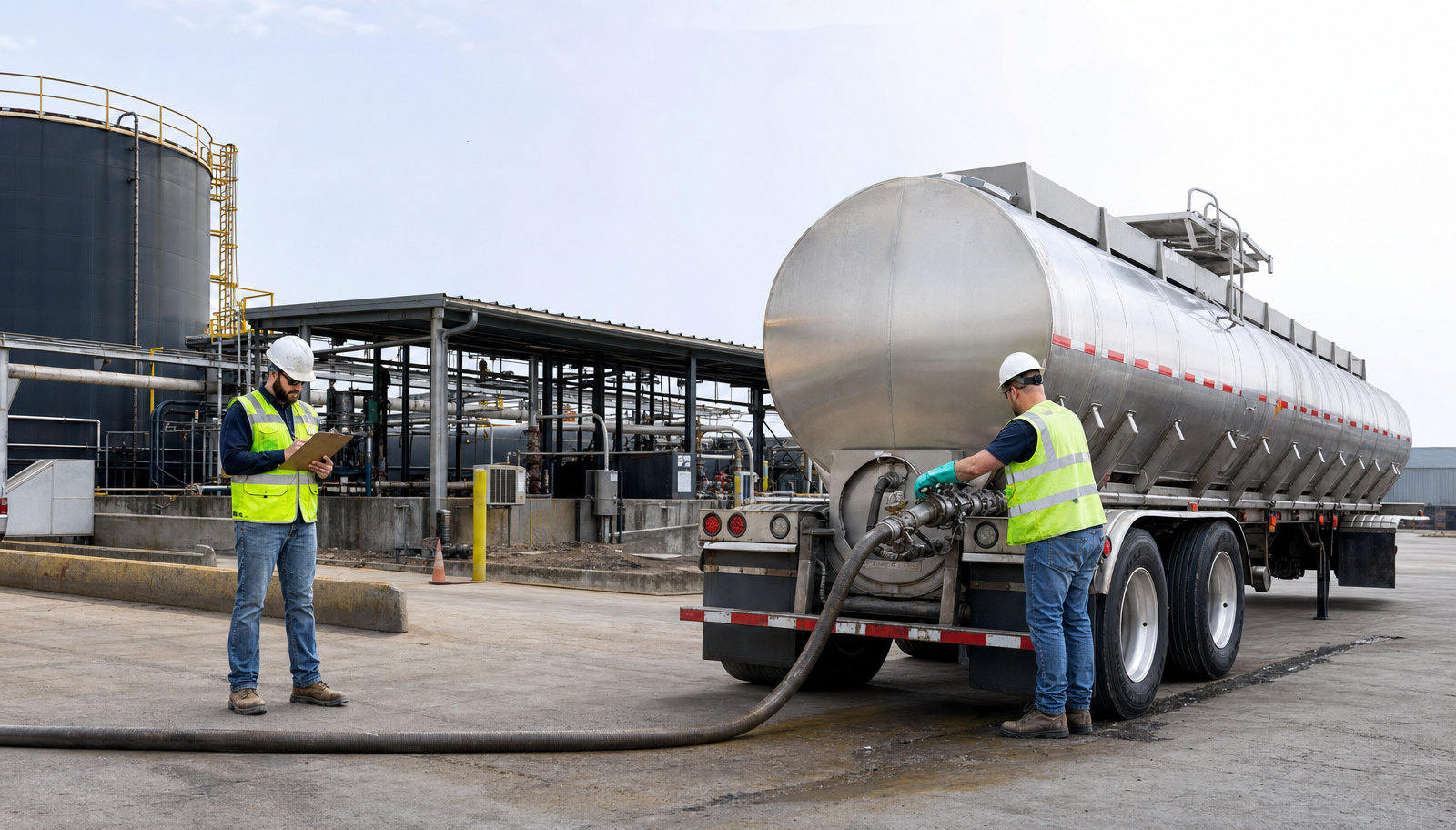
First-time discharge can happen on the same day in most cases. The onboarding sequence is intentionally short — there is no point making operators jump through paperwork for a relationship that should be simple to start:
Step 1 — Call ahead. 479-448-7755. Confirm load volume, ETA, and waste type. This call takes about three minutes.
Step 2 — Send transporter permit + COI. A photo or PDF of the hauler’s current state transporter permit and a current certificate of insurance go on file. Most operators send this from their phone in the parking lot.
Step 3 — Discharge. Bring the load and the manifest. Discharge happens at the receiving bay; documentation is signed on both sides; payment is per-dump for first-time accounts or invoiced for recurring ones.
Standard tipping fee is $0.20 per gallon, based on the manifest-stated volume from the originating grease trap. Recurring transporter accounts with consistent monthly volume can negotiate tiered pricing. Used cooking oil is handled on a separate account — pricing varies by quality and can be credit-based for pure, uncontaminated loads.
Yes. We are the only permitted receiving facility for FOG / grease-trap waste in Northwest Arkansas. The next-nearest licensed alternatives are in Tulsa, OK (approximately 90 miles one-way), Little Rock, AR (approximately 220 miles one-way), and Kansas City, MO (approximately 290 miles one-way).
Receiving is by appointment Monday through Friday during normal business hours, with emergency and off-hours discharges arranged in advance. For recurring transporter accounts we hold standing windows that make weekly cadence simple to plan around. Call to set the first slot.
Same day in most cases. Setup is three steps: call ahead to confirm load and ETA, send a photo of the current transporter permit and certificate of insurance, then discharge on arrival. There is no membership, no minimum, and no upfront commitment.
No. This is a FOG-specific receiving facility — not a septic / domestic sewage facility. Septic haulers should route to a permitted septic receiving site. Mixed loads are case-by-case; call before hauling if there is any question about the load composition.
A complete manifest showing date, originating facility name and address, trap size and stated volume, hauler name and transporter license number, truck unit number, the receiving facility (Ozark Grease Pros), and driver signature. Measured grease-and-solids percentage at the pump is strongly recommended even where not required by the originator’s city ordinance.
Most operators save $150 to $300 per load when they switch from a Tulsa discharge to the Siloam Springs facility. The headline savings is fuel — roughly 180 miles of round-trip diesel — but the binding savings is the half-day of truck time that goes back into paying work. For Tulsa-side operators it is worth running the monthly math; we have signed up recurring accounts on that basis several times.
Yes. Recurring transporter accounts move to net-30 monthly invoicing once a discharge pattern is established. New accounts typically start on per-dump payment and transition after two or three months of consistent volume.
Yes — eastern Oklahoma operators are a natural fit and frequently discharge at the facility, particularly transporters working the Cherokee Nation, Tahlequah, Stilwell, and Westville corridors. Tulsa-area and southern Missouri haulers are accepted case-by-case depending on volume. The transporter’s home-state permit and a current COI cover the regulatory side.
Oils are separated from the water stream and routed to recycling — primarily biofuel feedstock and rendered tallow markets. The residual water is treated on site to discharge standards before release. Nothing untreated leaves the facility. The chain of custody — manifest at intake, treatment record on site, discharge record at the back end — is auditable and is what makes the receiving permit legally meaningful.
Three steps and you’re in. First-time dumps can happen the same day — call ahead and bring the manifest.