
Full interior scrub, baffles cleared, bacteria eliminated. Waste to Siloam Springs. In Fayetteville’s competitive entertainment district and University market, a clean trap isn’t just a compliance checkbox — it’s part of the customer experience.
Interior Scrub Every Cycle
Dickson Street Specialists
Bacteria & Odor Eliminated
Washington Co. Compliance

Dickson Street is a four-block entertainment strip with dozens of restaurants, bars, and music venues competing for the same customers on the same weekend nights. A customer choosing between three bars on a Thursday night is making that decision partly on feel, atmosphere, and smell. A grease trap odor that reaches the bar, the dining room, or the outdoor patio is a conversion problem, not just a compliance problem.
This is specific to Dickson Street in a way that doesn’t apply to a suburban QSR on Wedington or a corporate casual dining chain on I-49 south. Those restaurants lose a compliance finding. A Dickson Street bar loses a table, a repeat customer, and potentially a Yelp or Google review from a University of Arkansas student with 800 followers who posts about it that same night.
The grease trap odor mechanism on Dickson Street is compounded by the physical environment. Many Dickson Street buildings have tight back-of-house layouts where the trap access is near prep areas, drain lines run close to the dining room, and HVAC systems that weren’t designed for high-volume kitchen operations push air in ways that carry kitchen odors to the front of house. Pump-only service leaves the bacterial film on trap walls intact. Every week that passes, that film produces more odor — odors that are detectable to customers by week two or three after a pump, and overwhelming by week four.
The solution isn’t more frequent pumping. It’s cleaning on every cycle — eliminating the bacteria, not just removing the liquid.
Many Dickson Street restaurant spaces have a grease trap history that extends back years or decades, often through multiple tenants and several service providers of varying quality. When Ozark Grease Pros takes on a new Dickson Street account, the first service visit is as much a trap assessment as it is a cleaning visit.
Legacy traps in Fayetteville’s downtown buildings can present several conditions that require attention beyond a standard pump-and-clean:
Substantial wall accumulation from pump-only history: A trap that has been pump-only serviced for years — even at regular frequency — develops a thick grease layer on interior walls that doesn’t pump out. This material has to be physically scrubbed off. On a first-time full cleaning, a trap that has been pump-only serviced quarterly for two years can yield several inches of wall buildup that cleaning removes and previous service left behind. Baffle deterioration or damage: Older plastic baffles in Dickson Street building traps show wear and damage more often than newer commercial installations. Baffles that are cracked, displaced, or missing their top sections allow grease to bypass the trap’s separation function — a condition that makes the trap less effective and accelerates sewer line accumulation downstream. Ozark Grease Pros documents baffle condition on every visit. Inlet and outlet partial blockage: Years of accumulation on the inlet side can create partial blockage that reduces effective trap volume — the trap appears full before it actually is, triggering backup odors. Cleaning the inlet clears this and restores effective capacity. Residual solids from inadequate prior service: If previous service providers pumped liquid waste but didn’t address bottom solids, a thick layer of compacted organic material may be present at the bottom of the trap. This material produces significant odor during warm months and reduces effective trap volume. The first full cleaning visit on a legacy Dickson Street trap establishes the baseline — and the difference in odor the following week is typically the confirmation that cleaning was the issue all along. |
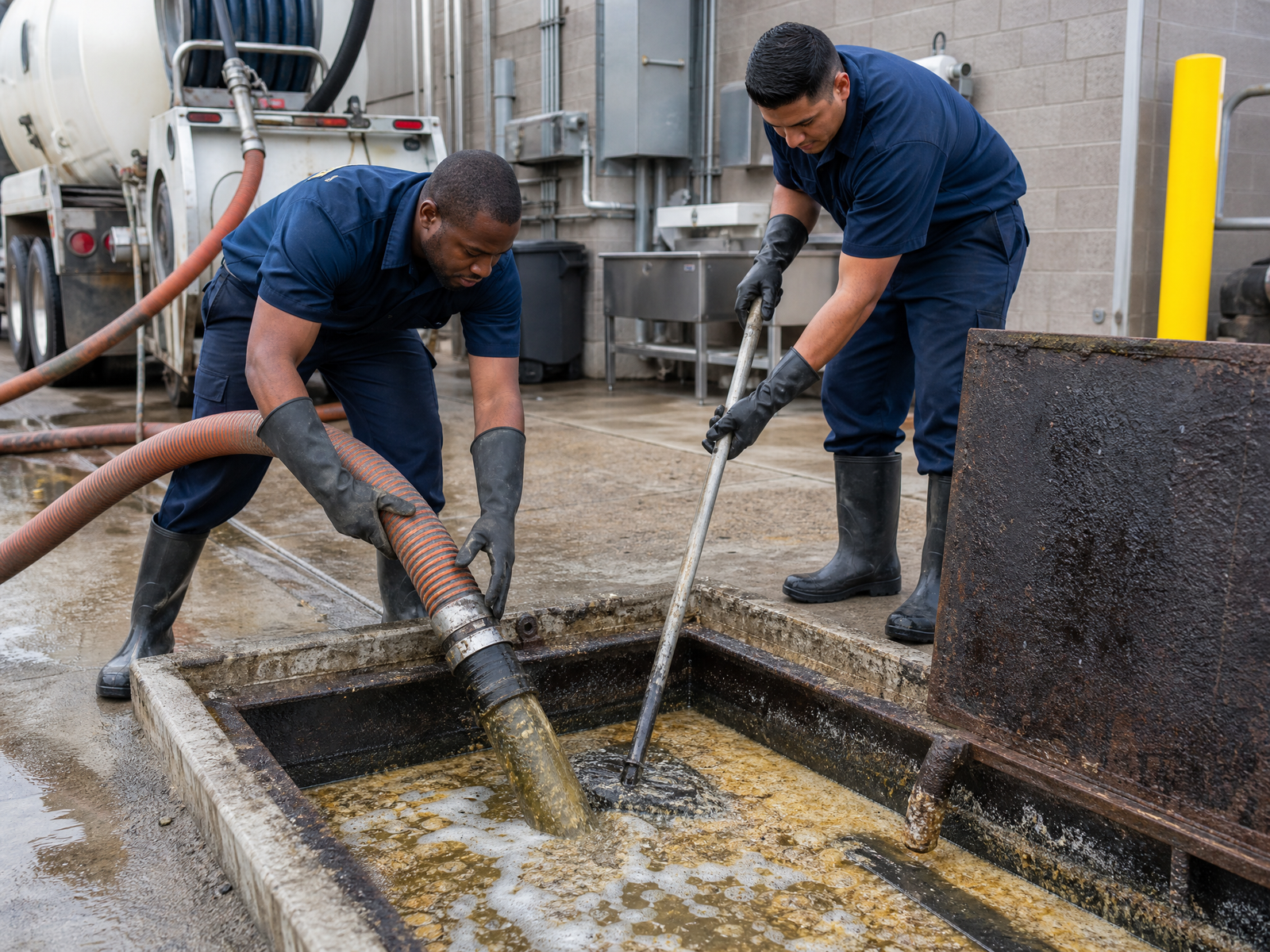
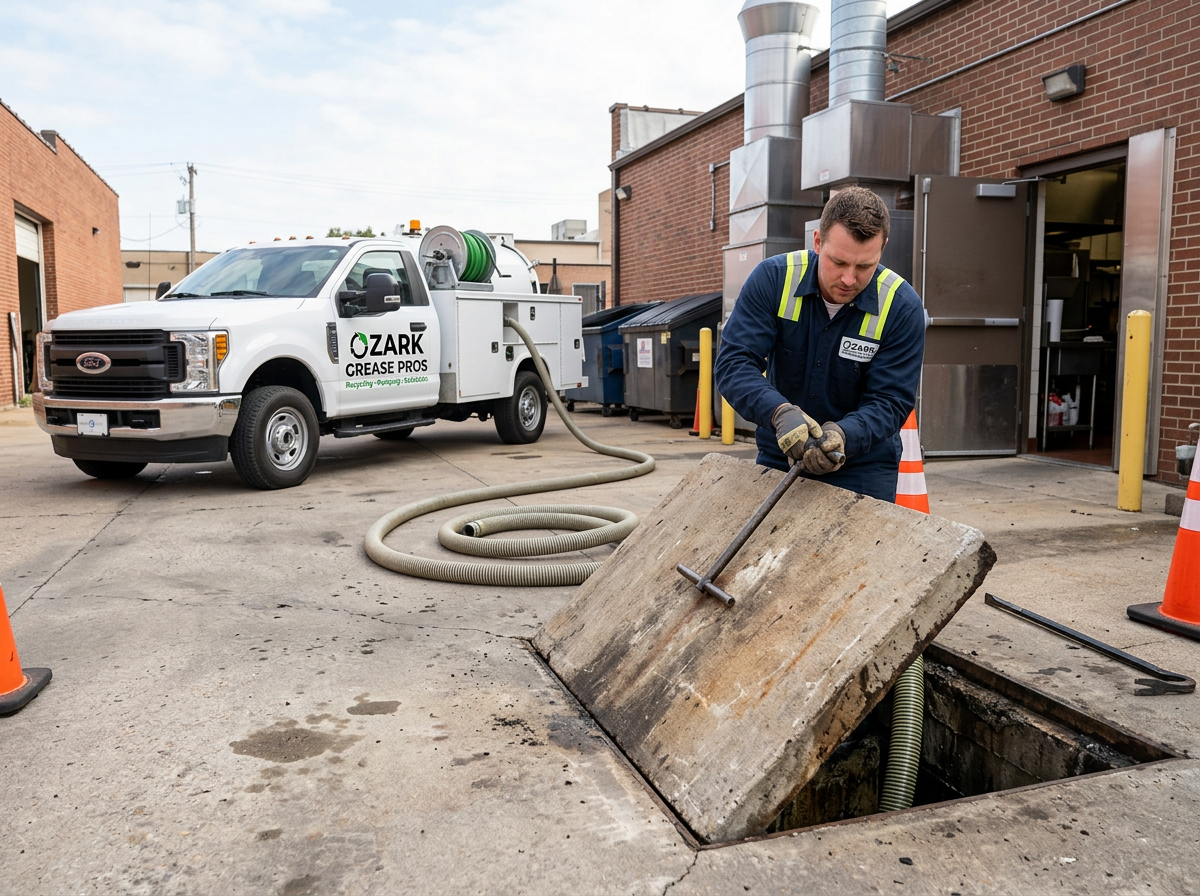
Every Ozark Grease Pros service call in Fayetteville combines a complete pump-out with a thorough interior cleaning. On Dickson Street, the cleaning scope addresses both the standard service checklist and the legacy accumulation conditions described above:
Service Component
What This Means for Your Fayetteville Kitchen
Full pump-out
Complete removal of all liquid waste — floating grease, wastewater, settled solids. Volume documented on manifest.
Interior wall scrubbing
Walls and lid underside scrubbed to remove grease film, bacteria colonies, and accumulated organic material. On Dickson Street legacy traps, this step often reveals — and removes — years of pump-only accumulation in a single visit.
Baffle clearing and inspection
Baffles cleared of deposits and inspected for condition. Damage, displacement, or deterioration documented. For Dickson Street buildings, baffle condition is flagged on the service record so operators know if a replacement is needed.
Bottom solids removal
Compacted organic material at the trap bottom removed — not left to produce odor between service cycles. Critical for legacy traps that have had pump-only service history.
Inlet/outlet pipe clearing
Partial blockages at inlet cleared to restore effective trap volume. Outlet checked for flow restriction.
Water refill
Trap refilled to operating level to maintain the water seal against sewer gas. A missing water seal is a common cause of kitchen odor that isn't from the trap walls themselves.
Signed manifest
Fayetteville address, service date, gallons removed, Siloam Springs disposal destination, technician signature. City of Fayetteville Water & Sewer compliance documentation
Fayetteville Restaurant / Zone
Recommended Cleaning Frequency
Dickson Street bar with late-night kitchen
Monthly combined pump-and-clean. Late-night volume and the competitive odor-sensitivity of the entertainment district make monthly cleaning the standard — not a premium add-on.
Dickson Street full-service restaurant
Monthly to bi-monthly combined pump-and-clean. Full-service restaurants with significant frying should lean monthly. Interior cleaning prevents the bacterial buildup that generates odor in dining areas.
University area restaurant (semester)
Bi-monthly during fall and spring semesters. University market is review-driven and odor-sensitive — do not let bacteria accumulate between service cycles on accounts serving the U of A student population.
Wedington Drive / I-49 QSR
Monthly combined pump-and-clean. Standard high-volume frying commercial corridor — consistent FOG output requires cleaning on every cycle.
Downtown Fayetteville / Fayetteville Square
Bi-monthly combined pump-and-clean. Moderate FOG output from mostly non-frying independent restaurants in the downtown mixed-use zone.
New Fayetteville account — first visit
Full cleaning baseline on first visit regardless of prior service record. Dickson Street accounts especially — establish the true interior condition before setting the ongoing schedule.
The City of Fayetteville Water & Sewer Department’s FOG enforcement activity in the Dickson Street zone means that inspectors in Fayetteville often look at more than just fill level. A trap that has been pumped on schedule but not cleaned — with visible wall accumulation, baffle fouling, and organic odor when the lid is opened — is a finding in Fayetteville even if the liquid level is technically compliant.
Ozark Grease Pros’ combined pump-and-clean service produces the trap condition that Fayetteville inspectors expect in a compliant commercial kitchen: empty and clean. The signed manifest documenting the service visit, the disposal destination, and the cleaning scope is the compliance record on demand for any City of Fayetteville or Washington County inspection.
For Fayetteville restaurants with an inspection scheduled: contact us for priority cleaning service — we provide pre-inspection pump-and-clean for Fayetteville accounts.
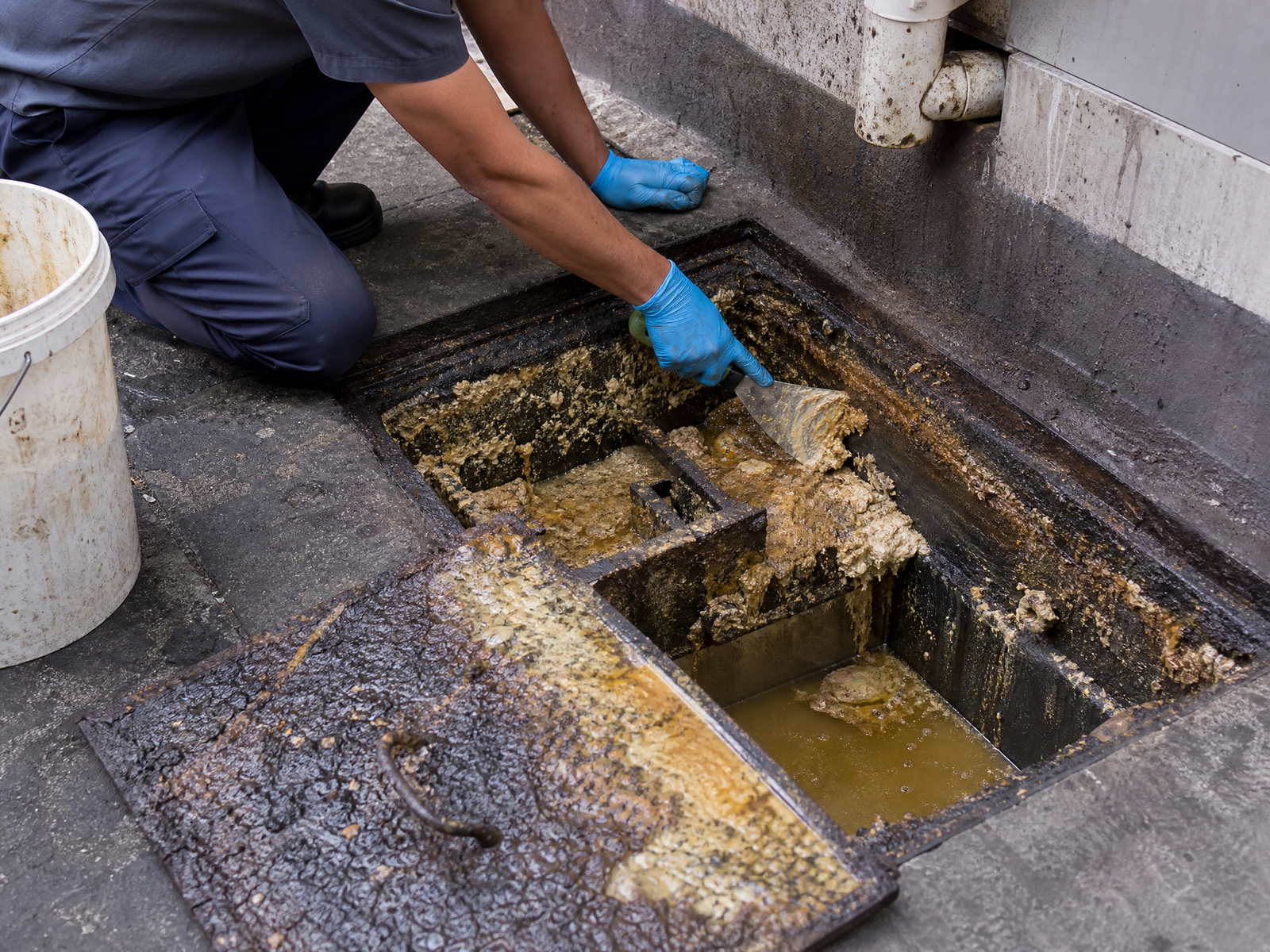
Every Fayetteville cleaning visit includes a full pump-out plus interior wall and baffle scrubbing, bottom solids removal, inlet clearing, water refill, and a signed manifest naming our Siloam Springs, AR facility. On Dickson Street legacy accounts, the first full cleaning also addresses accumulated wall deposits from pump-only service history that previous providers left behind.
Monthly combined pump-and-clean. Dickson Street’s late-night kitchen volume and the competitive odor-sensitivity of the entertainment district — where customers choose between dozens of options on a short strip — make monthly cleaning the operational standard. Pump-only monthly service is not adequate for bars doing late-night food service in this environment.
Persistent odor after pumping means bacteria colonies on interior walls are still present — pumping removes liquid but not the bacteria. In Fayetteville, this is especially common on Dickson Street where late-night kitchen operations load the trap walls rapidly. Interior cleaning eliminates the odor source. If your restaurant is being pumped on schedule and odors return by week two or three, cleaning is the missing service.
Many Dickson Street buildings have traps with years of pump-only service history that have never been properly interior-cleaned. Common conditions: thick wall accumulation from years of grease film, deteriorated or displaced baffles, inlet partial blockage, and compacted bottom solids. A first full cleaning visit reveals and addresses all of these — and typically produces an immediate improvement in kitchen odor.
Yes. Combined pump-and-clean with signed manifest naming our ADEQ-licensed Siloam Springs facility satisfies City of Fayetteville Water & Sewer FOG compliance requirements. Fayetteville’s active enforcement program checks both fill level and interior trap condition — combined cleaning addresses both.
Yes. All waste from Fayetteville cleaning visits goes to our licensed recycling facility in Siloam Springs, AR — approximately 28 miles west. Oil is extracted and recycled. Water is treated to Arkansas ADEQ standards.
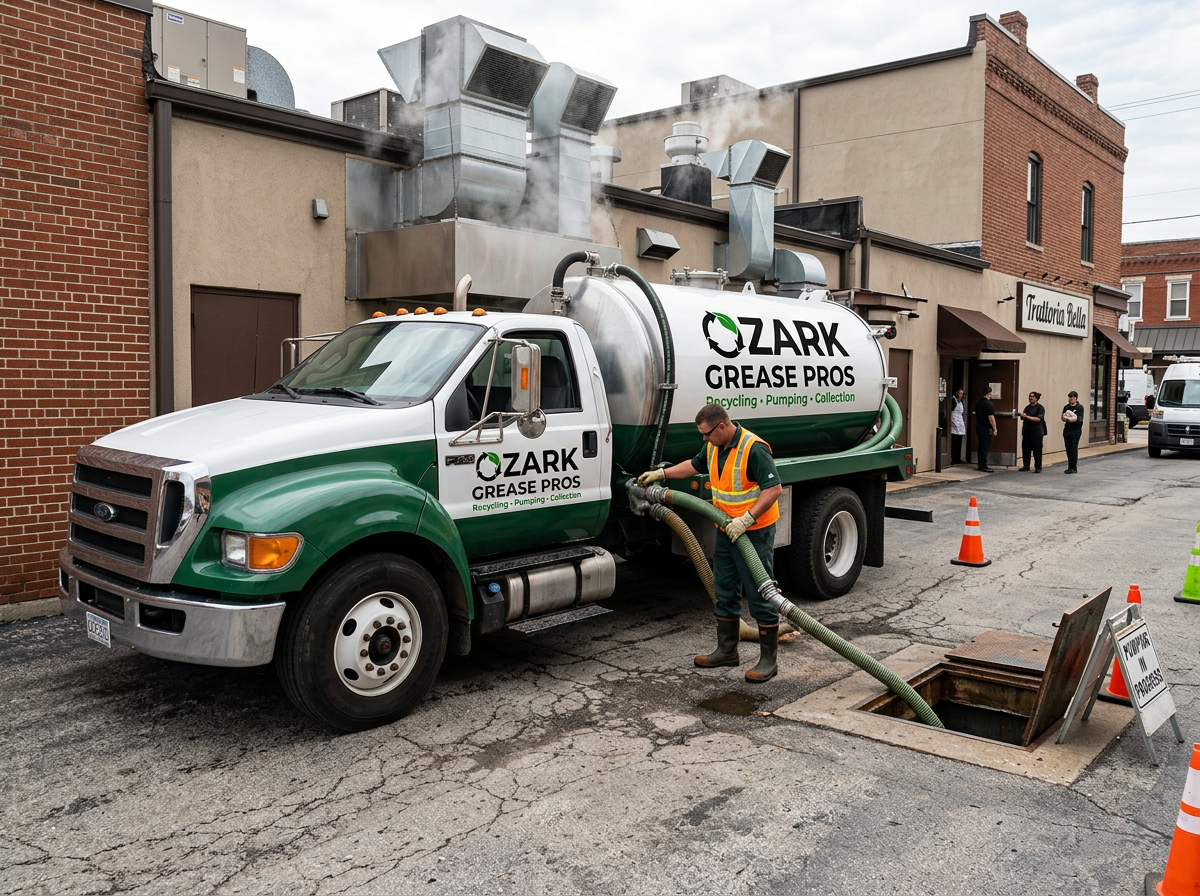
Grease Trap Pumping — Fayetteville
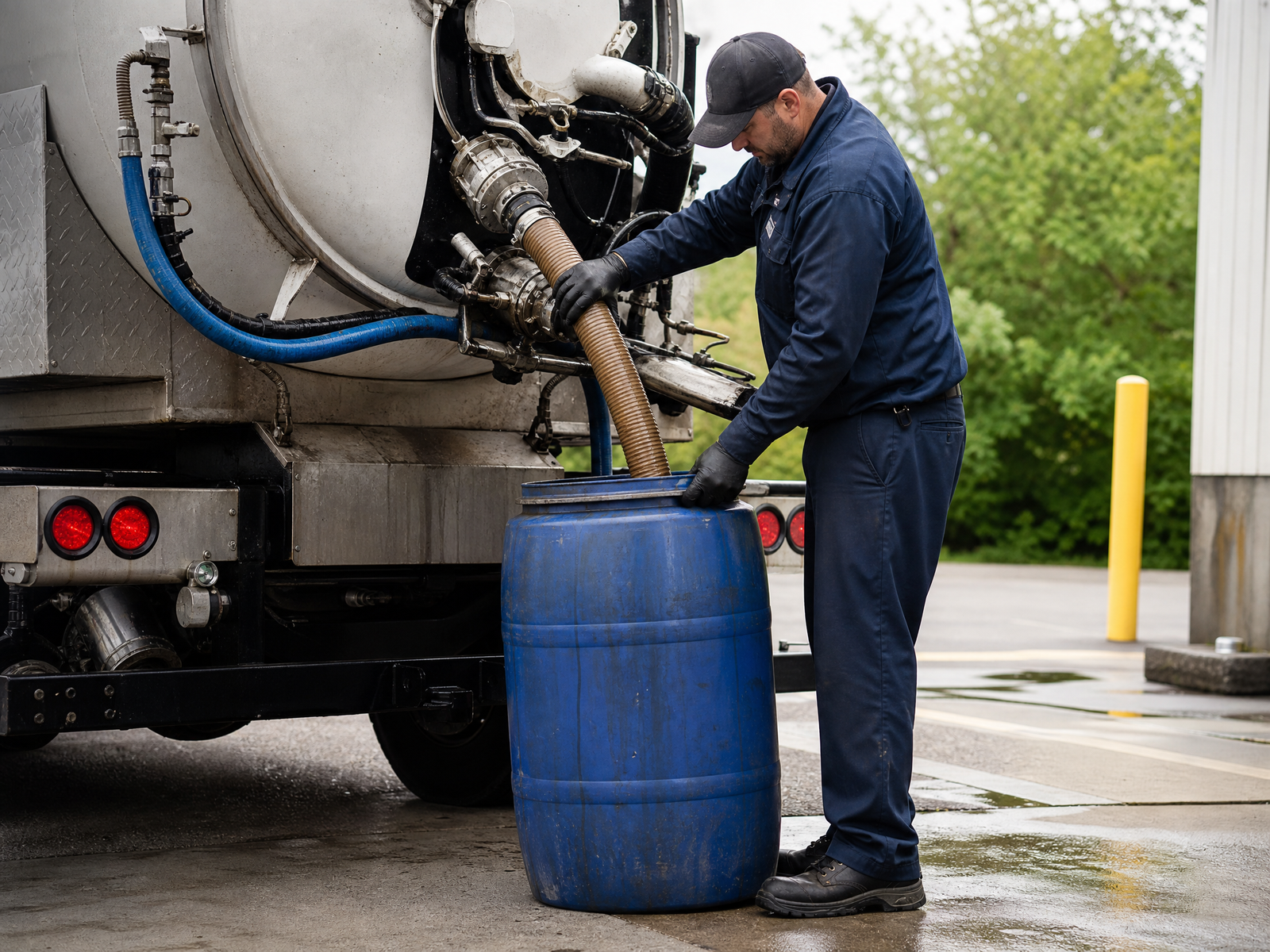
Grease Recycling — Fayetteville
Fayetteville Service Overview